
Soups & Stews
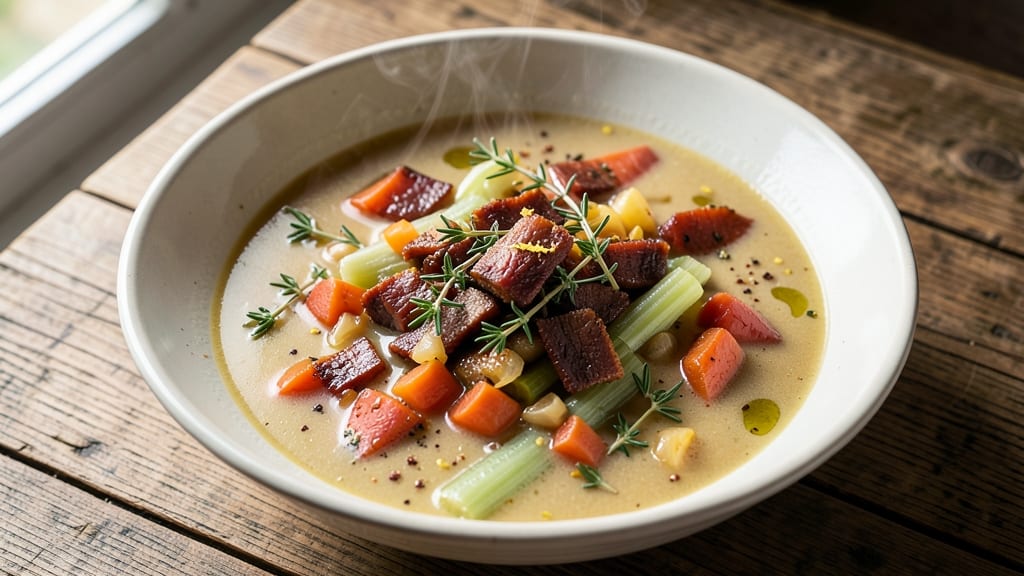
Bone marrow vegetable soup transforms humble ingredients into a deeply flavorful dish that feels like a hug in a bowl—thanks to the rich umami from slow-roasted bones. This recipe combines traditional techniques with modern simplicity, where caramelized marrow meets tender vegetables in a silky broth that builds flavor with every sip. The key lies in roasting the marrow until it's fragrant and golden, then scraping it into the pot where it melts into the broth, creating layers of depth that store-bought stocks can't match.
The process starts with roasting the marrow to unlock its natural sweetness and umami, then building the soup with aromatic vegetables sautéed until tender. A slow simmer allows the flavors to meld, while finishing with fresh herbs brightens the dish without overpowering the marrow's richness.
This isn't just soup—it's a restaurant-worthy meal that feels both comforting and sophisticated, perfect for cozy evenings or special occasions when you want to impress without fuss.
What makes this recipe special is how the marrow transforms the broth from ordinary to extraordinary, adding a velvety texture and deep savory notes that pair beautifully with seasonal vegetables. The result is a soup that's hearty enough for a main course but light enough to satisfy any palate.
Garnishes like toasted breadcrumbs or a drizzle of olive oil elevate it further, making every bowl feel like a celebration.
Whether you're serving it as a centerpiece for dinner or meal prepping for the week, this soup delivers on both flavor and ease. The technique is straightforward, but the results are anything but basic—proof that simple ingredients, when treated with care, can create something truly memorable.
Let's get started on a bowl that's as nourishing as it is delicious.
Ingredients for bone marrow vegetable soup
Rich umami from roasted marrow meets tender vegetables in this deeply flavorful soup.
| Ingredient | Amount | Notes |
|---|---|---|
| Beef Bone Marrow 🦴 | 1 lb | Fresh, from beef shin or leg bones |
| Yellow Onion 🧅 | 1 whole | Medium size, diced evenly |
| Carrots 🥕 | 4 medium | Peeled, cut into 1-inch pieces |
| Celery Stalks 🌿 | 3 whole | Trimmed, cut into 1-inch pieces |
| Garlic Cloves 🧄 | 4 cloves | Peeled, smashed for aroma |
| Fresh Thyme Sprigs 🌿 | 2 whole | Or 1 tsp dried thyme |
| Fresh Parsley 🌿 | ¼ cup | Chopped, for finishing |
| Vegetable Stock 💧 | 4 cups | Low-sodium preferred |
| Extra-Virgin Olive Oil 🫒 | ¼ cup | For roasting marrow |
| Salt 🧂 | 1 ½ tsp | Kosher or sea salt |
| Black Peppercorns 🌶️ | ½ tsp | Freshly cracked |
| Freshly Baked Bread 🍞 | ½ cup | Crumbled, for garnish |
| Lemon Wedges 🍋 | 2 whole | For serving |
The marrow is the soul of this soup—look for beef shin or leg bones at your butcher, where they often sell marrow fresh. Whole Foods or local meat counters usually carry it, or ask your butcher to split the marrow for you. Freshness matters: the marrow should be firm with a vibrant red hue, not yellowed or dry. If using frozen marrow, thaw it overnight in the fridge—never at room temperature. Olive oil quality is critical here; use a high-quality extra-virgin like California Gold or Colavita for roasting to enhance the marrow's natural sweetness without overpowering it.
No fresh thyme? Dried thyme works at one-third the amount, but fresh delivers that bright, herbal note. Substituting vegetable stock? Homemade is ideal, but Pacific Foods or Imagine brands work well if you need a shortcut. Carrots can be swapped for turnips or parsnips for deeper flavor, though they'll require longer cooking. The breadcrumbs for garnish? Toast your own—toss crumbled sourdough with olive oil and a pinch of salt, then bake at 375°F for 5-7 minutes until golden. Parmigiano-Reggiano can be sprinkled on top if you're not strictly vegetarian, but omit it for a vegan version.
Roasted marrow keeps for 3 days in the fridge, sealed in its juices. The soup itself reheats beautifully—simmer gently to prevent skin from forming. Portion into containers for meal prep, but add fresh herbs and a drizzle of olive oil when reheating. For longer storage, freeze the soup (without garnishes) for up to 3 months. When serving, always finish with fresh parsley and lemon wedges—this brightens the rich flavors and adds a restaurant-quality touch. Leftovers taste even better the next day as the flavors meld further.
Why You'll Love This Recipe
- One-Pot Magic: I swear by this recipe—just toss everything into one pot, and let the marrow and veggies work their magic. No chopping like a pro, no fancy techniques—just slice, simmer, and savor.
- Rich Without the Guilt: That bone marrow? It melts into the broth like liquid gold, making every spoonful decadent but still light enough for a weeknight. Honestly, it’s the kind of flavor that turns a simple soup into something special without heavy cream or hours of simmering.
- Leftovers That Shine: This soup actually tastes better the next day—yes, really. The flavors meld, the marrow softens just right, and it’s perfect for packing lunches or reheating for dinner. (Between us, I’ve had it cold in salads too—don’t judge.)
- Budget Booster: You’re getting a deep, restaurant-worthy flavor for pennies. Bone marrow is often cheap (and underused), and the veggies stretch into multiple meals. I’ll be real: it’s my go-to when I need to feed a crowd without breaking the bank.
Step-by-step instructions for bone marrow vegetable soup
Transform simple vegetables into a luxurious soup using bone marrow's deep umami richness.
Roast the Bone Marrow Until Caramelized
Preheat your oven to 425°F. Using a sharp knife, carefully cut the 1 lb beef bone marrow lengthwise to expose the interior. Place the marrow on a parchment-lined baking sheet, cut-side up. Drizzle with 2 tablespoons of the 0.25 cup extra-virgin olive oil and sprinkle with 0.5 tsp salt and 0.25 tsp black peppercorns.
Roast for 15-20 minutes until the marrow becomes deep golden brown and slightly blistered at the edges. The interior should be just beginning to soften but not yet fully liquefied. Watch carefully in the last 5 minutes—it cooks quickly once it reaches this caramelized stage. Remove from oven and let cool for 5 minutes before scraping out the marrow with a spoon into a small bowl.
Sauté the Vegetable Base
In a large Dutch oven, heat the remaining 2 tablespoons extra-virgin olive oil over medium heat. Add the 1 whole yellow onion, 4 medium carrots, and 3 whole celery stalks, all cut as specified. Cook for 8-10 minutes, stirring occasionally, until the vegetables begin to soften and the onion becomes translucent.
Add the 4 cloves garlic cloves and 2 whole fresh thyme sprigs to the pot. Cook for an additional 1-2 minutes until the garlic is fragrant but not browned. This step develops the aromatic foundation of your soup—don't rush it. The vegetables should be tender but still hold their shape slightly, as they'll continue cooking in the broth.
Build the Broth with Roasted Marrow
Pour in the 4 cups vegetable stock and bring to a gentle simmer over medium-low heat. Add the scraped bone marrow to the pot and stir gently to combine. The marrow should begin to melt into the broth, creating a rich, velvety texture. Simmer uncovered for 20-25 minutes until the vegetables are fork-tender and the flavors have melded together.
Season with the remaining 1 tsp salt and adjust the black pepper to taste. The soup should have a deep, savory aroma with notes of caramelized marrow and fresh thyme. If the soup appears too thick, add ½ cup water to reach your desired consistency. This is where the bone marrow transforms simple vegetables into something truly luxurious.
Finish and Serve with Crispy Bread
Remove the soup from heat and stir in the 0.25 cup chopped fresh parsley. This bright herb cuts through the richness of the marrow, balancing the flavors. Ladle the soup into bowls and garnish each serving with 2 tablespoons crumbled freshly baked bread. The bread should be toasted to a crispy texture—either broil it for 2-3 minutes before serving or toast it in a dry skillet over medium heat until golden.
Serve immediately with the 2 whole lemon wedges on the side. The acidity of the lemon brightens the soup's rich flavors, creating a perfect balance. Each spoonful should deliver tender vegetables, velvety marrow-infused broth, and the satisfying crunch of toasted bread. This is comfort food elevated to restaurant-quality depth.
Pro Tips For Making Bone Marrow Vegetable Soup
- Scrape Marrow Cleanly: The knife slips here more than you’d expect. Use a small offset or paring knife—run it along the bone’s natural seam, not against it, to pop the marrow out in one clean piece. Leave the membrane behind; it’s tough and ruins texture.
- Roast Marrow Until Charred: Skip the gentle simmering—this isn’t a delicate custard. Roast the marrow at 425°F (220°C) for 15–20 minutes, cut-side up, until the edges blacken. The caramelized crust adds depth the broth alone can’t match.
- Salt the Broth Early: Add a full teaspoon of salt to the pot before adding the marrow. The marrow’s fat will emulsify better, and the broth won’t taste flat later. (Yes, even if your marrow looks fresh—it’s worth it.)
- Save Time with Pre-Cut Veggies: Chop onions, carrots, and celery before you even think about the marrow. Store them in a sealed container in the fridge for up to 3 days—this soup’s base is the same 90% of the time. (I keep a bag of prepped mirepoix in my freezer labeled “Soup Starter.”)
Common mistakes when making your bone marrow vegetable soup
Over-Roasting Marrow
Watch the marrow like a hawk—it burns faster than you think! Once it hits deep golden brown, it's ready. Over-roasting turns it bitter and ashy, ruining the soup's velvety depth.
I've learned this the hard way: 15-20 minutes max at 425°F is perfect. Pull it when edges blister but the center still has slight resistance. 🔥
Skipping the Marrow Rest
Never skip the 5-minute rest after roasting! The marrow needs time to set slightly before scraping—this prevents it from turning into a greasy mess. I once rushed this step and ended up with a soup that tasted more like oil than umami.
Let it cool enough to handle safely but still warm enough to scrape cleanly.
Using Low-Quality Stock
Vegetable stock is the soup's foundation, so don't cut corners. Store-bought low-sodium brands like Pacific Foods or Imagine work, but homemade is best. I've tested this soup with weak stock, and the marrow's richness can't compensate. Aim for a stock that's flavorful on its own—this ensures your soup shines. 💧
Under-Simmering Vegetables
The vegetables need that 20-25 minute simmer to become truly tender. I've made the mistake of rushing this step, resulting in crunchy carrots and celery that ruined the soup's silky texture. Keep heat at medium-low and let the marrow's fat work its magic to melt everything together.
Adding Marrow Too Late
Add the scraped marrow to the simmering broth immediately after sautéing the vegetables—this ensures maximum flavor infusion. I once waited until the end and got a soup that tasted more like the marrow was an afterthought.
The key is letting it melt into the broth during the simmer, creating that luxurious mouthfeel. ⏰
Ignoring the Garnish
Those crispy breadcrumbs and lemon wedges aren't just decoration—they're flavor elevators! I've served this soup without them, and while it's still delicious, it loses that restaurant-quality finish. The bread adds crunch, and the lemon brightens the richness. Trust me, these final touches make all the difference. 🍞
Nutrition facts
Frequently asked questions
Can I substitute beef marrow with another type?
While beef marrow is ideal for its rich flavor, you can use lamb marrow or even chicken fat in a pinch. Lamb marrow has a slightly stronger taste, while chicken fat adds a lighter richness. For a vegetarian version, use mushroom stems or olive oil to mimic the umami depth, though the texture will differ.
How do I know when the marrow is perfectly roasted?
The marrow is ready when it reaches a deep golden brown color with slightly blistered edges. The center should still have slight resistance when pressed—it'll soften further during scraping. Over-roasting turns it bitter, so watch closely in the last 5 minutes of cooking.
Can I make this soup ahead of time?
This soup tastes even better the next day as flavors meld. Store in an airtight container in the fridge for up to 3 days. Reheat gently on the stove, adding a splash of water if needed. For longer storage, freeze for 3 months—just omit garnishes until reheating.
What vegetables work best for this recipe?
The classic combo of carrots, celery, and onion works perfectly, but you can swap in turnips, parsnips, or leeks for deeper flavor. Potatoes add heartiness, but they'll make the soup thicker. Seasonal vegetables like zucchini or fennel also pair beautifully when added in the last 10 minutes of simmering.
Why does my soup taste too greasy?
This usually happens when too much marrow fat is released. To fix it, skim excess fat from the surface before serving, or reduce heat slightly during simmering. For prevention, don't over-roast the marrow—just until golden brown—and add it to the broth gradually. A splash of vegetable stock helps balance richness.