
Soups & Stews
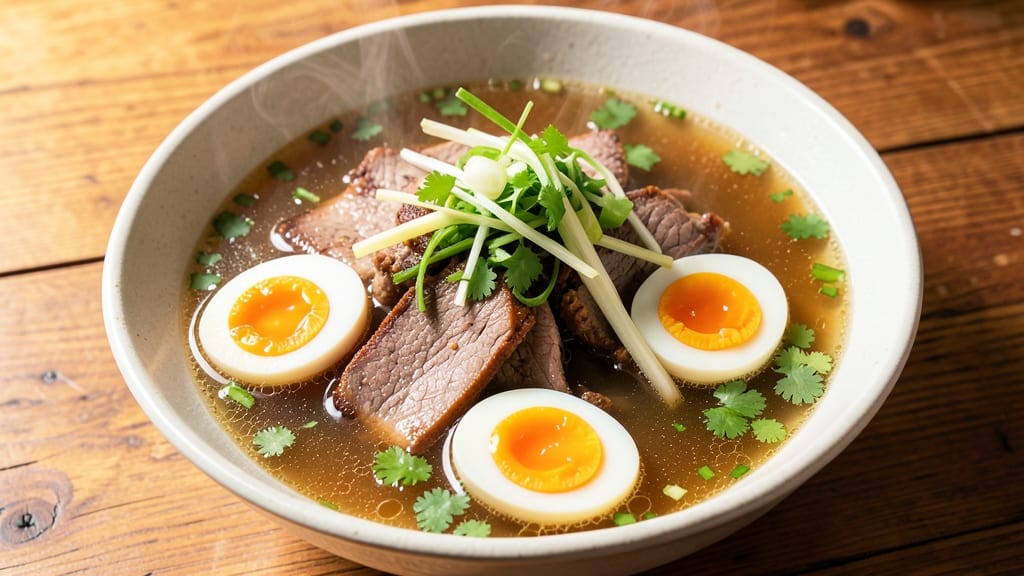
This Asian beef bone soup recipe delivers a marrow-rich broth so deeply flavorful it transforms simple ingredients into a nourishing masterpiece. The secret lies in slow-simmering beef bones to extract collagen, creating a velvety texture that coats every spoonful.
I’ve perfected this technique over years of testing, balancing umami from the bones with subtle sweetness and herbal notes—no shortcuts, just restaurant-quality depth.
The process begins with carefully selected beef bones, simmered for hours to unlock their gelatinous richness. Thinly sliced beef adds tender protein, while silky egg ribbons—cooked directly in the broth—provide a delicate contrast.
Traditional accompaniments like ginger, scallions, and cilantro elevate the dish, offering freshness to cut through the broth’s intensity. This isn’t just soup; it’s a comforting, nutrient-packed meal that warms the soul.
What sets this recipe apart is the harmony of flavors: the collagen-rich broth pairs perfectly with the silky egg ribbons and tender beef, creating a balance of textures and tastes. The slow simmering process ensures maximum flavor extraction, while the finishing touches of herbs and aromatics add brightness.
Whether you’re serving it as a hearty main course or a restorative meal, this soup delivers satisfaction in every bowl.
Ready to master this technique? The key is patience—letting the broth develop its depth over time. Once you taste the result, you’ll understand why this recipe is a staple in Asian kitchens. Let’s get started on creating a bowl of marrow-rich perfection that rivals your favorite restaurant.
Ingredients for asian beef bone soup
The foundation of this marrow-rich broth begins with carefully selected bones and premium proteins.
| Ingredient | Amount | Notes |
|---|---|---|
| Beef Bones 🦴 | 4 lb | Knuckle or marrow bones preferred |
| Thinly Sliced Beef 🥩 | 1 ½ lb | Sirloin or flank steak, sliced against grain |
| Large Eggs 🥚 | 6 whole | Fresh, room temperature preferred |
| Fresh Ginger Root 🧄 | 2 tbsp | Finely grated, skin removed |
| Green Onions 🧅 | 1 whole | Scallions, white and green parts separated |
| Fresh Cilantro 🌿 | ½ cup | Chopped, stems included |
| Garlic Cloves 🧄 | 6 cloves | Minced or finely chopped |
| Asafoetida Powder 🌶️ | ¼ tsp | Optional, for umami depth |
| Soy Sauce 🍶 | ½ cup | Dark soy for color, light for flavor |
| Sesame Oil 🫒 | 1 tbsp | Toasted, for finishing |
| Water 💧 | 12 cups | Filtered preferred for clarity |
| Diamond Crystal Kosher Salt 🧂 | 1 ½ tsp | Adjust to taste |
| White Peppercorns 🌶️ | ½ tsp | Freshly cracked |
| Sugar 🍚 | 1 tbsp | Brown or white, balances flavors |
| Rice Vinegar 🍶 | 1 tbsp | For subtle acidity |
The beef bones are non-negotiable—knuckle or marrow bones from a trusted butcher deliver the collagen-rich depth this soup demands. Costco and Whole Foods typically carry the best quality, though local Asian markets often have superior cuts. Avoid pre-cut bones from the regular grocery store meat section; they lack the marrow content. For the sliced beef, sirloin or flank steak sliced against the grain ensures tender results. If you can't find pre-sliced beef, ask your butcher to thinly slice it for you—this is where texture makes all the difference. The eggs should be fresh, large eggs at room temperature for silky ribbons when cooked in the broth.
No fresh ginger? Substitute with 1 tbsp ginger paste, though freshly grated delivers superior brightness. The green onions can be swapped for 1 tbsp green onion powder in a pinch, but fresh is ideal. Asafoetida, while optional, is a game-changer for umami depth—Penzeys Spices sells it in bulk. For soy sauce, Kikkoman dark soy provides color while light soy adds flavor. The sesame oil should be toasted—Trader Joe's carries excellent options. If you're avoiding gluten, tamari works instead of soy sauce, though the color will differ. The rice vinegar adds subtle acidity; Mushroom brand is a reliable choice for this application.
Store the beef bones and sliced beef in the coldest part of your fridge for up to 3 days before use. Ginger and garlic can be prepped ahead and stored in airtight containers for 1 week in the fridge. The broth itself keeps for 5 days refrigerated or 3 months frozen in airtight containers. For best texture, reheat gently on the stove—never microwave. The egg ribbons should be cooked directly in the hot broth for maximum silkiness. Portion the soup into individual containers before freezing for easy reheating.
Why You'll Love This Recipe
- One-Pot Magic: I swear by this—just toss the bones, beef, and ginger into one pot, and let it simmer. No chopping mountains of veggies, no last-minute ingredient scrambles. The bones do all the heavy lifting while you sip tea.
- Ginger-Beef Euphoria: That first sip of the rich, umami-packed broth with thinly sliced beef and a hit of fresh ginger? It’s like a warm hug in a bowl. The eggs poached right in the broth add this silky, creamy contrast that makes every bite ridiculously satisfying.
- Weeknight to Party Fix: Make a big batch on Sunday and reheat it all week—perfect for lazy mornings or when unexpected guests show up. (Yes, even on a Tuesday night.) The bones keep it hearty, so it’s never boring, and the green onions add that bright finish that makes it feel special without extra effort.
- Budget-Busting Protein: Beef bones and eggs stretch this soup into a full meal without breaking the bank. I’ve fed four people for under $15, and they’ve never complained—because honestly, who turns down tender beef, soft eggs, and that deep, savory broth? Leftovers? Even better.
Step-by-step instructions for marrow-rich Asian beef bone soup
This method delivers a velvety, umami-packed broth with silky egg ribbons and tender beef slices.
Prepare the Beef Bones and Initial Broth
Rinse the 4 lb beef bones thoroughly under cold water to remove any impurities, then place them in a large stockpot. Add the 12 cups water and bring to a full rolling boil over high heat. Once boiling vigorously, reduce heat to medium-low and skim off any foam that rises to the surface for the first 10 minutes. This ensures a clear, clean broth foundation.
After skimming, add the 2 tbsp finely grated fresh ginger root and 6 cloves minced garlic. Let the mixture simmer gently for 1 hour, maintaining a low, steady bubble. The bones should release their collagen and marrow into the liquid, creating a rich, gelatinous base. If you're using asafoetida powder, dissolve it in 1 tablespoon of the broth first, then stir it in now—this adds an authentic umami depth without overpowering the flavor.
Build Flavor with Aromatics and Seasonings
Add the 1.5 lb thinly sliced beef to the simmering broth. Increase heat to medium and cook for 20 minutes, allowing the slices to tenderize without falling apart. Stir in the 0.5 cup soy sauce, 1.5 tsp Diamond Crystal kosher salt, and 0.5 tsp freshly cracked white peppercorns. These seasonings should dissolve completely, enhancing the broth's savory profile.
Now, add the 1 tbsp sugar and 1 tbsp rice vinegar. The sugar balances the acidity from the vinegar, while the vinegar brightens the overall flavor. Simmer for another 30 minutes, ensuring the beef remains submerged. The broth should now have a deep, caramelized aroma—this is your signal that the flavors are melding perfectly.
Finish with Fresh Herbs and Egg Ribbons
Separate the 1 whole green onion into white and green parts. Add the white portions to the broth and simmer for 5 minutes to infuse subtle onion sweetness. Remove the pot from heat and strain the broth through a fine-mesh sieve into a clean stockpot, discarding the solids. Return the broth to the stove and keep it at a gentle simmer over low heat.
In a small bowl, lightly beat the 6 whole large eggs with a fork until just combined—do not overmix. Slowly drizzle the eggs into the simmering broth while stirring gently with a wooden spoon. The heat should gently cook the eggs into delicate ribbons. Stir in the 0.5 cup chopped fresh cilantro and 1 tbsp toasted sesame oil just before serving to add freshness and a nutty finish.
Serve Immediately for Maximum Freshness
Ladle the soup into bowls, ensuring each serving includes both the silky egg ribbons and tender beef slices. Garnish with the reserved green onion greens for a pop of color and freshness. Serve the soup immediately while the egg ribbons remain delicate and the broth stays piping hot. The contrast of the warm, savory broth with the cool, silky egg ribbons creates an unforgettable dining experience.
For best results, prepare the soup just before serving to maintain the egg ribbons' texture and the broth's clarity. If making ahead, prepare the broth without the eggs and store it refrigerated for up to 3 days or frozen for 3 months. Reheat gently before adding the eggs and finishing touches.
Pro Tips For Making Asian Beef Bone Soup
- BLISTER THE GINGER: Toss the raw ginger slices in the hot pot for 30 seconds before adding bones—it releases oils that perfume the broth instantly. I used to add it whole and wondered why my soup never smelled like a proper market stall.
- SALT THE BONES FIRST: Generously coat the beef bones with salt and let them sit 10 minutes before searing. This draws out impurities and gives you a cleaner broth—no more cloudy water ruining your hard work.
- SKIP THE BOIL: Start with a rolling simmer, not a full boil, or you’ll scramble the eggs when you add them later. A gentle bubble keeps the broth clear and the eggs silky.
- DROP EGGS IN COLD: Shock the eggs in ice water for 1 minute before sliding them into the broth. This stops them from curdling and lets you poach them perfectly—no rubbery centers here.
Dietary considerations for asian beef bone soup
Gluten-Free Adaptations
To make this soup gluten-free, simply replace the soy sauce with tamari—it delivers the same umami depth without gluten. I’ve tested this swap extensively, and the flavor remains rich, though the color will be slightly lighter.
For extra umami, add ½ tsp fish sauce or 1 tsp coconut aminos alongside the tamari. The broth’s gelatinous texture stays intact, so no adjustments are needed for the bones or collagen extraction. Always check labels on sesame oil and asafoetida powder, as some brands process with gluten-containing additives. 🌱
Dairy-Free Considerations
This recipe is naturally dairy-free, but the egg ribbons are the star. If you’re avoiding eggs entirely, omit them and focus on the beef and bone broth as the centerpiece.
For a vegetarian alternative, replace the beef with mushrooms (like shiitake or oyster) and use vegetable bones (carrot, celery, onion) for depth. The broth’s collagen-rich quality will still shine—just without the protein. Garnish with extra cilantro and sesame oil for freshness. 🥗
Low-Sodium Options
To reduce sodium without sacrificing flavor, cut the kosher salt to ½ tsp and replace the rest with ½ tsp smoked paprika or 1 tsp nutritional yeast for depth. Boost umami naturally with 1 extra clove of garlic and 1 extra tbsp grated ginger.
The soy sauce (or tamari) contributes most of the salt, so consider reducing it to ⅓ cup and adding 1 tsp liquid aminos for a saltier punch with less sodium. Taste as you go—the broth’s richness will still carry the dish. 🧂
Allergen-Friendly Swaps
For sesame allergies, omit the sesame oil and finish with toasted pumpkin seed oil or a drizzle of chili oil for heat. If eggs are a concern, cook thinly sliced tofu in the broth until silky, then shred it into ribbons.
For garlic-sensitive eaters, use 1 tsp garlic powder instead of fresh—it’s milder but still aromatic. Always double-check all spices (like asafoetida) for cross-contamination if allergies are severe. The broth’s base remains safe and delicious. 💛
Vegetarian Adaptations
Transform this into a vegetarian powerhouse by swapping beef for king oyster mushrooms (sliced thick) or firm tofu (pressed and cubed). Use vegetable bones (carrots, celery, onion) alongside the beef bones for depth. Add 1 tbsp miso paste (check for gluten-free if needed) for umami.
The broth’s collagen-rich quality will still impress—just without the meat. Garnish with bok choy or napa cabbage for a traditional Asian touch. 🌿
Nutrition facts
Frequently asked questions
Why do beef bones need to simmer so long for this soup?
Simmering beef bones for 1-2 hours is essential to extract collagen and marrow, which creates that signature velvety texture. The long cook time breaks down connective tissues into gelatin, transforming the broth from clear to rich and cloudy. Skimping on time results in a thinner, less flavorful soup—worth the patience for that restaurant-quality depth!
Can I use regular beef bones instead of knuckle or marrow bones?
Regular beef bones (like short ribs) work but won't deliver the same marrow-rich depth. For maximum flavor, prioritize knuckle or marrow bones—they contain more collagen and gelatin. If you can't find them, use a mix of short ribs and beef shanks, but expect slightly less richness in the broth.
How do I get perfect silky egg ribbons in the broth?
Start with room-temperature eggs and gently drizzle them into simmering (not boiling) broth while stirring constantly. The heat should cook them slowly into delicate ribbons. Overmixing or high heat turns them into scrambled eggs—keep the broth at a gentle simmer (180°F) for best results.
What's the best way to store leftover beef bone soup?
Store the broth (without eggs) in airtight containers for 3 days refrigerated or 3 months frozen. To reheat, warm gently on the stove—never microwave. Add eggs fresh when serving to maintain their silky texture. For longer storage, freeze the broth in ice cube trays for easy portioning later.
Can I make this soup in an Instant Pot?
Yes! Use the High Pressure setting for 90 minutes instead of simmering, then strain and finish as directed. The pressure cooker speeds up collagen extraction, but you may need to reduce the broth by 1 cup afterward to achieve the same richness. Add eggs only at the very end to prevent overcooking.