
Soups & Stews
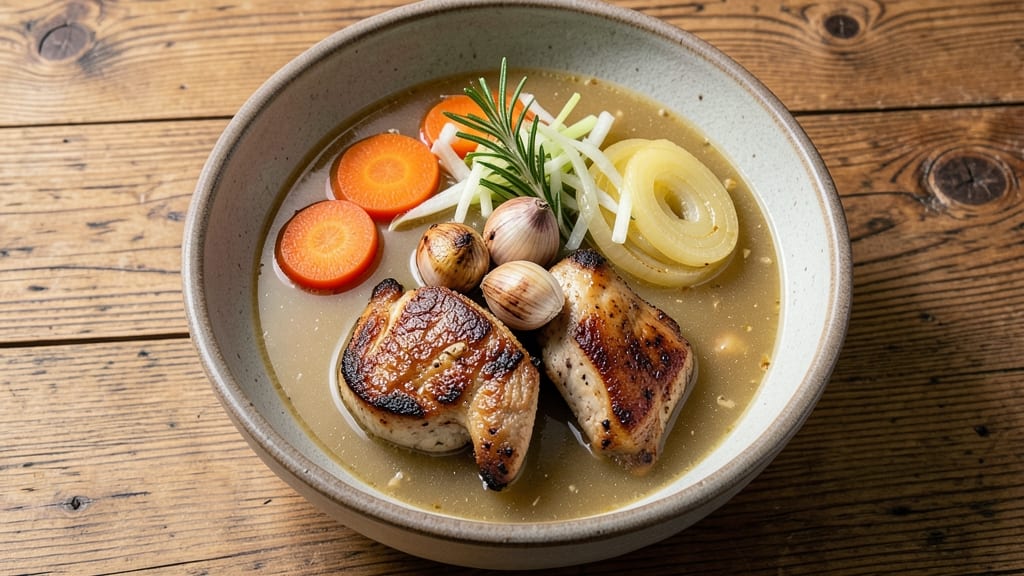
This bone broth soup recipe paleo delivers restaurant-quality umami depth using only whole-food ingredients that honor ancestral eating principles. The secret lies in slow-simmered broth infused with aromatic vegetables and paleo-friendly protein, creating a nourishing soup that's naturally dairy-free and gluten-free while packing serious flavor.
The foundation begins with a rich bone broth base—simmered for hours to extract collagen and minerals from bones—then layered with paleo-approved vegetables like carrots, celery, and onions. I add chicken thighs for hearty protein and a touch of coconut aminos for that signature umami punch without any processed ingredients.
What you'll end up with is a velvety, aromatic soup where every spoonful delivers deep savory satisfaction. The slow cooking process transforms tough vegetables into tender, flavorful bites while preserving all the nourishing benefits of bone broth.
Perfect for meal prep or weeknight dinners, this recipe serves four and comes together in under an hour of active time (plus the essential simmering). The best part? It tastes even better the next day as flavors meld further.
Ingredients for bone broth soup recipe paleo
Paleo-friendly ingredients that build rich umami through slow simmering and aromatic vegetables.
| Ingredient | Amount | Notes |
|---|---|---|
| Chicken Thighs 🍗 | 1 ½ lb | Bone-in, skin-on preferred |
| Chicken Bone Broth 💧 | 4 cups | Homemade or high-quality store-bought |
| Yellow Onion 🧅 | 1 whole | Chopped into 1/2-inch pieces |
| Carrots 🥕 | 3 medium | Peeled and cut into 1-inch chunks |
| Celery Stalks 🌿 | 3 whole | Trimmed and cut into 1-inch pieces |
| Garlic Cloves 🧄 | 4 cloves | Minced for depth of flavor |
| Coconut Aminos 🥄 | 2 tbsp | For umami without soy |
| Fresh Ginger 🌿 | 1 tbsp | Grated, not powdered |
| Sea Salt 🧂 | 1 tsp | Diamond Crystal preferred |
| Black Peppercorns 🌶️ | ½ tsp | Freshly cracked |
| Fresh Thyme Leaves 🌿 | ¼ cup | Or 1 tbsp dried thyme |
| Fresh Parsley Leaves 🌿 | ¼ cup | Chopped for garnish |
| Olive Oil 🫒 | 1 tbsp | Extra-virgin for sautéing |
| Green Onions 🧅 | 2 whole | Sliced for garnish |
The bone broth is non-negotiable—homemade is ideal, but high-quality Kettle & Fire or Epic brands work in a pinch. Chicken thighs add depth (skin-on for extra flavor), and bone-in cuts maximize collagen extraction. For vegetables, organic carrots and celery from the produce section at Whole Foods or your local farmers market ensure vibrant color and sweetness. Fresh ginger and thyme are worth the splurge—Penzeys carries excellent quality, or check the bulk bins at Trader Joe's for cost-effective options.
No coconut aminos? Fish sauce or tamari provides umami, though coconut aminos align perfectly with paleo principles. Swap fresh thyme for dried at one-third the amount, and pre-shredded carrots (the good stuff, not the pre-shredded kind) save time. For extra richness, add 1 tbsp of collagen peptides—it dissolves completely and boosts protein content. The green onions can be omitted if you're avoiding nightshades, though they add freshness.
Broth reheats beautifully—simmer on low heat for 5-10 minutes to maintain texture. Store in glass jars for up to 5 days in the fridge or 3 months frozen. Double the batch and freeze portions for quick meals. The flavors deepen overnight, so leftovers taste even better. Garnish with fresh herbs just before serving to preserve their brightness.
Why You'll Love This Recipe
- No-Chop Trick: I swear by the "mirepoix hack" here—just roughly chop the onion, carrots, and celery into big chunks (no knife skills required). Toss them straight into the broth with the thighs, and let the slow simmer break everything down into pure, velvety flavor. Honestly, my lazy days thank me every time.
- Deep Umami Magic: That bone broth? It’s the star. Rich, collagen-packed, and simmered with the chicken thighs until the meat falls off—no waste, just flavor. The carrots and celery soften into sweet, earthy threads, while the onion adds a subtle depth that makes this taste like a hug in a bowl. (Yes, even on a Tuesday night.)
- Meal Prep MVP: This soup begs to be made in big batches. The broth thickens beautifully when reheated, and the chicken thighs stay tender for days. I freeze portions in jars—just thaw, warm, and serve. Perfect for busy mornings or when you need a comforting lunch without the fuss.
- Budget-Buster Combo: Chicken thighs and bones are cheaper than you think, and they stretch into so much soup. No fancy ingredients, just real food that fills you up. Between us, this is the kind of recipe that makes grocery bills feel less scary—and leftovers? They’re basically free meals.
Step-by-step instructions for paleo bone broth soup
This method builds rich umami flavor while maintaining paleo principles—no dairy, no grains, just pure savory depth.
Sear the Chicken Thighs for Maximum Flavor
Heat the 1 tablespoon olive oil in a large Dutch oven over medium-high heat until shimmering. Pat the 1.5 lb chicken thighs completely dry with paper towels—this ensures a proper sear. Working in batches if needed, add the thighs skin-side down and let them cook undisturbed for 6-8 minutes until the skin is deep golden brown and crispy.
Flip the thighs and continue searing for another 5-6 minutes until the internal temperature reaches 165°F. The skin should release easily from the pan when ready. Remove the thighs and set aside on a plate, reserving any rendered fat in the pot. This searing step forms the flavor foundation—those browned bits packed with collagen will dissolve into the broth, creating depth of flavor.
Sauté the Aromatic Vegetables
In the same Dutch oven (no need to wipe it clean), add the 1 whole yellow onion chopped into ½-inch pieces, 3 medium carrots cut into 1-inch chunks, and 3 whole celery stalks trimmed and cut into 1-inch pieces. Cook over medium heat for 8-10 minutes, stirring occasionally, until the vegetables soften and begin to caramelize slightly at the edges.
Add the 4 cloves garlic cloves minced and the 1 tablespoon fresh ginger grated, cooking for another 1-2 minutes until fragrant. The vegetables should release their natural juices and begin to stick lightly to the bottom of the pot. This process develops the sweet, caramelized notes that balance the savory broth. If the vegetables appear too dry, add 1-2 tablespoons of the reserved chicken fat to help them cook evenly.
Build the Broth Base
Pour in the 4 cups chicken bone broth and scrape up any browned bits from the bottom of the pot with a wooden spoon. This deglazing step captures all the concentrated flavor that would otherwise stick to the pan. Add the 2 tablespoons coconut aminos, 1 teaspoon sea salt, and ½ teaspoon black peppercorns freshly cracked. Stir well to combine, then return the seared chicken thighs to the pot.
Bring the mixture to a gentle simmer over medium-low heat. The broth should bubble softly—if it boils vigorously, reduce the heat to maintain a steady simmer. Partially cover the pot and let it cook for 45-60 minutes, allowing the chicken to break down and infuse the broth with its gelatinous richness. The broth should reduce slightly, intensifying its flavor as it cooks.
Finish with Herbs and Seasoning
After the chicken has cooked, remove the thighs from the broth using tongs and let them cool slightly. Once cool enough to handle, shred the meat into bite-sized pieces using two forks, discarding any bones. Return the shredded chicken to the pot and stir in the ¼ cup fresh thyme leaves and ¼ cup fresh parsley leaves chopped. Taste the broth and adjust the seasoning if needed—add more coconut aminos for umami or sea salt for saltiness.
Simmer the soup for another 10-15 minutes to allow the herbs to infuse their bright, aromatic qualities into the broth. The soup should be rich and flavorful, with a deep umami taste that coats the palate. If the soup is too thick, add ¼ cup water to reach your desired consistency. The final texture should be velvety yet light, with the vegetables holding their shape but tender enough to eat with a spoon.
Serve with Fresh Garnishes
Ladle the soup into bowls and garnish each serving with 2 whole green onions sliced. The fresh green onions add a bright, crisp contrast to the rich, savory broth. Serve immediately while the soup is hot, allowing the steam to carry the aromatic herbs throughout the room. Each spoonful should deliver a perfect balance of umami, sweetness from the caramelized vegetables, and fresh herbal notes.
This paleo bone broth soup delivers restaurant-quality depth without any dairy or grains. The collagen-rich broth supports gut health, while the balanced flavors make it a satisfying meal that feels indulgent yet aligns with paleo principles. The key is patience—allowing the broth to simmer and the flavors to meld creates a dish that's far more complex than its simple ingredients suggest.
Pro Tips For Making Bone Broth Soup Recipe Paleo
- CHAR THE ONIONS FIRST: Get that pot hot and sear the onions until they’re deep golden—almost caramelized—before adding anything else. I used to rush this step, and the soup always tasted flat. Three minutes of focused heat makes a real difference.
- CUT CELERY LARGE: Skip the tiny dice—chop celery into 1-inch chunks so it stays intact while simmering. Over-chopping turns it to mush, and you’ll end up straining out half of it later. (Yes, even if it looks rustic.)
- SIMMER LOW AND COVERED: Once the broth comes to a boil, turn the heat down to just below a simmer and cover the pot. I learned this the hard way—boiling too hard evaporates flavor and turns the broth cloudy. A gentle roll is all you need.
- USE LEFTOVER BROTH: If your bone broth is already made, use it cold—no need to reheat. Adding cold broth to the pot keeps the temperature stable and prevents the veggies from cooking too fast. (Your future self will thank you.)
Flavor customization for these flavors
Spicy Ginger Kick
For a bold, warming twist, add 1 teaspoon of fresh turmeric and ½ teaspoon of cayenne pepper when sautéing the aromatics. The turmeric adds earthy depth while the cayenne introduces a subtle heat that lingers beautifully in the broth.
I find this works especially well when paired with extra ginger (1.5 tbsp) for a triple-ginger punch that feels both invigorating and comforting. 🌶️
Smoky Depth
Transform your soup into a smoky masterpiece by adding 1 teaspoon of smoked paprika during the simmering phase. For an even deeper flavor, swap the coconut aminos for 1 tablespoon of liquid smoke (like La Choy)—just be mindful not to overdo it, as liquid smoke can be potent.
I recommend starting with ½ tablespoon and adjusting to taste. This works particularly well with bone-in chicken thighs for a rustic, campfire-inspired bowl. 🔥
Bright Citrus Lift
Brighten the soup with zest from 1 lemon and 2 tablespoons of fresh lemon juice at the end of cooking. The citrus cuts through the richness of the broth while adding a refreshing contrast.
For a tropical twist, add ½ cup of diced pineapple during the final 10 minutes of simmering—it adds natural sweetness that balances the savory notes. Garnish with extra lemon zest for a pop of color and aroma. 🍋
Herb Variations
Swap out the thyme and parsley for 1 tablespoon of fresh rosemary and 2 sprigs of fresh sage for a more robust herbal profile. These herbs pair beautifully with the umami-rich broth and add a piney, earthy complexity.
For a Mediterranean-inspired version, add 1 teaspoon of dried oregano and ½ teaspoon of red pepper flakes during the simmer. The oregano adds a distinct, slightly bitter note that elevates the dish. 🌿
Extra Richness
For a creamier texture without dairy, stir in 1 tablespoon of coconut cream (not coconut milk) during the final 5 minutes of simmering. Alternatively, blend ½ cup of the soup until smooth, then stir it back in for a velvety finish.
I also love adding 1 tablespoon of collagen peptides for an extra protein boost—it dissolves completely and adds a subtle, savory richness. 🥥
Protein Swaps
Need to change up the protein? Swap the chicken thighs for 1 lb of pork shoulder (cut into chunks) for a deeper, meatier flavor. For seafood lovers, use 1 lb of shrimp (added during the final 5 minutes of cooking) or ½ lb of mussels (steamed open in the broth).
If you prefer beef, 1 lb of grass-fed chuck roast works beautifully—just increase the simmering time to 90 minutes for maximum tenderness. 🍤
Nutrition facts
Frequently asked questions
Can I use store-bought bone broth instead of homemade?
Yes, but choose a high-quality brand like Kettle & Fire or Epic for the best flavor. Look for options with no added salt or preservatives, and make sure it contains real bone for maximum collagen. If your broth tastes bland, simmer it uncovered for 10-15 minutes to reduce and intensify the flavor before using in your soup.
How do I make this soup dairy-free and gluten-free?
This recipe is already fully compliant! The broth is naturally dairy-free, and we use coconut aminos (instead of soy sauce) for umami. Double-check your broth label for hidden additives—some commercial brands contain gluten. For extra safety, choose a certified gluten-free broth. All other ingredients are inherently paleo-friendly.
Can I prep this soup ahead of time?
The soup actually tastes better the next day as flavors meld. Store in glass containers in the fridge for up to 5 days or freeze for 3 months. Reheat gently on the stove over medium-low heat for 5-10 minutes, stirring occasionally. Avoid microwaving to preserve texture. The broth will reduce slightly when reheated, so add ¼ cup water if needed.
What if I don't have coconut aminos?
Try these paleo-friendly umami boosters: fish sauce (1 tbsp), tamari (1 tbsp), or extra chicken broth (¼ cup) with a pinch of seaweed flakes. For a meaty depth, add 1 tbsp of beef or mushroom powder (like Better Than Bouillon). The key is balancing saltiness with savory complexity—adjust to taste.
Why does my soup taste too salty?
Commercial bone broth often contains high sodium. If your soup tastes too salty, dilute it with ½ cup water or add 1 cup chopped fresh vegetables (like zucchini or mushrooms) to absorb excess salt. For future batches, use low-sodium broth or homemade broth with controlled salt levels. Taste as you go—add more broth or herbs to balance.