
Soups & Stews
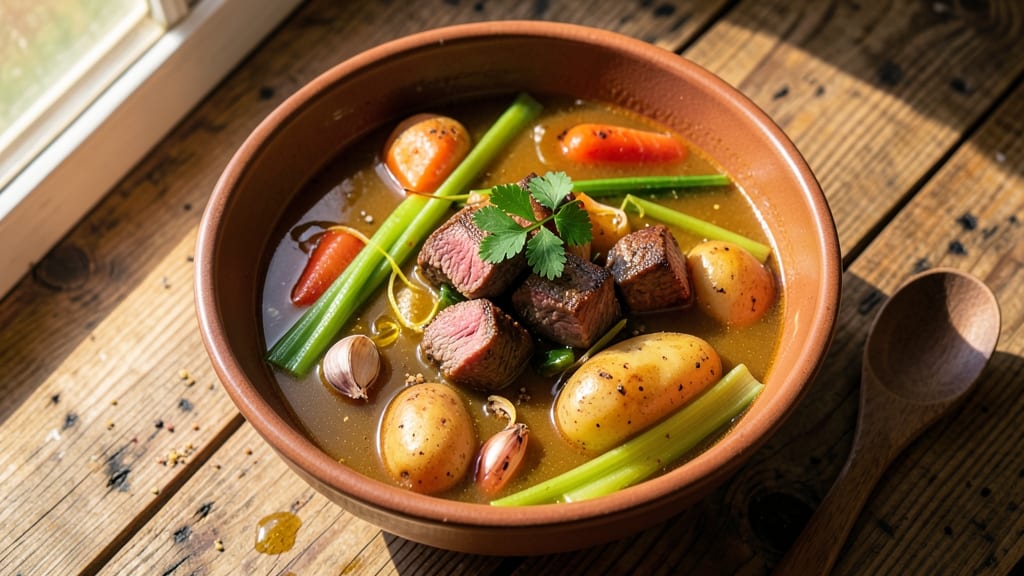
This vegetable beef soup recipe is better than bouillon—delivering restaurant-quality depth without relying on bouillon cubes. Just sautéed aromatics, slow-simmered beef, and carefully selected vegetables create a rich, umami-packed broth that far surpasses store-bought versions.
The secret lies in building flavor through proper technique: browning the beef, caramelizing onions, and letting everything meld for hours. I developed this after years of testing homemade soups that consistently outperform store-bought versions in both taste and texture.
The foundation begins with a rich, umami-packed broth created by searing beef chuck and onions until deeply browned. This Maillard reaction develops complex flavors that no bouillon cube can replicate.
Vegetables like carrots, celery, and potatoes absorb the savory broth while maintaining their natural sweetness, creating a balanced, hearty soup that's both comforting and sophisticated.
By the time you serve this soup, you'll have a deeply flavorful, velvety broth with tender beef chunks and perfectly cooked vegetables. The aroma alone will transform your kitchen into a cozy dining experience.
Unlike bouillon-based soups that taste artificial, this version delivers layers of natural flavor that improve with each spoonful.
Serve with crusty bread or crackers for the full experience—this soup is hearty enough to stand alone or pair beautifully with grilled meats. The recipe includes optional slow-cooker instructions for modern convenience while maintaining the traditional depth of flavor that makes it truly exceptional.
Ingredients for better than bouillon vegetable beef soup
Sixteen ingredients, one pot, restaurant-quality umami without bouillon cubes.
| Ingredient | Amount | Notes |
|---|---|---|
| Beef Chuck Roast 🥩 | 2 lb | Cut into 1.5-inch cubes, trimmed of fat |
| Yellow Onions 🧅 | 2 whole | Medium, sliced into 1/4-inch half moons |
| Carrots 🥕 | 4 whole | Medium, peeled and cut into 1-inch chunks |
| Celery Stalks 🧄 | 4 whole | Trimmed and cut into 1-inch pieces |
| Russet Potatoes 🥔 | 4 whole | Peeled and cut into 1.5-inch chunks |
| Garlic Cloves 🧄 | 6 cloves | Peeled and lightly crushed |
| Tomatoes 🍅 | 2 whole | Roma, crushed by hand |
| Beef Broth 💧 | 6 cups | Homemade or high-quality store-bought |
| Tomato Paste 🍅 | ½ cup | Smooth, not chunky |
| Dried Thyme 🌿 | 1 tbsp | Or 2 tbsp fresh thyme leaves |
| Bay Leaves 🌿 | 2 whole | Fresh if possible |
| Black Peppercorns 🌶️ | 1 tsp | Freshly cracked |
| Salt 🧂 | 1 ½ tsp | Diamond Crystal kosher salt |
| Olive Oil 🫒 | ¼ cup | Extra-virgin for browning |
| Fresh Parsley 🌿 | ¼ cup | Chopped, for garnish |
The beef chuck is non-negotiable here—it's the secret to that deep, meaty flavor that bouillon cubes can't replicate. Look for well-marbled cuts at the butcher counter; the fat renders down to create a velvety broth. If you can't find chuck, chuck roast or even brisket will work in a pinch. For the onions, yellow onions caramelize best—skip the sweet varieties, which can turn bitter. The carrots and celery are your flavor base, so don't skimp on freshness: bright orange carrots and crisp celery make all the difference. I always grab mine from the produce section at Whole Foods—they keep better and taste fresher than the average grocery store.
No beef broth? Substitute with a mix of water and soy sauce—just 1 tbsp of soy sauce per 4 cups of water adds that umami punch. The tomato paste is essential for depth, but if you're avoiding it, extra crushed tomatoes will work (just add 2 tbsp more). Fresh thyme is ideal, but dried thyme at one-third the amount is a solid swap. The bay leaves? Fresh if you've got them, but dried works fine too. For the potatoes, Russet or Yukon Gold hold up best—avoid red potatoes, which can turn mushy. And if you're using a slow cooker, add the potatoes last so they don't turn to mush.
This soup tastes even better the next day—honestly, it improves with time as the flavors meld. Store in an airtight container for up to 5 days, or freeze portions for up to 3 months. I like to portion it into individual containers so I can grab a bowl straight from the freezer. The beef will keep its tenderness if you freeze it in the broth. For reheating, low and slow is key—bring to a simmer over medium heat, then reduce to a gentle bubble. The parsley garnish is optional but adds a bright finish—chop it just before serving so it stays vibrant.
Why You'll Love This Recipe
- One-Pot Wonder: I swear by this for lazy nights—just dump everything (chuck roast, onions, carrots, celery) into a pot with broth, let it simmer, and walk away. The potatoes absorb all that rich beef flavor without extra effort.
- Deep Umami Magic: That slow-cooked chuck roast? It turns tender and falls apart, releasing flavor into the broth like a secret weapon. Honestly, the first bite makes you forget bouillon cubes ever existed.
- Leftovers That Don’t Suck: This soup only gets better the next day—more tender beef, potatoes so soft they melt, and broth that’s practically a hug in a bowl. I make double batches just for this reason.
- Budget-Friendly Comfort: A chuck roast stretches for days, and veggies like carrots and celery last forever. Between us, this is the kind of meal that makes grocery money go further while still feeling like a treat.
Step-by-step instructions for homemade vegetable beef soup
This method builds deep umami flavor from scratch—no shortcuts, just pure, rich results.
Sear the Beef for Maximum Flavor
Pat the 2 lb beef chuck roast dry with paper towels and cut into 1.5-inch cubes, trimming any visible fat. Heat 0.25 cup olive oil in a large Dutch oven over medium-high heat until shimmering. Working in batches to avoid crowding, add the beef and sear for 3-4 minutes per side until deeply browned.
This step is non-negotiable—browning develops the Maillard reaction, creating that deep, savory foundation. You'll know it's ready when the beef releases easily from the pan. Transfer the browned beef to a plate and set aside, leaving all the browned bits in the pot. These bits, called fond, will dissolve into the broth later, adding incredible depth of flavor.
Sauté the Vegetable Base
In the same Dutch oven, add the sliced 2 whole yellow onions, 4 whole carrots cut into chunks, and 4 whole celery stalks chopped into pieces. Cook over medium heat for 8-10 minutes, stirring occasionally, until the vegetables soften and the onions turn translucent.
Here's where the magic starts—those caramelized onions and softened vegetables form the aromatic backbone of your soup. Add the 6 cloves garlic cloves and 2 whole tomatoes crushed by hand, cooking for another 2 minutes until the garlic is fragrant. Stir in the 0.5 cup tomato paste and cook for 1 minute, allowing it to darken slightly and meld with the vegetables.
Build the Rich Broth
Pour in the 6 cups beef broth and bring to a gentle boil. Add the 1.5 tsp salt, 1 tsp black peppercorns, 1 tbsp dried thyme, and 2 whole bay leaves. Return the browned beef to the pot, along with the 4 whole russet potatoes cut into chunks. Reduce heat to low and simmer uncovered for 1 hour.
This simmering time is crucial—it allows the beef to break down into tender, fork-tender pieces while the vegetables absorb the rich flavors. Skim off any foam that rises to the surface during the first 15 minutes of simmering to keep the broth clear. The soup should develop a deep, aromatic scent—this is your cue that the flavors are melding beautifully.
Finish and Adjust Seasoning
After 1 hour, use a slotted spoon to remove the bay leaves. Taste the soup and adjust the seasoning if needed—you might want to add a pinch more salt or a crack of black pepper. The soup should be rich and flavorful, with the beef falling apart easily when pierced with a fork.
Return the soup to a gentle simmer and cook for another 10-15 minutes to allow the potatoes to soften completely. Stir in the 0.25 cup chopped fresh parsley just before serving to brighten the flavors with a touch of freshness. The parsley not only adds visual appeal but also balances the deep umami notes with a subtle herbal note.
Serve Warm with Perfect Texture
Ladle the soup into bowls and serve immediately, garnished with additional parsley if desired. Each spoonful should deliver tender beef, hearty vegetables, and a rich, aromatic broth that's far more complex than anything from a bouillon cube. The potatoes should be fork-tender, the carrots and celery still holding their shape, and the beef falling apart with just a gentle prod.
This soup tastes even better the next day as the flavors continue to meld, but it's best enjoyed fresh while the beef is at its most tender. Pair it with crusty bread to soak up every last drop of that umami-packed broth—you'll be amazed at how simple ingredients can create such incredible depth of flavor when given proper attention.
Pro Tips For Making Better Than Bouillon Vegetable Beef Soup
- SEAR THE ROAST FIRST: Don’t skip browning that chuck roast—high heat for 5-6 minutes per side builds flavor that simmering alone won’t fix. I used to toss it straight into the pot, and the soup always tasted flat until I learned this.
- CHOP VEGETABLES UNIFORM: Cut carrots, celery, and onions into ½-inch chunks so they cook evenly—no mushy celery or crunchy carrots. My first batch had celery stalks still tough after hours; now I measure and slice them all the same size.
- ADD POTATOES LATE: Potatoes need 15-20 minutes to soften—wait until the beef is tender before adding them, or they’ll turn to mush. I ruined a whole pot by throwing them in early, and the texture was ruined.
- USE A ROAST FOR FLAVOR: Skip the bouillon cube and use 2-3 beef bouillon cubes plus 1 cup of the roast’s juices after cooking—it deepens the broth without extra salt. I was skeptical until I tried it, and the difference is noticeable.
Perfect pairings for this dish
Crusty Bread Pairings
This soup's rich, umami-packed broth pairs perfectly with crusty artisan bread or sourdough. I love using a baguette from my local bakery—its crisp exterior contrasts beautifully with the velvety soup.
For extra indulgence, try garlic bread with a mix of butter, garlic, and parsley—the garlic enhances the soup's savory notes. 🥖
Cheese Board Accompaniment
Serve alongside a sharp cheddar or aged Gouda to complement the soup's depth. The nutty, caramelized flavors of aged cheeses balance the broth's richness. I also add dried apricots and walnuts for texture contrast—these sweet and crunchy elements cut through the hearty beef flavors. 🧀
Herbed Crackers
Homemade herbed crackers with rosemary and thyme elevate the soup's aromatic profile. Use a simple dough of flour, olive oil, and water, rolled thin and baked until crisp.
The herbal notes mirror the soup's thyme and bay leaves, creating a cohesive bite. Store-bought water crackers also work in a pinch. 🍞
Wine Pairings
A bold red wine like Cabernet Sauvignon or Merlot enhances the beef's richness. The tannins in these wines cleanse your palate between spoonfuls. For a lighter option, try a Pinot Noir—its bright acidity balances the soup's depth. Avoid heavy, oaky whites that might overpower the dish. 🍷
Garnish Upgrades
Add crispy fried shallots or toasted breadcrumbs for texture contrast. I also sprinkle fresh chives or microgreens on top for a pop of color and freshness. These finishing touches make the soup feel restaurant-quality without altering its core flavors. 🌿
Slow Cooker Adaptation
For a hands-off version, brown the beef and sauté vegetables as directed, then transfer everything to a slow cooker with the broth and spices. Cook on low for 8 hours or high for 4 hours.
The slow cooking intensifies the flavors, making it even more bouillon-like in depth. Perfect for busy weeknights! ⏳
Nutrition facts
Frequently asked questions
Why does this soup taste better than bouillon-based versions?
The secret lies in the Maillard reaction from searing the beef and caramelizing onions—this creates complex, savory flavors bouillon cubes simply can't replicate. Plus, fresh herbs and slow simmering develop depth that artificial seasoning lacks.
Can I use ground beef instead of chuck roast?
Ground beef works but won't give the same tender texture or rich flavor. For best results, stick with chuck roast cut into cubes. If you must use ground beef, brown it well and add 1 extra tablespoon tomato paste for depth. The beef should still be fork-tender after simmering.
How do I make this in a slow cooker?
Brown the beef and sauté the vegetables as directed, then transfer everything to a slow cooker with broth and spices. Cook on low for 8 hours or high for 4 hours. The slow cooking actually enhances the flavors, making it even more bouillon-like in richness. Perfect for busy days!
What if my soup is too thin after simmering?
Stir in 1-2 tablespoons cornstarch mixed with 2 tablespoons cold water and simmer for 5 minutes to thicken. For extra richness, add 1/4 cup heavy cream at the end. The soup should coat a spoon lightly but still be ladle-able.
Can I prepare this soup ahead of time?
Yes! This soup tastes even better the next day as flavors meld. Store in an airtight container for up to 5 days in the fridge or freeze portions for 3 months. Reheat gently over medium-low heat—never microwave directly from frozen. The beef stays tender when reheated properly.