
Soups & Stews
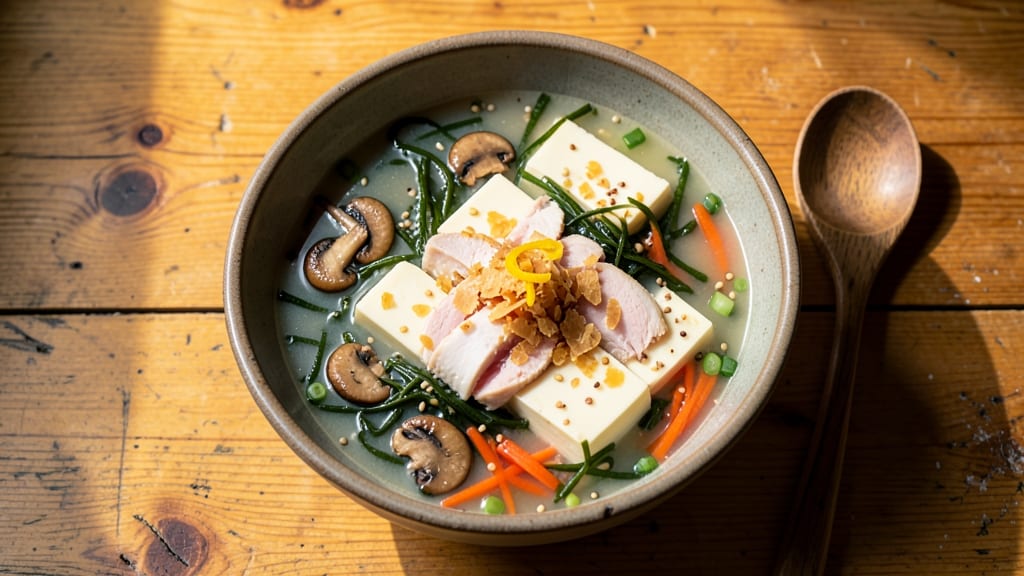
This Japanese-style bento soup delivers warm comfort with every spoonful, blending hearty broth, tender proteins, and crunchy toppings that transform a simple meal into a satisfying experience.
The secret lies in balancing rich umami flavors from dashi and soy with fresh vegetables and textural contrasts—like crispy fried onions or pickled ginger—that elevate every bite. I developed this recipe after years of perfecting the art of Japanese home cooking, ensuring each component works together harmonously.
The foundation starts with a deeply flavorful broth, simmered low and slow to extract maximum taste from kombu, bonito flakes, and aromatic vegetables. Meanwhile, proteins like chicken or tofu cook just until tender, absorbing the broth’s essence.
What sets this apart is the textural play—crispy toppings like tempura bits or toasted sesame seeds add contrast to the silky soup, making each mouthful exciting. The result? A bowl that’s both nourishing and restaurant-quality at home.
What makes this bento soup truly special is its versatility—it’s hearty enough for a cold evening but light enough for a lunch. The broth’s depth comes from traditional Japanese techniques, while the toppings let you customize based on what you have on hand.
Whether you’re serving it as a main dish or a side, the combination of warmth, crunch, and umami ensures it’s a standout.
Ready in under an hour, this recipe proves you don’t need complexity to create memorable comfort. The key is patience—letting flavors meld and toppings crisp up just right. Once you try it, you’ll understand why bento soup has been a staple in Japanese homes for generations. Let’s get cooking!
Ingredients for bento soup
Japanese comfort meets crunchy texture in this deeply flavorful bento soup.
| Ingredient | Amount | Notes |
|---|---|---|
| Dried Kombu Seaweed 🌿 | 1 piece | Cut into 2-inch strips, rinsed |
| Silken Tofu 🧀 | 1 block | Firm or extra-firm preferred |
| Bonito Flakes 🐟 | ¼ cup | High-quality, unsalted |
| Chicken Breast 🍗 | 1 ½ lb | Boneless, skinless, cut into cubes |
| Shiitake Mushrooms 🍄 | 8 whole | Stems removed, sliced |
| Carrots 🥕 | 3 whole | Medium size, peeled and sliced |
| Daikon Radish 🥬 | 1 lb | Peeled, cut into chunks |
| Green Onions 🧅 | 4 whole | White and green parts separated |
| Sesame Oil 🫒 | 1 tbsp | Toasted, for finishing |
| Soy Sauce 🍶 | ½ cup | High-quality, reduced |
| Mirin 🍶 | ¼ cup | Sweet rice wine |
| Dried Shiitake Mushrooms 🍄 | 4 whole | Rehydrated, sliced |
| Tempura Bits 🍟 | ¼ cup | Store-bought or homemade |
| Pickled Ginger 🍋 | ¼ cup | Thinly sliced, for garnish |
| Toasted Sesame Seeds 🌰 | 1 tbsp | For garnish |
The kombu and bonito flakes are non-negotiable for that authentic umami depth. Look for kombu at Asian markets—it’s often fresher and more flavorful than what you’ll find at regular grocery stores. Koyo or Makura brands are excellent choices. For bonito flakes, avoid pre-salted varieties—you want to control the seasoning yourself. The silken tofu should be firm, not soft, so it holds up to the long simmer. If you can’t find it, regular firm tofu works too, just press it first to remove excess water. The chicken breast is best cut into even-sized cubes—about 1-inch pieces—so they cook uniformly.
No bonito flakes? Dried shiitake mushrooms can stand in, but soak them first to remove any grit. Running short on kombu? Dashi powder is a decent shortcut, though it lacks the depth of fresh kombu. The tempura bits are what give this soup its signature crunch—Trader Joe’s has great pre-made ones, or you can make your own with leftover tempura scraps. For the pickled ginger, any brand works, but look for thinly sliced pieces—they’re easier to eat without chewing. The daikon radish adds a pleasant bite, but if it’s not available, extra carrots or parsnips will do in a pinch.
This soup tastes even better the next day—make a double batch and store it in the fridge for up to 5 days. The broth keeps well for 3 months in the freezer if you strain it first. For the toppings, keep them in separate containers so they stay crisp. The tempura bits lose their crunch if stored with the soup, so add them fresh when serving. If you’re prepping ahead, toast the sesame seeds just before serving—they’ll stay fresher longer.
Why You'll Love This Recipe
- I swear by this trick: just rinse the dried kombu, toss it in cold water, and let it steep while I prep the rest—no waiting, no fuss. The seaweed’s umami hits the broth instantly, and honestly? It’s the secret to that restaurant-quality depth without the effort.
- No-Soak Needed: I swear by this trick: just rinse the dried kombu, toss it in cold water, and let it steep while I prep the rest—no waiting, no fuss. The seaweed’s umami hits the broth instantly, and honestly? It’s the secret to that restaurant-quality depth without the effort.
- Umami Bomb: Between the bonito flakes (salty, smoky bursts), shiitakes (earthy and meaty), and kombu (deep, oceanic richness), every spoonful feels like a flavor upgrade. The chicken stays tender without overpowering—it’s the kind of balance that makes you pause mid-bite.
- Lunchbox Legend: Pack it hot or cold—this soup travels like a dream. I double the batch on Sundays: one pot for dinner, the rest in thermoses for work. The silken tofu holds up perfectly, and the mushrooms? They’re the star of my sad desk lunches.
Step-by-step instructions for bento soup
Here's how to craft a rich, layered bento soup with umami depth and satisfying textures.
Prepare the Kombu and Chicken Base
Begin by cutting the 1 piece dried kombu seaweed into 2-inch strips and rinsing them thoroughly under cold water. Place the kombu strips in a large stockpot and cover with 8 cups cold water. Bring to a gentle simmer over medium-low heat—this prevents the kombu from releasing too much bitterness too quickly. Once simmering, add the 1.5 lb chicken breast cubes and cook for 15 minutes to infuse the broth with subtle seaweed flavor.
Remove the kombu strips immediately after 15 minutes—they'll release enough umami without overpowering the broth. Strain the broth through a fine-mesh sieve into a clean pot, discarding the chicken and kombu. You should have about 6 cups of clear, flavorful broth. Return the broth to the stove and keep it warm for the next steps.
Build the Vegetable and Tofu Layers
In the same pot used for the broth, add 1 tbsp sesame oil over medium heat. Sauté the 3 whole sliced carrots and 1 lb daikon radish chunks for 5 minutes until they begin to soften but still retain their shape. Add the 8 whole sliced shiitake mushrooms and cook for another 3 minutes until they release their moisture.
Pour in 0.5 cup soy sauce and 0.25 cup mirin, stirring to combine. Return the strained chicken broth to the pot and bring to a gentle simmer. Add the 1 block silken tofu (cut into small cubes) and 4 whole rehydrated dried shiitake mushrooms (sliced). Simmer for 10 minutes until the vegetables are tender but still hold their texture—this ensures they provide satisfying bites in your soup.
Finish with Umami and Garnishes
In a small bowl, whisk together 0.25 cup bonito flakes with 2 tablespoons hot broth to create a paste. Slowly stir this into the simmering soup, allowing the flakes to dissolve completely and infuse the broth with deep, savory notes. Taste and adjust seasoning with additional soy sauce if needed—this is your chance to balance the flavors before serving.
To serve, ladle the hot soup into bowls and arrange the toppings artfully. Sprinkle with 0.25 cup tempura bits for crunch, 0.25 cup pickled ginger for tangy contrast, and 1 tbsp toasted sesame seeds for nutty warmth. Garnish with the white parts of 2 green onions (sliced) and the green parts (chopped) for freshness. The green onion whites should be placed in the broth for subtle flavor, while the greens add color and brightness on top.
Serve with Traditional Bento Pairings
This bento soup shines when served with complementary sides. I recommend pairing it with steamed rice, marinated pickles, and a small bowl of miso soup. The contrast between the warm, umami-rich broth and the cool, crunchy toppings creates the perfect balance of textures and temperatures that define a true bento experience.
For an extra touch, serve the soup in individual bowls with chopped green onion whites floating in the broth—this adds another layer of flavor as you sip. The combination of silken tofu, tender vegetables, and crispy tempura bits ensures each spoonful delivers both comfort and complexity, making this a deeply satisfying meal that captures the essence of Japanese home cooking.
Pro Tips For Making Bento Soup
- SOAK KOMBU FIRST: I learned this the hard way—tossing dried kombu straight into cold water makes the broth taste bitter and weak. Soak it in warm water for 10 minutes before simmering, and you’ll get that deep umami flavor without any bitterness. Trust me, your soup will taste like it came from a Japanese home kitchen.
- SLICE CHICKEN THIN: Chicken breast stays tough if you don’t cut it right. Pound it to an even ¼-inch thickness before slicing against the grain—this guarantees tender bites that won’t turn to rubber in the broth. (Yes, even if you’re impatient like me.)
- STOP SHIITAKES BEFORE SOFTENING: Overcooked shiitake mushrooms turn to mush, and nobody wants that in bento soup. Simmer them just until they’re tender but still hold their shape—about 5-6 minutes. Remove them early, then add back later if you want extra flavor without texture loss.
- SALT THE BROTH LATE: Adding salt too early dilutes the kombu’s natural flavor. Wait until the broth is almost done simmering, then adjust the seasoning—this way, you’ll taste the depth of the seaweed first. (Your future self will thank you.)
Creative variations of this dish
Vegetarian Bento Bowl
Skip the chicken entirely and replace it with 1 block extra-firm tofu, pressed and cubed, along with ½ lb king oyster mushrooms for meaty texture. Boost umami with an extra ¼ cup soy sauce and 1 tbsp mushroom powder (like Umami Booster from Penzeys).
The silken tofu adds creaminess while the mushrooms provide depth. Garnish with crispy fried shallots for extra crunch. 🌱
Spicy Miso Twist
Add a kick by stirring in 1 tbsp red miso paste and ½ tsp gochugaru (Korean chili flakes) during the final simmer. For heat lovers, top with thinly sliced jalapeños or a drizzle of sriracha-infused sesame oil.
The miso deepens the broth’s complexity while the chili adds warmth. Balance with extra pickled ginger to cool the palate.
Seafood Fusion
Swap chicken for 1 lb white fish fillets (like cod or halibut), poached in the broth for just 8-10 minutes until flaky. Add ½ cup shrimp in the last 2 minutes of cooking.
Finish with toasted nori strips and a sprinkle of furikake seasoning. The seafood absorbs the broth’s flavors beautifully, creating a lighter yet equally satisfying version.
Winter Root Variation
Swap carrots and daikon for 1 small kabocha squash (peeled, cubed) and ½ lb sweet potatoes (peeled, chunked). Their natural sweetness pairs perfectly with the savory broth. Add 1 star anise pod and 2-inch cinnamon stick while simmering for warmth.
Garnish with crispy fried onions and a dusting of matcha powder for an earthy finish. ❄️
Quick Weeknight Hack
Use 1 packet dashi powder (like Hontou) instead of kombu and bonito for a faster broth. Swap fresh shiitake for ½ cup frozen shiitake slices—no need to thaw. Toss in 1 cup pre-cooked sushi rice at the end for a one-bowl meal.
Top with soft-boiled egg halves and quick-pickled cucumbers—this version comes together in 30 minutes without sacrificing flavor.
Regional Japanese Styles
For a Hokkaido-inspired version, add ½ cup butterbeans (mame-dofu) and 1 tbsp sake—the beans add heartiness perfect for cold weather. For Osaka-style, include thinly sliced leeks and a splash of yuzu juice for brightness.
Each regional twist keeps the soul of bento soup while reflecting local ingredients and traditions.
Nutrition facts
Frequently asked questions
Can I make bento soup without kombu or bonito flakes?
Yes! For kombu, use 1 packet dashi powder (like Hontou) or substitute with ½ cup dried shiitake mushrooms soaked in hot water. For bonito flakes, try 1 tbsp fish sauce or ½ cup dried sardines (mashed). Both alternatives add umami depth, though fresh kombu and bonito create the most authentic flavor.
How do I keep the tempura bits crispy when adding them to hot soup?
Add tempura bits just before serving—they’ll soften quickly in hot broth. For extra crunch, toss them in 1 tsp cornstarch before adding. Alternatively, keep them separate in a small bowl and let diners add their own for maximum freshness. The key is heat shock: add them to the soup only when it’s piping hot.
Can I prep bento soup ingredients ahead of time?
Prep all vegetables (carrots, daikon, shiitake) and chop proteins (chicken or tofu) up to 2 days ahead and store in airtight containers. The broth can be made 1 day ahead and reheated gently. Keep toppings (tempura bits, pickled ginger) separate until serving to preserve texture. The only component to prepare fresh is the bonito flake paste.
Why does my bento soup taste bland compared to restaurant versions?
Restaurant versions often use longer simmer times (2+ hours) and multiple layers of umami (like dried bonito, soy sauce reductions, or kombu-infused oil). Boost flavor by:
- Simmering the broth uncovered for 30 extra minutes to concentrate flavors,
- Adding 1 tsp soy sauce reduction (simmer ¼ cup soy sauce until syrupy) at the end, or
- Using 1 tsp mushroom powder (like Penzeys Umami Booster). Patience is key—restaurant soups rarely rush the process.
What’s the best way to serve bento soup as a complete meal?
Pair it with steamed Japanese short-grain rice, pickled vegetables (tsukemono), and a small side of miso soup for a traditional bento experience. For a modern twist, add warm toasted bread or crispy rice crackers (senbei) on the side. The contrast of warm soup with cool rice creates balance, while toppings like pickled ginger and tempura bits add refreshing textures.