
Soups & Stews
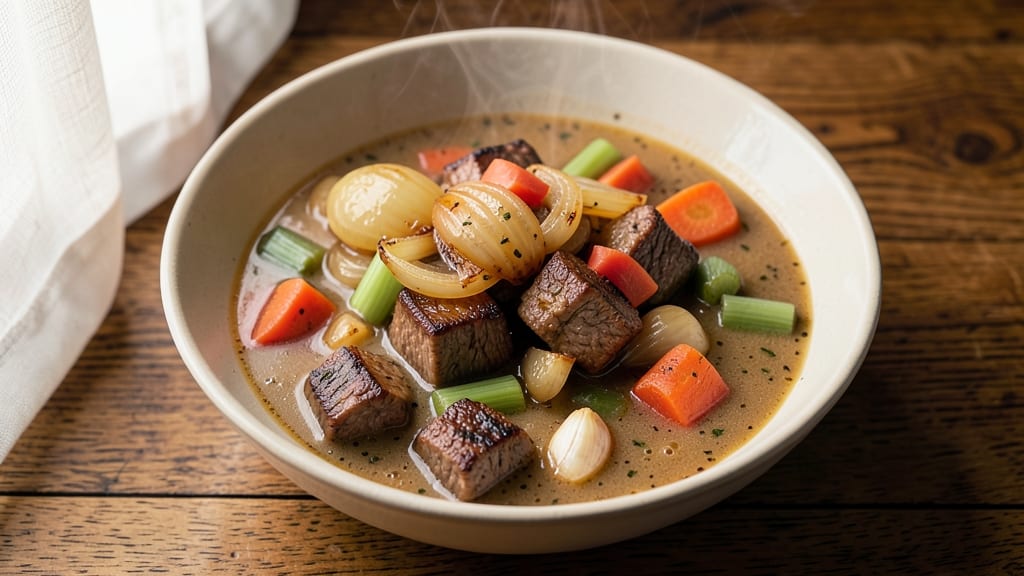
This beef stew and onion soup recipe transforms a simple pot into a deeply satisfying meal that marries hearty protein with velvety caramelized onions.
The secret lies in slow-cooked beef that melts in your mouth and a rich onion soup base that thickens beautifully—all while developing layers of umami flavor through proper searing and deglazing techniques. What starts as separate components comes together into one cohesive, comforting dish that feels both rustic and refined.
The process begins with browning beef chuck in batches to develop a deep, flavorful crust, then simmering it low and slow until tender. Meanwhile, onions caramelize until golden and sweet, forming the foundation for both the stew and soup.
The broth reduces to a perfect consistency, balancing the richness of the beef with the natural sweetness of the onions. This isn't just a stew or soup—it's a complete meal that builds flavor with every spoonful.
By the time you're done, you'll have fork-tender beef swimming in a deeply aromatic broth, topped with a creamy onion soup layer that's thickened just enough to coat a spoon.
The textures contrast beautifully—tender beef against silky onions—and the flavors are perfectly balanced, with the umami from the beef complementing the natural sweetness of the caramelized onions. Serve with crusty bread for dipping, and you've got a restaurant-quality dinner that's impossible to resist.
This recipe works equally well for weeknight dinners or special occasions, scaling easily to feed a crowd or serving two. The techniques are approachable yet professional, ensuring consistent results every time.
Whether you're a seasoned home cook or just starting out, this beef stew and onion soup combination delivers comfort, depth, and satisfaction in one pot.
Ingredients for beef stew onion soup
The heart of this recipe lies in rich beef, caramelized onions, and slow-simmered umami layers.
| Ingredient | Amount | Notes |
|---|---|---|
| Beef Chuck Roast 🥩 | 2 lb | Cut into 1.5-inch cubes |
| Yellow Onions 🧅 | 4 whole | Large, thinly sliced |
| Yellow Onions 🧅 | 2 whole | Medium, quartered for soup |
| Carrots 🥕 | 4 whole | Medium, peeled and sliced |
| Celery Stalks 🌿 | 4 whole | Trimmed and chopped |
| Garlic Cloves 🧄 | 6 cloves | Minced for depth |
| Beef Broth 💧 | 4 cups | Low-sodium preferred |
| Red Wine 🍷 | 1 cup | Bold dry variety |
| Tomato Paste 🍅 | 2 tbsp | High-quality, smooth |
| All-Purpose Flour 🌾 | 2 tbsp | For thickening soup |
| Heavy Cream 🧈 | ½ cup | Full-fat for richness |
| Thyme Sprigs 🌿 | 2 whole | Fresh, stems removed |
| Bay Leaves 🍃 | 2 whole | Dried for aroma |
| Salt 🧂 | 1 ½ tsp | Diamond Crystal preferred |
| Black Peppercorns 🌶️ | 1 tsp | Freshly cracked |
| Olive Oil 🫒 | 3 tbsp | Extra-virgin for searing |
The beef is non-negotiable—chuck roast with good marbling breaks down beautifully. Costco or your butcher's counter will have the best cuts, but any grocery store beef section works in a pinch. Look for bright red, well-marbled meat—that's where the flavor hides. I always buy extra because it freezes so well. For the onions, yellow onions are key—they caramelize more deeply than red or white. Trader Joe's sells them in bulk, which saves money and time. The carrots and celery are just flavor anchors, but don't skip them—they round out the broth beautifully.
No red wine? Beef broth with a splash of balsamic vinegar works just as well. Fresh thyme is ideal, but dried thyme at one-third the amount gets you close. The tomato paste can be skipped if you're avoiding it, but it adds that deep, concentrated sweetness that ties everything together. For the soup's creaminess, half-and-half works if you're avoiding full-fat cream. The flour is just for thickening—if you're gluten-free, use cornstarch instead. And if your onions start to burn while caramelizing, just lower the heat and be patient—it's worth the wait.
This dish tastes even better the next day as flavors meld. Store the stew and soup separately in the fridge for up to 5 days, or freeze for 3 months. I always make a double batch—one for dinner, one for leftovers. The beef stays tender for days, and the soup thickens up nicely when reheated. For serving, keep the bread in a separate basket—nothing ruins the experience like soggy bread. The caramelized onions? They'll keep in the fridge for 1 week covered, or freeze for 6 months in a sealed bag.
Why You'll Love This Recipe
- Ditch the Chopping: I’ll be real—this recipe only needs a few big cuts. One beef chuck roast, a couple of onions, a handful of carrots, and a few celery stalks. No fancy dice work, no small prep, just rough chop and toss. My kids even help now.
- Rich, Deep Comfort: That slow-cooked beef chuck breaks down into tender, melt-in-your-mouth shreds while the onions caramelize into sweet, savory layers. Honestly, the first bite feels like a hug in a bowl—especially when the broth thickens just enough to coat every spoonful.
- Weeknight to Potluck: Make it once, eat it three ways. Serve it steaming hot with crusty bread for a cozy weeknight, or let it cool and pack it for lunches. Even better? It’s the star at holiday gatherings when you need something hearty that feeds a crowd without fuss.
- Budget Meal Magic: A single chuck roast stretches across meals, and the veggies—onions, carrots, celery—are pantry staples that won’t break the bank. Between us, this is the recipe I turn to when I need to stretch groceries without sacrificing flavor. Leftovers? They taste even better the next day.
Step-by-step instructions for beef stew and onion soup
This method builds rich, caramelized flavors layer by layer—don't rush the process.
Sear the Beef Chuck Roast for Deep Flavor
Pat the 2 lb beef chuck roast dry with paper towels and cut it into 1.5-inch cubes. Heat 2 tablespoons of the 3 tbsp olive oil in a large Dutch oven over medium-high heat until shimmering. Working in batches, add the beef cubes and sear undisturbed for 2-3 minutes per side until deeply browned. This step creates the Maillard reaction that forms the stew's foundation.
Real talk: Don't crowd the pan or the temperature will drop and you'll steam instead of sear. You want those cubes to develop a rich, caramelized crust. Once all the beef is browned, transfer it to a plate and set aside. Leave the browned bits in the pot—they're packed with flavor that will dissolve into the broth.
Build the Caramelized Onion Base
In the same Dutch oven, add the remaining 1 tablespoon olive oil over medium heat. Add the 4 whole large yellow onions (thinly sliced) and cook them slowly, stirring occasionally, for 20-25 minutes. You're looking for deep golden caramelization—not burnt—where the onions become sweet and jammy. This takes patience, but it's worth it.
About halfway through cooking, add the 4 whole medium yellow onions (quartered) and continue cooking. The smaller pieces will caramelize faster. When the onions are beautifully caramelized and the edges are crispy, remove them from the pot and set aside with the beef. Add the 4 whole carrots (sliced), 4 whole celery stalks (chopped), and 6 cloves garlic (minced), cooking for 3-4 minutes until softened.
Deglaze and Simmer the Stew
Pour in the 1 cup red wine, scraping up all the browned bits from the bottom of the pot with a wooden spoon. Let it simmer for 2-3 minutes until the wine reduces by half. Add the 2 tbsp tomato paste, stirring to combine, then pour in the 4 cups beef broth. Bring to a gentle simmer, then add the beef, caramelized onions, thyme sprigs, bay leaves, 1.5 tsp salt, and 1 tsp black peppercorns.
Partially cover the pot and simmer gently for 2-2.5 hours, stirring occasionally, until the beef is fork-tender. You'll know it's ready when the meat easily pulls apart with a fork and the flavors have melded beautifully. The stew should have reduced slightly, creating a rich, velvety broth. If it looks too thin, you can thicken it later with the flour.
Thicken and Finish the Stew
In a small bowl, whisk together the 2 tbsp all-purpose flour with 2 tablespoons of cold water to create a slurry. Stir this into the simmering stew and cook for an additional 5-7 minutes until thickened to your desired consistency. Taste and adjust seasoning with additional salt or pepper if needed.
For the soup portion, return the caramelized onions to the pot and stir in the 0.5 cup heavy cream. Simmer for just 2-3 minutes to warm through—don't let it boil or the cream will curdle. The soup should be silky and rich, with the caramelized onions adding sweet depth. Remove the thyme sprigs and bay leaves before serving.
Pro Tips For Making Beef Stew Onion Soup
- Brown the Chuck Properly: That beef chuck won’t tenderize itself—get it deep golden, not just pink. Cut the roast into 2-inch chunks first, then sear in batches over medium-high heat with a tablespoon of oil. I used to rush this, and the stew always tasted like it needed more time. This step is the foundation.
- Slice Onions Paper-Thin: Thinly sliced onions dissolve into mush if they’re too thick. Use a mandoline or sharp knife to cut them 1/8-inch thick—this ensures they soften evenly without turning to sludge. Pro move: Toss the slices in a teaspoon of flour before adding them to the pot. It keeps them from sticking to the bottom.
- Deglaze with Beer or Wine: After browning the meat, don’t just splash in water—use 1/2 cup of beer (stout or ale) or dry white wine. The alcohol burns off, leaving behind a rich depth that water can’t match. I was skeptical until I tried it; now I won’t make stew without it.
- Simmer Low and Long: This isn’t a 30-minute meal. Cover the pot and simmer at a gentle bubble—so low you barely see movement—until the beef falls apart, about 2.5 to 3 hours. I learned this the hard way: high heat = tough meat. Set a timer and walk away.
Regional styles of beef stew onion soup
French Classic
In France, this dish is a beloved bistro staple where the onion soup is traditionally served with a crispy cheese crust. Start by caramelizing 5-6 yellow onions in 3 tbsp butter until deep golden, then simmer in 2 cups beef broth and 1 cup white wine.
Finish with a generous layer of Gruyère cheese and broil until bubbly. The beef stew here is often made with beef short ribs instead of chuck, braised for 3 hours to achieve melt-in-your-mouth tenderness. 🍷
American Heartland
Across the Midwest, this dish takes on a heartier profile with the addition of potatoes and cornbread on the side. The onion soup gets a creamy kick with ½ cup sour cream stirred in at the end, and the stew often includes smoked sausage or bacon for extra depth.
A common trick is to add 1 cup frozen peas during the last 15 minutes of cooking for a pop of color and texture. The result is a filling, comforting meal perfect for cold winters.
British Pub Style
In British pubs, this dish is often called "beef and ale stew with onion gravy." The key difference is using dark ale (like Guinness) instead of red wine for the stew, giving it a malty richness.
The onion soup here is typically made with a roux-based gravy thickened with beef drippings rather than flour. Serve with crusty soda bread and a sprinkle of fresh parsley for a true pub experience. The beef is usually cut into 2-inch chunks for larger, more substantial pieces.
Spanish Adaptation
In Spain, this dish transforms into a cocido—a rich stew with multiple layers, including chickpeas and morcilla (blood sausage). The onion soup becomes a sopa de cebolla with a touch of smoked paprika and garlic, often finished with a drizzle of olive oil instead of cream.
The beef stew is made with pork shoulder alongside the beef for extra richness. This version is traditionally served in three courses: first the broth, then the vegetables, and finally the meat and chickpeas.
German Twist
German cooks often pair this dish with pretzels and a dark lager. The onion soup gets a mustard kick, with 1 tsp Dijon stirred in at the end, and the stew includes sauerkraut for tangy contrast.
The beef is typically cut into 1-inch cubes and slow-cooked with beer instead of wine. A unique touch is adding 1 bay leaf and 2 cloves to the stew for an aromatic depth. This version is perfect for a hearty, satisfying meal with a crisp, cold beer.
Nutrition facts
Frequently asked questions
Can I make this recipe without red wine?
Replace the 1 cup red wine with 1 cup beef broth plus 1 tablespoon balsamic vinegar for depth. The acidity helps tenderize the beef and adds complexity. For extra richness, add 1 teaspoon soy sauce or 1 teaspoon Worcestershire sauce to mimic the umami notes wine provides.
How do I prevent the onion soup from getting watery?
Thickening is key! After simmering the onions in broth, whisk 2 tbsp flour with 2 tbsp cold water to make a slurry, then stir it into the soup. Simmer for 3-5 minutes until it reaches your desired consistency. For extra insurance, let the soup cool slightly before serving—it thickens more as it rests.
Can I use a slow cooker for the beef stew?
Yes, but with adjustments! Brown the beef first in a skillet, then transfer everything to the slow cooker. Cook on low for 6-8 hours or high for 3-4 hours until the beef is tender. The slow cooker can't caramelize onions as deeply, so sauté them separately in a pan before adding to the stew. Finish with the flour slurry to thicken the broth.
What's the best way to reheat leftovers?
Reheat the stew and soup separately on the stovetop over medium-low heat until warmed through (5-7 minutes). Avoid microwaving—the cream in the soup can separate. For extra flavor, stir in 1-2 tbsp beef broth or water to loosen the stew. The soup will thicken further as it cools, so adjust with a splash of cream if needed.
Why did my beef turn out tough?
Tough beef usually means it wasn't cooked long enough or the heat was too high. Use a meat thermometer—beef should reach 203°F for fork-tender results. Also, cut the beef into 1.5-inch cubes (smaller pieces cook faster). If using a slow cooker, 8 hours on low is ideal. For stovetop, simmer gently for 2-2.5 hours after adding liquid.