
Soups & Stews
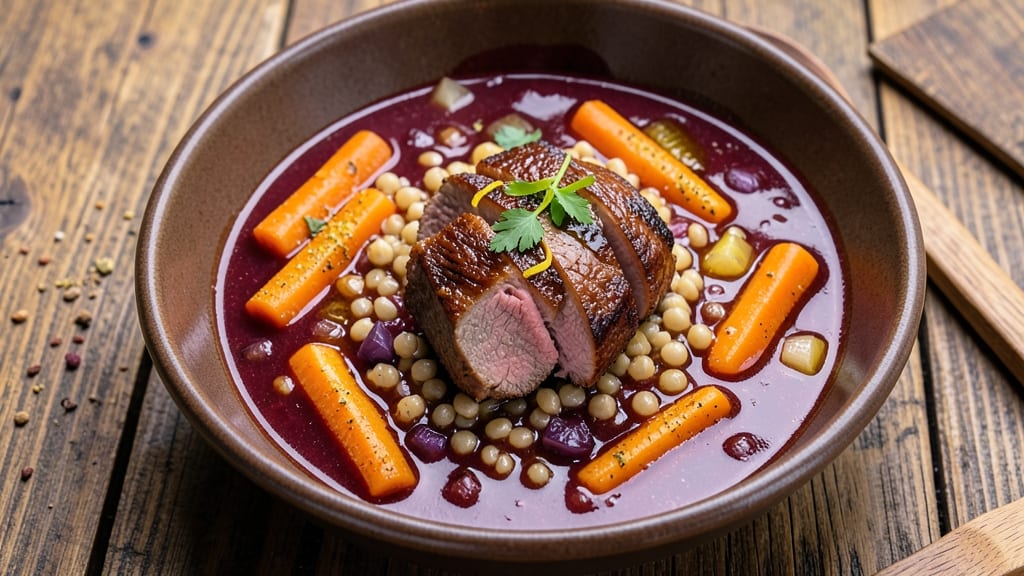
This beef barley soup recipe with red wine transforms humble ingredients into a restaurant-worthy bowl of hearty comfort. The slow-simmered red wine base infuses the broth with deep, complex flavors that elevate every spoonful—no shortcuts, just rich, satisfying depth.
I developed this version after years of testing, ensuring the wine's acidity and tannins meld perfectly with the beef and barley for a balanced, velvety texture.
The secret lies in the slow cooking process, where the wine reduces gradually, concentrating its flavors while tenderizing the beef. Unlike quick versions, this method develops layers of umami that turn simple ingredients into something extraordinary.
The barley adds hearty texture, while herbs and vegetables round out the dish with natural sweetness and earthiness.
What you'll end up with is a deeply aromatic, deeply flavorful soup that's perfect for chilly evenings or family gatherings. The wine-infused broth coats every bite, while the tender beef and chewy barley create a satisfying contrast.
It's the kind of dish that tastes even better the next day as the flavors continue to meld.
Serve with crusty bread to soak up every last drop of that rich, wine-infused broth. The recipe includes optional garnishes like fresh parsley or a drizzle of olive oil to elevate the presentation without overpowering the natural flavors. Let's make this soup from scratch!
Ingredients for beef barley soup recipe with red wine
Sixteen ingredients for a soup that tastes like a slow-simmered restaurant classic.
| Ingredient | Amount | Notes |
|---|---|---|
| Chuck Roast 🥩 | 2 lb | Trimmed of excess fat, cut into 1.5-inch cubes |
| Pearl Barley 🌾 | 1 cup | Rinsed thoroughly before cooking |
| Dry Red Wine 🍷 | 1 ½ cups | Bold variety like Cabernet Sauvignon or Merlot |
| Beef Broth 💧 | 6 cups | Homemade or high-quality low-sodium store-bought |
| Yellow Onion 🧅 | 1 whole | Medium size, chopped into 1/2-inch pieces |
| Carrots 🥕 | 4 medium | Peeled and cut into 1/2-inch rounds |
| Celery Stalks 🧅 | 4 whole | Trimmed and cut into 1/2-inch pieces |
| Garlic Cloves 🧄 | 6 cloves | Peeled and smashed with side of knife |
| Fresh Thyme Sprigs 🌿 | 2 whole | Stems removed, leaves finely chopped |
| Fresh Parsley 🌿 | ¼ cup | Chopped, for garnish and flavor |
| Tomato Paste 🍅 | 2 tbsp | High-quality, unsweetened |
| Olive Oil 🫒 | 2 tbsp | Extra-virgin for richness |
| Kosher Salt 🧂 | 1 ½ tsp | Diamond Crystal preferred |
| Ground Black Pepper 🌶️ | ½ tsp | Freshly ground for best flavor |
| Bay Leaves 🍃 | 2 whole | Dried, removed before serving |
The chuck roast is non-negotiable here—its marbled fat renders beautifully during slow cooking, creating a rich, velvety broth. Look for well-marbled cuts at your butcher or grocery store's meat counter, where they can trim excess fat for you. If using pre-cut chuck, Costco or Whole Foods offer high-quality options. For the red wine, bold, dry varieties like Cabernet Sauvignon or Merlot work best—their tannins and acidity balance perfectly with the beef's richness. Avoid sweet wines, which will make the soup taste cloying. The barley should be pearl barley, not instant—it needs time to develop that satisfying chewiness. Bob's Red Mill or Quaker brands are reliable choices that stay fresh for months in your pantry.
No red wine? Beef broth with 1 tbsp balsamic vinegar mimics the depth, though you'll lose some complexity. Fresh thyme is ideal, but dried thyme at one-third the amount works in a pinch. The tomato paste can be swapped for 1 cup crushed tomatoes if you prefer, though paste offers more concentrated umami. For the vegetables, baby carrots or celery root can replace regular carrots and celery—just adjust the amount to maintain balance. The olive oil matters here too; avoid light or refined oils that lack flavor. If you're short on time, pre-chopped mirepoix mixes from Trader Joe's save prep work without sacrificing quality.
This soup tastes even better the next day as flavors meld—make a double batch if you can. Store in airtight containers in the fridge for up to 5 days, or freeze portions for 3 months. The broth can be made ahead and frozen separately, then combined with cooked ingredients later. For serving, warm the soup gently on the stove or in the microwave, adding a splash of water or broth if it's too thick. The barley will absorb liquid as it reheats, so adjust consistency as needed. Garnish with fresh parsley just before serving to brighten the dish with freshness.
Why You'll Love This Recipe
- Slow-Simmer Magic: I swear by the overnight approach—just sear the chuck roast, toss in the onions and wine, then let it melt into tender perfection while I sleep. The barley plumps up like a dream, and that deep, caramelized flavor? Worth every minute.
- Wine’s Secret Boost: That red wine isn’t just for drinking—it’s the soul of this soup. A splash of bold Cabernet or Merlot turns the broth from good to ridiculously rich, balancing the beef’s meatiness with just the right tang. (Yes, even my wine-loving husband approves.)
- Leftovers That Shine: This soup only gets better the next day. The barley softens just enough to soak up all the flavors, and reheating it? Zero fuss—just a quick stir on the stove. I make a double batch on Sundays because it’s my go-to for lazy lunches all week.
- Budget Meal, Big Impact: Chuck roast is cheap, but it tastes like a steakhouse cut when braised right. Pearl barley stretches the meal without breaking the bank, and a single bottle of wine makes the whole pot sing. Honestly, it’s the kind of recipe that makes grocery day feel like a win.
Step-by-step instructions for beef barley soup with red wine
Master this classic technique for developing deep, complex flavors through slow cooking and wine reduction.
Sear the Chuck Roast for Maximum Flavor
Heat a large Dutch oven over medium-high heat and add the 2 tablespoons olive oil. Once shimmering, add the 2 lb chuck roast in a single layer and sear undisturbed for 4-5 minutes until deeply browned on one side. Flip and repeat on the second side, then transfer the roast to a plate.
This high-heat searing creates the Maillard reaction, which builds rich, caramelized flavors that will infuse the entire soup. Don't rush this step—you want a deep mahogany crust on each piece. I like to sear the roast in batches if needed to prevent overcrowding the pan.
Build the Aromatic Vegetable Base
In the same Dutch oven, add the 1 whole yellow onion, 4 medium carrots, and 4 whole celery stalks, all cut as specified. Cook for 8-10 minutes, stirring occasionally, until the vegetables soften and begin to caramelize. Add the 6 cloves garlic cloves and 2 whole fresh thyme sprigs (leaves only), cooking for another 1 minute until fragrant.
The vegetables should release their natural juices and develop a golden color—this is your flavor foundation. If the vegetables stick before caramelizing, add a splash of water and scrape up those browned bits from the bottom of the pan. These bits, called fond, are packed with flavor that will dissolve into the soup.
Develop the Wine Reduction
Pour in the 1.5 cups dry red wine and scrape up any browned bits from the bottom of the pan. Bring to a simmer and reduce by half—this should take about 5-7 minutes—until the wine has reduced to about ¾ cup. Stir in the 2 tablespoons tomato paste and cook for 1 minute to blend.
This wine reduction is where the magic happens. The alcohol cooks off, concentrating the wine's flavors and deepening the soup's complexity. You'll notice the aroma become more intense as the wine reduces—this is your signal that the flavors are developing properly. Don't walk away; you want to monitor the reduction closely to prevent burning.
Simmer the Soup Until Tender
Return the seared chuck roast to the Dutch oven. Add the 6 cups beef broth, 1.5 teaspoons kosher salt, 0.5 teaspoon ground black pepper, and 2 whole bay leaves. Bring to a boil, then reduce heat to low and cover partially. Simmer for 1.5 hours, skimming any foam that rises to the surface.
After 1.5 hours, check the doneness of the chuck roast. It should be fork-tender, meaning it should pull apart easily with a fork but still hold its shape. If it's not quite tender, continue simmering for another 30 minutes. The longer you cook, the more flavorful the meat becomes, but it shouldn't fall apart completely.
Finish with Barley and Garnish
Add the 1 cup rinsed pearl barley to the soup and simmer uncovered for another 30-40 minutes, stirring occasionally, until the barley is tender and the soup has thickened slightly. The barley should have a slight bite to it—it shouldn't be mushy. Taste and adjust seasoning with additional salt or pepper if needed.
Once the barley is tender, remove the bay leaves and discard them. Ladle the soup into bowls and garnish each serving with 1 tablespoon chopped fresh parsley. Serve immediately with crusty bread to soak up the rich, flavorful broth. The soup should have a deep red hue from the wine, tender meat that pulls apart easily, and a hearty texture from the barley.
Pro Tips For Making Beef Barley Soup Recipe With Red Wine
- SEAR THE ROAST FIRST: Walk away from the stove after browning the chuck roast—it’s not done when it’s golden, it’s done when the pan is dark and smoky. I used to rush this, and the soup always tasted flat; now I let the meat sit 5 minutes off-heat before scraping up those crusty bits. That’s where the depth comes from.
- TOAST THE BARLEY: Pearl barley needs a quick dry toast in the pot before adding liquid—just 2-3 minutes over medium heat, stirring constantly. I learned this the hard way when my soup turned mushy; toasting removes the raw starch and gives it that satisfying bite. Skip this, and you’ll regret it later.
- DEGLLAZE WITH WINE IMMEDIATELY: As soon as you remove the roast, pour in that red wine and scrape every last bit of fond from the bottom. I was skeptical—what if it overpowers the broth?—but it actually balances the acidity and adds richness. Use a cheap but drinkable wine; the flavor difference is minimal, but the alcohol helps tenderize the meat.
- SIMMER LOW AND LONG: This isn’t a 30-minute meal—plan for at least 2.5 hours on low heat. I used to crank the heat to speed things up, and the barley turned to paste. Keep it at a bare simmer, and the barley will soften evenly while the meat stays tender. Stir occasionally, but not obsessively; the broth will do the work.
Essential equipment for great beef barley soup recipe with red wine
Dutch Oven Essentials
The Dutch oven is my non-negotiable tool for this soup—its heavy construction ensures even heat distribution and prevents scorching during the long simmer. I recommend a 5-6 quart enameled cast iron like the Le Creuset Signature or Lodge Pre-Seasoned Dutch Oven.
The enameled version prevents rust and makes cleanup easier, while cast iron retains heat beautifully. If you're on a budget, the Amazon Basics Dutch Oven works well for occasional use. 🔥
Skimming Tool
You'll want a slotted spoon or skimmer to remove foam during simmering, which prevents a cloudy broth. I prefer a long-handled skimmer with a fine mesh—like the OXO Good Grips Skimmer—to easily scoop out impurities without losing broth.
A regular slotted spoon works too, but a dedicated skimmer makes the job faster. Keep it handy while the soup simmers.
Measuring Cups
Precise measurements matter for this recipe, especially with the red wine reduction and barley. Use liquid measuring cups with spouts for the wine and broth, and dry measuring cups for the barley and tomato paste. My go-to is the Pyrex Precision Measuring Cups—they're durable and accurate.
For the wine, a jigger or shot glass works if you don't have a liquid measuring cup, but measure carefully to avoid over or under-reducing.
Immersion Thermometer
An immersion thermometer ensures the beef reaches the perfect tenderness without overcooking. I use the ThermoWorks Thermapen ONE—it's fast, accurate, and easy to read. Insert it into the thickest part of the beef to check for doneness at 203°F internal temperature.
This tool prevents guesswork and guarantees perfectly tender meat every time. A budget-friendly alternative is the Taylor Precision Products Thermometer.
Kitchen Timer
Timing is critical for this soup, especially during the wine reduction and simmering phases. A countdown timer with a loud alarm—like the Cuisinart Countdown Timer—keeps you from burning the wine or overcooking the barley.
Set it for 5-7 minutes during reduction and 1.5 hours for simmering. Pro tip: Place it where you can see it while stirring or skimming the soup. ⏰
Knife & Cutting Board
Sharp tools make prep faster and safer. Use an 8-inch chef's knife (like the Mercer Culinary Genesis) and a cutting board with a non-slip base to chop the onion, carrots, and celery efficiently.
A mandoline speeds up uniform slicing for the carrots, but it's optional. Always keep your knife sharp—dull blades crush vegetables instead of cleanly chopping them, which affects flavor development in the soup.
Nutrition facts
Frequently asked questions
Can I substitute white wine for red wine in this recipe?
The red wine's bold tannins and depth are key to this soup's rich flavor profile. While you could use white wine, it will create a lighter, more acidic broth. For a similar effect, use 1 cup white wine plus 1 tbsp balsamic vinegar to mimic the complexity. The wine reduction step will still work, but the final soup will taste different—more delicate and less robust.
How do I know when the chuck roast is fully tender?
The beef should be fork-tender, meaning it should easily pull apart with a fork but still hold its shape. Check doneness by inserting a fork into the thickest piece—it should offer minimal resistance. For extra precision, use an immersion thermometer: the internal temperature should reach 203°F. If the meat feels slightly firm, simmer for another 20-30 minutes—it will continue tenderizing while off the heat.
Can I make this soup in an Instant Pot or slow cooker?
Yes! For an Instant Pot, sear the beef first, then add all ingredients (except barley) and pressure cook for 45 minutes, followed by a 10-minute natural release. Add barley during the last 15 minutes of cooking. In a slow cooker, combine all ingredients (including barley) and cook on low for 8 hours or high for 5 hours. The wine will reduce faster in these methods, so monitor the broth's consistency and add water if needed.
Why does my soup taste too bitter after cooking?
Bitterness often comes from over-reducing the wine or burning the vegetables. To fix it, stir in 1 teaspoon sugar or honey to balance the flavors, or add a splash of beef broth or water to dilute the intensity. For prevention: reduce the wine gently over medium-low heat, never high, and avoid letting the vegetables brown too darkly. Skimming foam during simmering also helps maintain a clean broth.
Can I use instant barley instead of pearl barley?
Instant barley cooks much faster (5-10 minutes vs 30-40 minutes for pearl), but it loses the satisfying chewiness and absorbs more liquid, potentially thinning the soup. If using instant, reduce the amount to ½ cup and add it during the last 10 minutes of cooking. The texture will be softer, but the flavor will still be great—just expect a less hearty mouthfeel.