
Soups & Stews
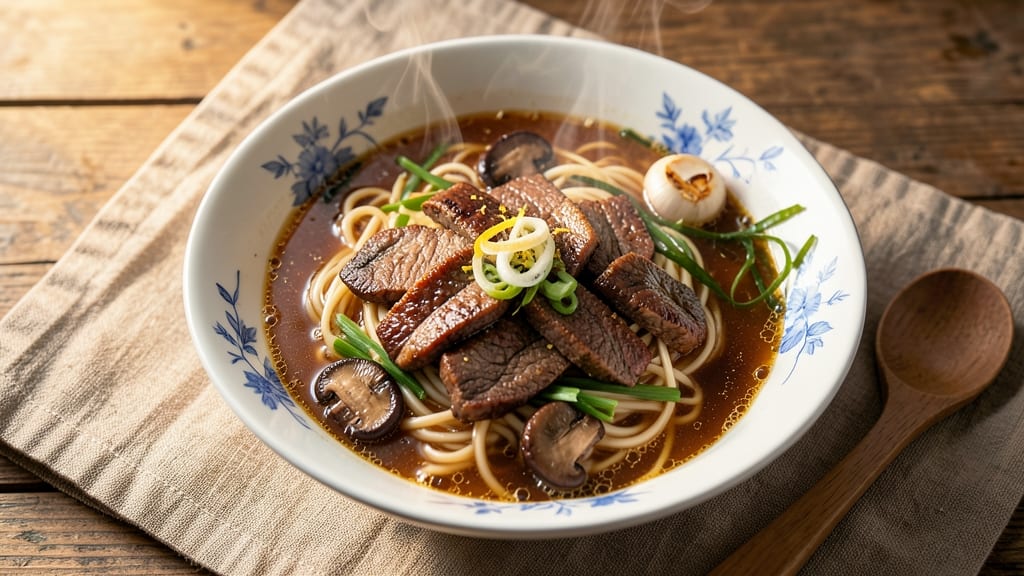
This beef soba noodle soup recipe delivers the perfect harmony of chewy noodles, tender beef, and a deeply flavorful broth that balances umami and brightness. The foundation lies in a slow-simmered broth infused with kombu and mushrooms, where collagen-rich beef transforms into melt-in-your-mouth slices.
What sets this apart is the careful balance of traditional techniques—like toasting sesame seeds and blooming aromatics—with modern twists like a touch of miso for depth.
Crafting this soup begins with properly preparing the beef, where thinly sliced cuts render just enough fat to enrich the broth without overpowering it. The soba noodles, with their nutty earthiness, absorb the broth beautifully, creating that signature chewy texture that defines the dish.
What makes this recipe foolproof is the layering of flavors: first the aromatic base, then the beef and vegetables, and finally the noodles cooked directly in the hot broth for maximum absorption.
By the time you serve this bowl, you'll have a restaurant-quality soup with tender beef, vibrant vegetables, and noodles that hold their shape while soaking up the rich, savory broth.
The garnish of sesame seeds and green onions adds freshness and texture, while a drizzle of chili oil or a splash of soy sauce lets you customize the heat and umami levels to your taste.
The beauty of this recipe lies in its versatility—it works as a comforting weeknight meal or an impressive dish for guests. The broth can be made ahead, allowing you to assemble the soup quickly when ready to serve.
Whether you're following traditional methods or adding your own creative twists, this beef soba noodle soup delivers on both flavor and satisfaction.
Ingredients for beef soba noodle soup
Thinly sliced beef, chewy soba noodles, and kombu-infused broth create restaurant-quality flavor.
| Ingredient | Amount | Notes |
|---|---|---|
| Beef Chuck Roast 🥩 | 1 ½ lb | Thinly sliced against the grain |
| Dried Soba Noodles 🍜 | 8 oz | 100% buckwheat preferred |
| Kombu Seaweed 🌿 | 1 sheet | Dried, cut into strips |
| Shiitake Mushrooms 🍄 | 8 whole | Fresh, stems removed |
| Green Onions 🧅 | 1 whole | White and green parts separated |
| Garlic Cloves 🧄 | 4 cloves | Minced for aromatic base |
| Ginger Root 🌶️ | 1 ½ tbsp | Freshly grated, not powdered |
| White Miso Paste 🍶 | 1 tbsp | High-quality, not instant |
| Sesame Seeds 🥜 | 1 tbsp | Toasted for garnish |
| Dried Shiitake Mushrooms 🍄 | 2 pieces | For extra umami depth |
| Low-Sodium Soy Sauce 🥄 | 2 tbsp | For seasoning broth |
| Rice Vinegar 🍶 | 1 tbsp | For brightness |
| Sesame Oil 🫒 | 1 tsp | Toasted, for finishing |
| Red Chili Flakes 🌶️ | ½ tsp | Adjust to taste |
| Salt 🧂 | 1 tsp | Kosher or sea salt |
The beef is non-negotiable—chuck roast gives you that melt-in-your-mouth texture when sliced thin. Look for well-marbled cuts at Whole Foods or your local butcher. If you can't find chuck, sirloin or flank steak works in a pinch, but slice it extra thin. For the kombu, Japanese brands like Marukome are best, but any dried seaweed sheet from the Asian market will do. The shiitake mushrooms should be plump and firm—none of that slimy stuff. And trust me on the 100% buckwheat soba noodles—the wheat-free versions just don't deliver that signature chew.
No kombu? Dried kelp flakes at half the amount will add depth, though it won't be identical. Fresh shiitake mushrooms unavailable? Dried shiitake soaked in hot water (discard the soaking liquid) works perfectly. The miso paste matters here—white miso is milder, while red miso adds more intensity. If you're using pre-minced garlic or ginger, toast it in the oil first to bring out those flavors. And for the sesame seeds, toast them in a dry pan for 30 seconds—game changer for that nutty aroma. The soba noodles? Cook them al dente, then finish in the hot broth for maximum flavor absorption.
This broth tastes even better the next day—make extra and keep it in the fridge for 3-4 days. The noodles? Store them dry in an airtight container for up to 1 month. For quick assembly, prep the broth ahead and store it in portions. When ready to serve, just reheat and add fresh noodles. The sesame oil and chili flakes should be added last—right before serving—so they stay aromatic. Portion out the garnishes (sesame seeds, green onions) in small containers to keep them fresh for up to 1 week in the fridge.
Why You'll Love This Recipe
- No Chopping Nightmare: I swear by the pre-sliced shiitake mushrooms and the kombu’s no-soak magic—just tear, simmer, and serve. Even my lazy Sunday mornings can’t ruin this.
- Umami Bomb: That beef chuck roast, slow-simmered with kombu and mushrooms? The broth turns into liquid gold—deep, savory, and impossible to resist. (Yes, even my picky husband finishes his bowl.)
- Lunchbox Hero: Make a double batch on Sunday, and you’ve got effortless lunches for the week. Cold soba noodles? No problem—just reheat the broth and toss. My kids’ favorite, honestly.
- Budget Stretch: A pound of chuck roast feeds four, and dried soba lasts forever. Kombu and shiitake add luxury without the grocery-shocking price. This soup keeps my wallet happy.
Step-by-step instructions for beef soba noodle soup
Here's how to create a rich, umami-packed broth with perfectly chewy noodles and tender beef.
Prepare the Beef and Aromatics
Slice the 1.5 lb Beef Chuck Roast thinly against the grain into ¼-inch thick strips. This ensures tender bites that cook quickly in the broth. Pat the slices dry with paper towels to help them sear properly.
Separate the 1 whole Green Onions into white and green parts. Finely mince the 4 cloves Garlic Cloves and grate the 1.5 tbsp Ginger Root. Set these aside—they'll form the aromatic base of your soup. The fresh ginger adds a bright, zesty note that balances the deep umami flavors.
Build the Umami-Packed Broth
In a large stockpot, combine 8 cups water (or enough to cover ingredients) with the 1 sheet Kombu Seaweed (cut into strips) and 2 pieces Dried Shiitake Mushrooms. Bring to a boil over high heat, then immediately reduce to a simmer. Let it cook uncovered for 30 minutes—this draws out the deep umami flavors from the seaweed and mushrooms.
After 30 minutes, add the sliced beef, 8 whole Shiitake Mushrooms (stems removed), minced garlic, and grated ginger. Return to a simmer and cook for 1 hour, skimming off any foam that rises to the surface. This step develops the rich, complex broth that makes this soup special.
Season and Finish the Broth
After the beef has cooked for 1 hour, stir in the 1 tbsp White Miso Paste, 2 tbsp Low-Sodium Soy Sauce, and 1 tsp Salt. Simmer for another 15 minutes to let the flavors meld together. Taste and adjust seasoning—you want a balance of saltiness, umami, and a touch of sweetness from the miso.
Remove the broth from heat and stir in the 1 tbsp Rice Vinegar. This adds a bright, tangy contrast to the rich flavors. Let the soup sit off heat for 10 minutes to allow the beef to reabsorb some of the cooking liquid, keeping it tender and juicy.
Cook the Soba Noodles
While the broth rests, prepare the 8 oz Dried Soba Noodles according to package instructions—usually 5-7 minutes in boiling water until al dente. Drain immediately and rinse briefly under cold water to stop the cooking process. This prevents the noodles from becoming mushy when added to the soup.
Add the cooked soba noodles to the broth and gently stir to combine. The noodles should absorb some of the broth but remain chewy. If the soup seems too thick, add ½ cup hot water to reach your desired consistency. Return to a gentle simmer for 2-3 minutes to heat through.
Garnish and Serve
Ladle the soup into bowls and garnish each serving with 1 tbsp toasted Sesame Seeds, a drizzle of 1 tsp Sesame Oil, and a sprinkle of 0.5 tsp Red Chili Flakes. The sesame seeds add a nutty crunch, while the sesame oil enhances the umami depth. The chili flakes bring a subtle heat that brightens every spoonful.
Top with the sliced Green Onions (white and green parts) for freshness and color. Serve immediately while the noodles are chewy and the broth is steaming hot. This soup tastes even better the next day as the flavors continue to develop!
Pro Tips For Making Beef Soba Noodle Soup
- SEAR THE BEEF RIGHT: Don’t just brown the chuck roast—get it deep golden and slightly crusty in a hot, dry pan first. I used to rush this, and the broth ended up tasting flat. A 3-4 minute sear on medium-high, flipping once, makes a real difference when you later add it to the simmering kombu broth.
- SOAK NOODLES SEPARATELY: Toss the dried soba noodles in warm water for 5 minutes before adding them to the soup—just until they soften slightly. This prevents them from turning mushy when they hit the hot broth. (Yes, even if you’re impatient like me.)
- USE FRESH SHIITAKES: Rehydrated dried shiitakes add bulk but lack depth. Fresh shiitakes—especially the thick stems—give the broth a richer umami flavor when simmered whole, then sliced for serving. If using dried, soak them for 20 minutes and reserve the soaking liquid.
- SIMMER LOW AND LONG: The kombu needs time to infuse—at least 30 minutes of gentle simmering at a bare bubble. I learned this the hard way: skipping this step means a broth that tastes like nothing. Keep it covered and let the heat do the work.
Essential equipment for this dish
Stockpot Essentials
A large stockpot (at least 8-quart capacity) is non-negotiable for this recipe. I recommend the All-Clad Stainless Steel Stockpot—it distributes heat evenly and handles the long simmer beautifully. If you're on a budget, the Cuisinart MultiClad offers great performance at a lower price.
Avoid non-stick pots for broth-making; stainless steel or enameled cast iron (like Le Creuset) prevents flavors from sticking and allows for better temperature control. 🌡️
Precision Tools
Invest in a high-quality meat thermometer to monitor the beef's internal temperature—aim for 160°F before removing it from the broth. The Thermoworks Smoke is my go-to for accuracy.
A sharp chef's knife (like Wüsthof) is essential for thinly slicing the beef against the grain, while a mandoline can help if you're not confident with freehand slicing. For grating ginger and garlic, a microplane ensures fine, even texture that blooms beautifully in the broth.
Broth Enhancers
For the kombu and dried shiitake mushrooms, a small cutting board and sharp knife are all you need to prep them efficiently. If you're using dried shiitake, soak them in hot water for 20 minutes before adding to the broth—this jumpstarts their umami contribution.
A fine-mesh strainer (like OXO Good Grips) helps remove any foam during the simmering process, keeping your broth clear and clean. For the sesame seeds, a small dry skillet is perfect for toasting them to a golden brown. 🥜
Noodle Perfection
Cooking soba noodles requires a medium-sized pot (4-6 quarts) with plenty of water to prevent sticking. I use a Cuisinart Stainless Steel Saucepan for this step. A slotted spoon makes draining and rinsing the noodles effortless.
For portion control, a ladle with a handle (like OXO Good Grips) ensures even distribution when serving. Pro tip: Keep a bowl of ice water nearby to stop the noodles from overcooking while you finish the broth. ❄️
Garnish Station
Set up a small station with small bowls for your garnishes: toasted sesame seeds, sesame oil, chili flakes, and sliced green onions. A dropper bottle (like Norpro) makes it easy to drizzle the sesame oil evenly over each bowl.
For the chili flakes, a small spoon ensures precise control over the heat level. Keep everything within arm's reach so you can garnish quickly before serving—this keeps the flavors vibrant and the textures fresh. 🌶️
Nutrition facts
Frequently asked questions
Can I substitute beef with another protein?
For a vegetarian option, use shiitake mushrooms or tofu (extra-firm works best). If you prefer poultry, chicken thigh slices (boneless, skinless) work well—they stay tender and add a mild flavor. For seafood lovers, shrimp or scallops cook quickly and pair beautifully with the broth. Just adjust cooking times—seafood needs only 3-4 minutes in the broth.
How do I make the broth less salty?
If your broth tastes too salty, don't panic! Add ½ cup cold water per bowl and stir well to dilute the saltiness. For a more natural approach, simmer in an extra ½ cup water for 10 minutes to reduce concentration. If using miso, reduce it to ½ tbsp next time—it's packed with salt. Taste as you go to adjust gradually.
Can I make this soup ahead of time?
Yes, this soup actually tastes better the next day! Prepare the broth completely (including beef and mushrooms) and refrigerate it for up to 4 days. When ready to serve, reheat gently on the stove, add fresh soba noodles, and garnish with toasted sesame seeds. The flavors meld even more beautifully after resting. For the noodles, store them dry in an airtight container—they'll keep for 1 month.
Why are my soba noodles mushy?
Mushy noodles usually mean overcooking or improper handling. Cook them 1 minute less than package instructions suggest, then rinse briefly in cold water to stop cooking. When adding to the broth, cook for only 2-3 minutes—they'll finish cooking in the hot liquid. Also, avoid using wheat-based soba noodles; 100% buckwheat holds its texture better. If your broth is too hot, let it cool slightly before adding noodles.
What can I add for extra umami depth?
For maximum umami, try these additions: 1 tsp fish sauce (adds complexity), ½ cup dashi powder (Japanese broth base), or 1 tbsp oyster sauce (sweet-savory kick). For a vegetarian boost, add 1 tbsp soy sauce + 1 tsp mushroom powder. Pro tip: A pinch of MSG (½ tsp) enhances umami without saltiness—use sparingly if you're sensitive. Always taste and adjust gradually!