
Soups & Stews
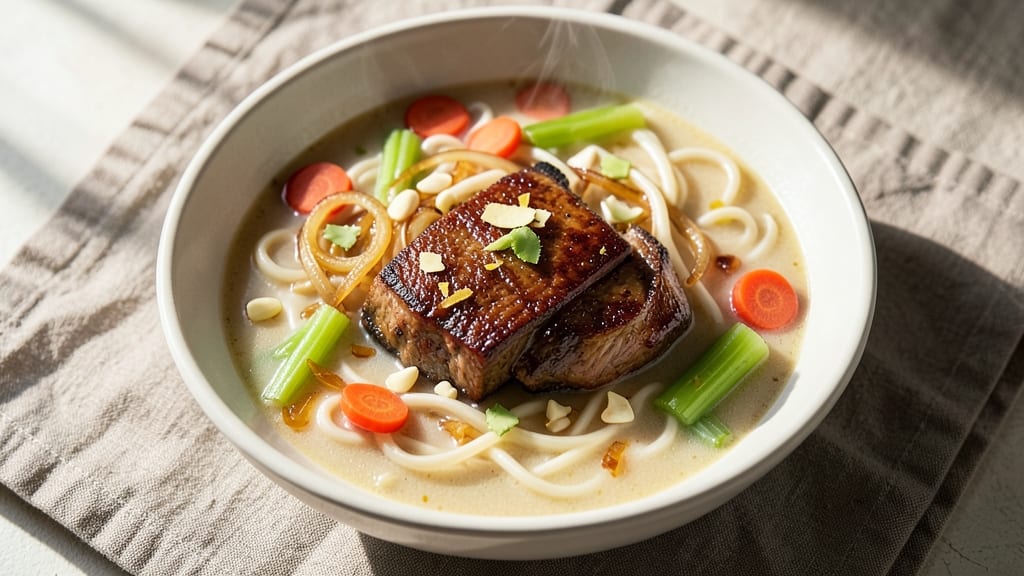
Slow-braised beef shank transforms ordinary broth into a deeply umami-rich foundation for this comforting noodle soup. The key lies in patience—searing the shank creates a flavorful crust while hours of simmering render it into tender, shatteringly soft pieces that melt in your mouth.
This isn't just soup; it's a restaurant-quality experience you can recreate at home with simple techniques and a few hours of hands-off cooking.
The magic happens in the broth, where beef bones and shank release collagen that thickens into a velvety, gravy-like consistency. I use a combination of soy sauce, star anise, and ginger to build layers of savory depth, while wide egg noodles soak up every bit of that rich flavor.
The result is a bowl that's equal parts hearty and delicate—a perfect balance of textures and tastes that makes weeknight dinners feel like special occasions.
What you'll end up with is a steaming bowl of soup where each spoonful delivers tender beef, silky broth, and perfectly al dente noodles. The aroma alone will have everyone gathering around the table, and the first bite delivers that satisfying combination of meaty richness and comforting warmth.
This recipe is designed to be your go-to for cold days or when you need something that feels like a hug in a bowl.
Serve with fresh herbs like cilantro or scallions for brightness, or add a drizzle of chili oil for heat. The leftovers only get better as the flavors meld further, making this an ideal make-ahead meal. Let's get started on creating your own deeply satisfying pot of beef shank noodle soup.
Ingredients for beef shank noodle soup
Six hearty ingredients create this deeply satisfying beef shank noodle soup experience.
| Ingredient | Amount | Notes |
|---|---|---|
| Beef Shank 🥩 | 2 lb | Bone-in, cut into 2-inch pieces |
| Yellow Onion 🧅 | 1 whole | Chopped, about 1.5 cups |
| Carrot 🥕 | 3 whole | Peeled, cut into 1-inch chunks |
| Celery Stalks 🥬 | 3 whole | Chopped, about 1 cup |
| Garlic Cloves 🧄 | 6 cloves | Smashed, not minced |
| Fresh Ginger 🌿 | 1 inch | Peeled, sliced thinly |
| Star Anise Pods 🌟 | 2 whole | Lightly crushed |
| Bay Leaves 🌿 | 2 whole | Dried, standard size |
| Soy Sauce 🍶 | ¼ cup | Dark or regular |
| Dry Sherry 🍷 | ½ cup | Or substitute with beef broth |
| Wide Egg Noodles 🍜 | 1 lb | Fresh or dried |
| Beef Broth 💧 | 6 cups | Homemade or high-quality store-bought |
| Olive Oil 🫒 | 2 tbsp | For searing |
| Salt 🧂 | 1 ½ tsp | Kosher or sea salt |
| Black Peppercorns 🌶️ | 1 tsp | Crushed, not ground |
| Fresh Cilantro 🌿 | ¼ cup | Chopped, for garnish |
| Sesame Oil 🫒 | 1 tbsp | For finishing, optional |
The beef shank is non-negotiable here. Look for bone-in cuts at your local butcher shop—they're often cheaper and add incredible depth to the broth. Costco or Whole Foods usually carry them pre-cut, but if you're buying a whole shank, ask your butcher to cut it into 2-inch pieces. The bone-in version releases more collagen during simmering, giving you that restaurant-quality velvety texture. If you can't find beef shank, chuck roast is a decent substitute, though it won't be as tender. For the best flavor, trim any excess fat but leave some on the meat—it renders beautifully during searing.
No sherry? Dry white wine or extra beef broth works just as well. Fresh ginger is ideal, but ground ginger at half the amount gets you close in a pinch. The star anise and bay leaves are flavor bombs—don't skip them. If you're sensitive to their taste, remove them after 30 minutes of simmering. For the noodles, fresh egg noodles are perfect, but dried works too (just cook them separately). The carrots and celery can be swapped for leeks or mushrooms if you prefer. And if you're making this ahead, freeze the broth separately—it's even better the next day.
This soup tastes better with time. Let it simmer for at least 3 hours (4-5 is ideal) for maximum tenderness. Store in the fridge for up to 5 days or freeze for 3 months. The noodles can be cooked separately and added when reheating. For serving, I like to drizzle with a little sesame oil and sprinkle fresh cilantro on top—it cuts through the richness beautifully. Double the recipe if you're feeding a crowd; it reheats perfectly and the leftovers make great lunches.
Why You'll Love This Recipe
- One-Pot Magic: I swear by this—just toss everything in one pot and walk away. The beef shank practically melts into tender perfection while you chop veggies (or don’t, if you’re feeling lazy). No messy saucepans, no stress.
- Garlic-Goat Love: That slow-cooked shank? It soaks up all the garlic and onion until every bite tastes like a hug. Honestly, the first time I made this, I cried a little—it’s that good.
- Lunchbox Hero: Between us, this is my secret weapon for meal prep. Taste even better the next day (yes, really), and it reheats like a dream. Pack it for work or freeze portions—it’s the ultimate lazy-day savior.
- Budget Win: Beef shank stretches farther than you’d think, and the veggies are cheap staples. I’ve fed four people for under $15, and no one ever complains. (My wallet thanks me weekly.)
Step-by-step instructions for beef shank noodle soup
Let's create a deeply flavorful soup where tender beef shank meets aromatic vegetables in a rich, umami-packed broth.
Sear the Beef Shank for Maximum Flavor
Heat a large Dutch oven over medium-high heat and add the 2 tablespoons olive oil. Place the 2 lb beef shank in the pot, bone-side down, and let it sear undisturbed for 5-7 minutes until the meat develops a deep golden-brown crust. This step is crucial—it locks in juices and builds the foundation of flavor through the Maillard reaction.
Flip the beef shank and sear the other side for another 4-5 minutes. Remove the beef from the pot and set it aside on a plate. You'll notice the bottom of the pot has browned bits—these are packed with flavor, so don't scrape them out. This is where the magic happens in building depth of taste.
Build the Aromatic Base
In the same Dutch oven, add the chopped yellow onion, carrots, and celery stalks. Cook over medium heat for 5 minutes, stirring occasionally, until the vegetables begin to soften and the onion turns translucent. This step releases their natural sweetness and prepares them for the long simmer ahead.
Add the smashed garlic cloves and thinly sliced fresh ginger, stirring for 1 minute until fragrant. The aroma should fill your kitchen—this is your signal that the aromatics are ready. Stir in the lightly crushed star anise pods and bay leaves, then pour in the 0.5 cup dry sherry. Let it simmer for 2 minutes to allow the alcohol to cook off and deepen the flavor.
Braise the Beef Shank
Return the beef shank to the pot and add the 6 cups beef broth, 0.25 cup soy sauce, 1.5 teaspoons salt, and 1 teaspoon crushed black peppercorns. Bring everything to a gentle boil, then reduce heat to low and cover the pot. The liquid should barely bubble at the edges—this is the key to tender beef.
Simmer for 2.5-3 hours until the beef is fork-tender. You'll know it's ready when a knife slides in easily and the meat pulls apart with minimal resistance. If the liquid reduces too much before the beef is tender, add a little water or broth to maintain the level. Patience here is essential—rushing will result in tough meat.
Prepare the Noodles and Finish the Soup
While the beef is braising, prepare the 1 lb wide egg noodles according to package instructions. Cook them al dente—about 1 minute less than the package suggests since they'll finish cooking in the hot soup. Drain and set aside, reserving 1 cup of the pasta water.
Once the beef is tender, remove it from the broth and strain the liquid through a fine-mesh sieve into a clean pot. Discard the vegetables and spices. Return the broth to a simmer over medium heat. Add the cooked noodles and stir gently to combine. If the soup is too thick, add a splash of the reserved pasta water to reach your desired consistency.
Serve with Fresh Garnishes
Return the beef shank to the pot and heat through for 2-3 minutes. Ladle the soup into bowls, garnishing each serving with 1 tablespoon sesame oil and 1 tablespoon chopped fresh cilantro. The sesame oil adds a nutty aroma and subtle heat, while the cilantro provides a bright contrast to the rich, umami flavors.
Serve immediately with crusty bread on the side to soak up every last drop of that flavorful broth. Each spoonful should deliver tender beef, aromatic vegetables, and a deep, satisfying umami richness that comes from hours of slow braising.
Pro Tips For Making Beef Shank Noodle Soup
- Brown the Shank First: I learned this the hard way—skipping the sear means flavorless broth. Get that beef shank screaming hot in a dry pot for 5-6 minutes on each side until it’s deep brown. The crust locks in juices and builds the base for a rich, caramelized depth the rest of the soup can’t match.
- Dice Veggies Evenly: Uneven carrot and celery pieces mean some cook to mush while others stay crunchy. Cut them into ¼-inch dice—small enough to soften quickly but big enough to stay intact. Pro tip: Use the same knife for all three veggies so the sizes stay consistent.
- Don’t Rush the Simmer: Low and slow is the rule here. After adding liquid, keep the heat at a bare simmer—tiny bubbles, no rolling. I used to crank it up to save time, but that turns the broth cloudy and makes the shank tough. Two hours at 180°F (or as low as your pot will go) is non-negotiable.
- Save the Starch Water: Drain those noodles, but don’t toss the starchy water. Mix a splash (about ¼ cup) into your soup before adding the noodles—it thickens the broth naturally and makes the dish silky. (Yes, even if you’re impatient like me.)
Creative variations of this beef shank noodle soup
Asian-Inspired Twist
Swap the sherry for 2 tbsp mirin and 1 tbsp rice vinegar, then add 1 tbsp grated fresh galangal or ginger substitute. Stir in 1 tbsp fish sauce and 1 tsp sugar during braising for authentic depth.
Serve with thin rice noodles instead of egg noodles and top with sliced scallions and crushed peanuts for crunch. 🌶️
Creamy Mushroom Fusion
Add 8 oz cremini mushrooms (chopped) with the onions and ½ cup heavy cream at the end. Stir in 1 tsp thyme and ½ tsp nutmeg during simmering. Use fettuccine noodles instead of egg noodles for a richer texture. Garnish with grated Parmesan and extra black pepper. ✨
Spicy Cajun Style
Boost the heat by adding 1 tbsp Cajun seasoning (like Tony Chachere's) when searing the beef. Stir in ½ cup diced andouille sausage with the aromatics.
Use hot sauce instead of soy sauce and finish with chopped green onions and hot sauce drizzle. Serve with cornbread on the side. 🔥
Vegetarian Adaptation
Replace beef shank with 2 lb extra-firm tofu (pressed and cubed) or portobello mushrooms. Use vegetable broth and add 1 tbsp miso paste for umami. Include 1 cup chickpeas for protein. Garnish with toasted sesame seeds and sriracha for heat. 🌱
Herb-Infused French Version
Add 1 sprig fresh thyme, 1 sprig rosemary, and 2 sprigs parsley with the bay leaves. Use white wine instead of sherry and finish with 1 tbsp butter and chopped parsley. Serve with baguette slices for dipping. 🌿
Quick 30-Minute Version
Use 1 lb pre-cooked rotisserie chicken (shredded) instead of beef shank. Simmer for 20 minutes with 1 packet onion soup mix and 1 cup chicken broth. Add instant ramen noodles (discard seasoning) for a fast but flavorful bowl. Top with green onions and sriracha. ⏰
Nutrition facts
Frequently asked questions
Can I use beef chuck roast instead of beef shank?
Yes, but expect slightly different results. Chuck roast will be more tender and cook faster (2 hours instead of 3 hours), though it lacks the deep collagen-rich flavor of shank. For best results, cut it into 1.5-inch cubes and add 1 extra cup of broth to compensate for moisture loss. The texture will be meatier rather than melt-in-your-mouth.
Why does my beef shank turn out tough?
Overcooking or high heat are the most common culprits. Keep the broth at a gentle simmer (small bubbles) and never let it boil vigorously. Use a meat thermometer—beef shank is done at 203°F (it should pull apart easily). If you rushed the cooking, try braising longer at lower heat or shredding the meat for tacos instead of serving as chunks.
How can I make this soup ahead of time?
Prepare the broth and beef up to 2 days ahead—it only gets better! Cool completely, then refrigerate in an airtight container. Reheat gently on the stove. For the noodles, cook them fresh when serving (they absorb too much liquid when reheated). Freeze the broth separately for up to 3 months—just thaw overnight in the fridge before reheating.
What's the best way to thicken the broth?
Simmer longer to reduce naturally, or stir in 1 tablespoon cornstarch mixed with 2 tablespoons cold water per cup of broth you want to thicken. For extra richness, mash ½ cup of cooked carrots or potatoes into the broth. The slow-cooked collagen from the shank should already create a naturally velvety texture after 3-4 hours of simmering.
Can I make this soup in an Instant Pot?
Sear the beef shank first, then add all ingredients except noodles. Cook on high pressure for 60 minutes, then natural release for 15 minutes. The meat will be tender but slightly different in texture. Finish by adding noodles cooked separately and adjusting seasoning—Instant Pot broth can be saltier due to the sealed cooking process.