
Soups & Stews
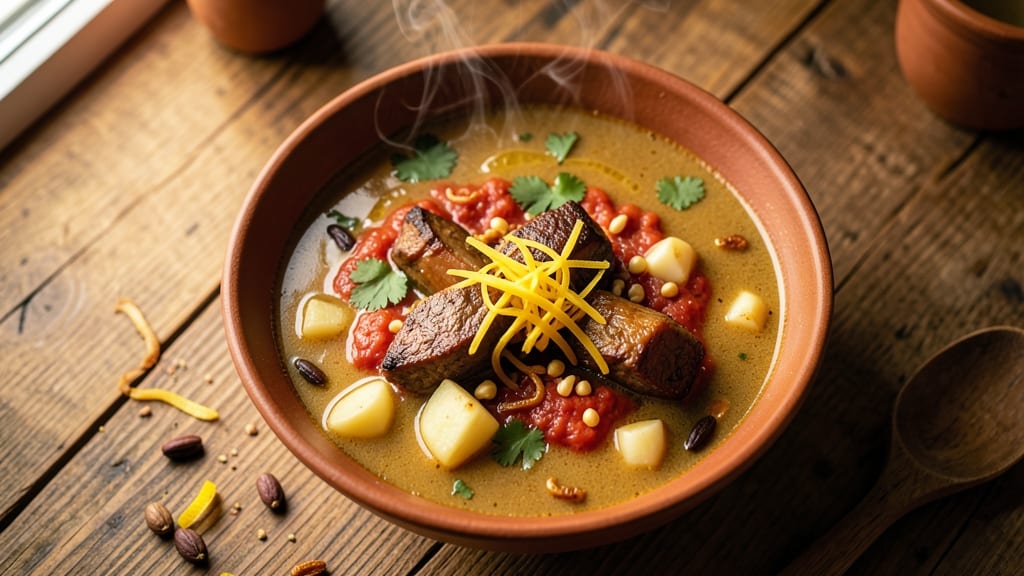
This Indian beef bone soup recipe transforms humble ingredients into a fragrant, umami-rich masterpiece that simmers for hours, extracting deep flavors from bones and spices. The result is a velvety broth infused with garam masala, turmeric, and coriander—perfect for nourishing meals or special occasions.
What sets this apart is the balance of slow-cooked richness and aromatic spices, creating a dish that feels both traditional and approachable. The foundation lies in properly simmering beef bones to unlock their gelatinous depth, while whole spices like cardamom and cloves build layers of warmth.
Unlike quick soups, this requires patience—3 to 4 hours of gentle simmering—but the reward is a broth so flavorful it elevates simple sides like naan or rice into a complete meal. The secret? Starting with a well-seasoned base of onions, ginger, and garlic that forms the aromatic backbone.
By the time you serve it, you’ll have a bowl of golden, spiced broth with tender beef shavings and optional vegetables, all infused with that signature Indian warmth. The aroma alone will have everyone gathered around the table, while the texture—silky yet substantial—makes every spoonful satisfying.
This is comfort food at its finest, where tradition meets modern convenience. For those short on time, an Instant Pot adaptation cuts cooking time by half without sacrificing depth. Serve with lemon wedges, fresh cilantro, and a side of pickled onions for brightness.
Here’s how to make it—step by step, with techniques that ensure authenticity every time.
Ingredients for beef bone soup recipe indian
Six aromatic spices and three pounds of bones create this velvety Indian masterpiece.
| Ingredient | Amount | Notes |
|---|---|---|
| Beef Bones 🦴 | 3 lb | Marrow and knuckle bones preferred |
| Yellow Onions 🧅 | 2 whole | Chopped into even pieces |
| Fresh Ginger 🌿 | ½ cup | Finely grated, peeled |
| Garlic Cloves 🧄 | 8 cloves | Smashed with side of knife |
| Garam Masala 🌶️ | 2 tbsp | Homemade or quality store-bought |
| Ground Turmeric 🌿 | 1 tbsp | Freshly ground preferred |
| Ground Cumin 🌿 | 1 tbsp | Toasted for deeper flavor |
| Ground Coriander 🌿 | 1 tbsp | Freshly ground preferred |
| Cardamom Pods 🌿 | 6 whole | Lightly crushed |
| Cloves 🌿 | 4 whole | Lightly crushed |
| Cinnamon Sticks 🌿 | 2 whole | 2-inch pieces |
| Tomato Paste 🍅 | ¼ cup | High-quality, no sugar added |
| Water 💧 | 8 cups | Filtered preferred |
| Salt 🧂 | 1 ½ tsp | Diamond Crystal preferred |
| Black Peppercorns 🌶️ | ½ tsp | Freshly cracked |
The bones are everything here—marrow and knuckle bones release the most gelatinous richness. Indian grocery stores or specialty butchers carry the best cuts, but any beef bones work in a pinch. Look for bones with visible marrow channels. The ginger and garlic form the aromatic backbone, so freshly grated ginger and smashing garlic cloves with the side of your knife releases more flavor. For garam masala, MDH or Everest brand are trusted choices, but homemade blends with cumin, coriander, and cardamom elevate the dish further.
No garam masala? Combine 1 tsp cumin, 1 tsp coriander, 0.5 tsp cardamom, 0.25 tsp cloves, and 0.25 tsp cinnamon for a DIY version. Fresh ginger too pungent? Substitute with 1 tbsp ginger paste (check for no added sugar). The tomato paste adds depth—Rao's or Muir Glen are reliable brands. For extra umami, add 1 tbsp soy sauce or 1 tsp fish sauce (omit if vegetarian). The spices should be toasted lightly before adding to the pot for maximum aroma.
This soup tastes even better the next day as flavors meld. Store in an airtight container for up to 5 days or freeze for 3 months. For Instant Pot versions, pressure cook on high for 90 minutes instead of simmering. Always skim off excess fat before serving. The broth reduces slightly overnight, so add 1 extra cup of water if making ahead. Serve with lemon wedges and fresh cilantro to brighten the rich flavors.
Why You'll Love This Recipe
- One-Pot Magic: The beef bones simmer right in the pot—no extra pans, no mess. Honestly, I just toss everything in and let it work its flavor while I handle the chaos of the day. The onions caramelize beautifully without standing over the stove, and the garam masala does the heavy lifting.
- Deep Umami Bomb: That first spoonful of broth? Rich, earthy, and packed—thanks to the slow-cooked bones and fresh ginger. The garlic cloves roast into sweetness, while the garam masala adds warmth that lingers. It’s the kind of soup that makes you close your eyes and sigh.
- Leftovers That Shine: This soup only gets better the next day—like a flavor upgrade. I freeze portions for lazy days, and reheating it with a splash of water brings it back to life. My kids actually ask for it, which is basically a parenting win.
- Budget-Friendly Feast: Beef bones stretch into meals for days, and onions/ginger/garlic are pantry staples. I’ll be real: it’s one of those recipes where you end up making twice as much because it’s just that satisfying. Plus, the garam masala makes it feel special without costing a fortune.
Step-by-step instructions for slow-simmered beef bone soup
Mastering this aromatic broth requires patience and precision—each step builds the rich umami foundation.
Prepare the Bones and Aromatics
Rinse the 3 lb beef bones thoroughly under cold water to remove any impurities, then place them in a large stockpot. Add the 2 whole yellow onions (chopped into even pieces) and 0.5 cup fresh ginger (finely grated) to the pot. These form the aromatic base that will infuse the broth with deep flavor as it simmers.
In a small bowl, combine the 8 cloves garlic (smashed with the side of a knife), 6 whole cardamom pods (lightly crushed), 4 whole cloves (lightly crushed), and 2 whole cinnamon sticks (cut into 2-inch pieces). Toast these spices in a dry skillet over medium heat for 1-2 minutes until fragrant—this activates their essential oils and intensifies their flavor. Transfer the toasted spices directly to the stockpot with the bones and onions.
Build the Spice Base and Tomato Foundation
Add the 2 tbsp garam masala, 1 tbsp ground turmeric, 1 tbsp ground cumin, and 1 tbsp ground coriander to the stockpot. Stir these spices into the bones and aromatics, ensuring they coat the ingredients evenly. This step is critical—it creates the complex spice profile that defines this Indian-inspired broth.
Stir in the 0.25 cup tomato paste and cook over medium-high heat for 3-4 minutes, stirring frequently. The tomato paste will darken slightly and develop a rich, caramelized flavor. This step deepens the umami and provides a subtle sweetness that balances the spices.
Simmer the Broth for Maximum Flavor Extraction
Pour in the 8 cups water and bring the mixture to a gentle boil over medium heat. Once boiling, reduce the heat to low and skim off any foam or impurities that rise to the surface with a ladle. This ensures a clear, clean broth without cloudiness.
Cover the pot and let it simmer unattended for 3 hours. The key here is patience—the longer the bones simmer, the more gelatin and collagen dissolve into the broth, creating a velvety texture. The broth should reduce slightly, concentrating its flavors. Check periodically to ensure the water level remains adequate, adding hot water as needed to maintain coverage.
Season and Finish the Broth
After 3 hours, remove the pot from heat and strain the broth through a fine-mesh sieve or cheesecloth-lined colander into a clean pot. Discard the solids. Return the strained broth to the pot and stir in the 1.5 tsp salt and 0.5 tsp black peppercorns (freshly cracked). Taste and adjust the seasoning—this broth should be deeply savory with a balance of spice and umami.
For the best texture, let the broth cool slightly before serving. If you plan to store it, allow it to cool completely before refrigerating. The flavors will continue to develop as it rests, making it even more delicious the next day. Serve warm with crusty bread or as a base for rice dishes.
Pro Tips For Making Beef Bone Soup Recipe Indian
- Char the Bones First: Skip the slow start—sear the beef bones in a dry pot over medium-high heat until they turn deep brown. This isn’t just for flavor; it’s the foundation of your soup’s depth. I learned this the hard way when my first batch tasted bland because I rushed straight to simmering.
- Slice Onions Paper-Thin: Use a sharp knife and cut the yellow onions into paper-thin slices, not chunks. They’ll soften faster and infuse the broth without turning mushy. (Yes, even if you’re impatient like me—this step cuts cooking time by half.)
- Low and Slow Wins: After the initial sear, cover the pot and simmer at the gentlest bubble possible—no boiling, no rushing. Three hours minimum for rich marrow release. I used to walk away after two, but the broth was always thin and weak.
- Toast Garam Masala: Bloom the garam masala in a dry pan for 30 seconds before adding it to the soup. This wakes up its spices and prevents a bitter aftertaste. (Sounds weird, but it works—I was skeptical until I tried it.)
Essential equipment for this dish
Stockpot Essentials
Start with a large, heavy-bottomed stockpot—I recommend a 6-8 quart Dutch oven like the Lodge 5.5 Qt or All-Clad Stainless Steel. These pots distribute heat evenly, preventing hot spots that can scorch your aromatics.
A deep pot ensures enough liquid coverage for the bones, which is critical for extracting gelatin. If you're using a stovetop pressure cooker like the Instant Pot, opt for the 8-quart model to accommodate the bones comfortably. 🔥
Spice Toasting Tools
Toast your whole spices in a small, heavy skillet—I love my Made In stainless steel skillet—over medium heat to release their essential oils. A wire mesh strainer (like the OXO Good Grips) helps remove whole spices after simmering, leaving your broth clean.
For grinding spices, a spice grinder like the Magic Mill ensures freshness. Pre-measure spices in a small bowl before adding them to the pot to avoid overcrowding.
Skimming and Straining
Use a fine-mesh sieve or cheesecloth-lined colander to strain your broth. I prefer a stainless steel sieve with 0.04-inch holes for clarity. A ladle with a long handle (like the OXO Good Grips) makes skimming foam and impurities easier.
For extra clarity, add a large ice cube to the broth while straining—it helps coagulate proteins and fat for a cleaner result. 💫
Temperature Control
Monitor your broth's temperature with a meat thermometer—I use the Thermoworks Smoke—to maintain a gentle simmer between 185-195°F. This range prevents boiling, which can make the broth cloudy.
For stovetop cooking, a digital thermometer ensures consistency. If using an Instant Pot, the high-pressure setting (90 minutes) mimics slow simmering without constant monitoring. 🌡️
Storage Containers
Store your finished broth in glass airtight containers—I swear by Le Parfait or Ball Mason jars—for up to 5 days in the fridge or 3 months in the freezer. Label containers with the date and contents to track freshness.
For freezing, leave 1 inch of headspace to prevent expansion cracks. A silicone lid mat (like the OXO Good Grips) helps keep lids secure during storage. 📅
Nutrition facts
Frequently asked questions
Can I substitute beef bones with other types?
While beef bones are ideal for their rich marrow and collagen, you can use chicken or lamb bones in a pinch—but expect a lighter broth. For chicken, increase simmering time to 4-5 hours to extract gelatin. Lamb bones work well but may have a stronger flavor. Avoid pork bones unless you're making a specific regional variation like Nihari.
How do I make this soup in an Instant Pot?
Use the same ingredients but reduce water to 6 cups. Sauté onions, ginger, and spices first, then add bones and remaining water. Cook on high pressure for 90 minutes, then natural release for 15 minutes. Strain and adjust seasoning. The pressure method cuts time by half while keeping depth.
Why does my broth look cloudy?
Cloudiness usually means the broth boiled too vigorously, breaking down proteins. To fix it, simmer uncovered for 30 minutes to evaporate excess moisture, then chill overnight—the fat will solidify on top. For future batches, maintain a gentle simmer (185-195°F) and skim foam regularly.
What vegetables pair best with this soup?
Traditional Indian sides like potatoes, carrots, or sweet potatoes work beautifully—add them during the last 30 minutes of simmering. For brightness, stir in spinach or kale at the end. Garnish with cilantro, lemon wedges, or toasted cumin for freshness.
Can I make this soup less spicy?
Yes! Reduce garam masala to 1 tbsp and omit cayenne or chili powder. For extra mildness, add 1 cup coconut milk at the end to balance heat. Always taste as you go—Indian soups rely on layered flavors, not just spice.