
Soups & Stews
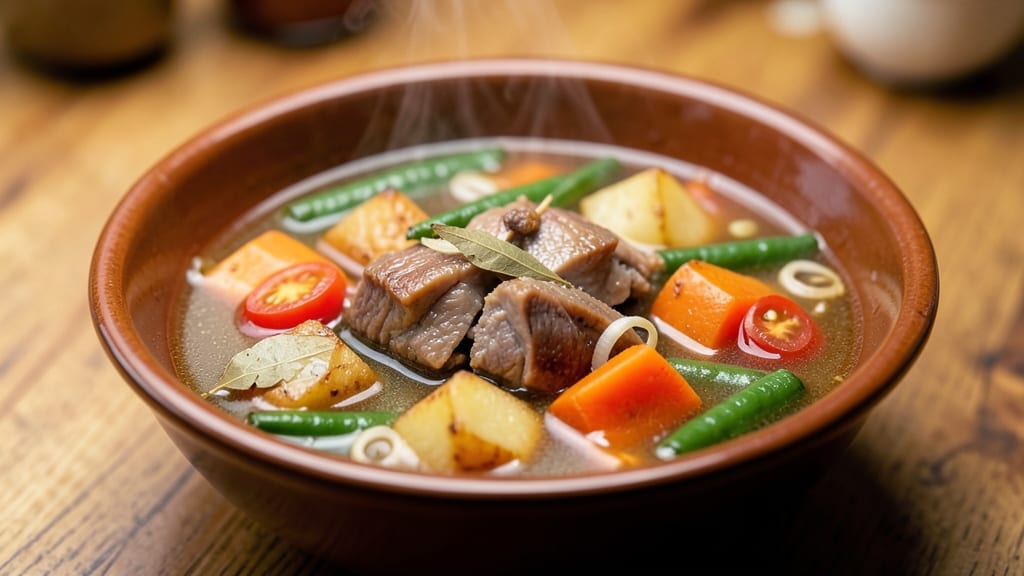
This Filipino-inspired Balbacua Soup transforms tough pork cuts into melt-in-your-mouth tenderness through slow simmering—a dish that carries the warmth of Filipino home cooking.
The secret lies in its layered flavors: savory pork, hearty vegetables, and a rich broth that develops depth over time, creating a comforting meal perfect for family gatherings or cozy weeknights.
Traditionally served with steamed rice, this soup begins with pork bones and meat that infuse the broth with unmatched richness. Potatoes, carrots, and green beans round out the vegetables, while hard-boiled eggs add a satisfying texture contrast.
The slow cooking process—often 2 to 3 hours—ensures every ingredient melds into a harmonious, deeply flavorful stew.
What makes Balbacua Soup truly special is its ability to turn simple ingredients into something extraordinary. The pork becomes fork-tender, the broth velvety, and the vegetables perfectly tender—all while maintaining a balance of savory, umami, and subtle sweetness.
It’s the kind of dish that feels like a hug in a bowl, especially when shared with loved ones.
The best part? This recipe is designed to be both approachable and impressive, making it ideal for those new to Filipino cuisine or seasoned home cooks looking to expand their repertoire. Ready to create a soup that’s as comforting as it is delicious? Let’s get started.
Ingredients for balbacua soup
Filipino home cooking relies on these 15 ingredients to transform tough pork into velvety, deeply flavorful soup.
| Ingredient | Amount | Notes |
|---|---|---|
| Pork Shoulder Bones 🥩 | 2 ½ lb | With meat attached for richness |
| Pork Shoulder Meat 🥩 | 2 lb | Cut into 2-inch chunks |
| Russet Potatoes 🥔 | 3 medium | Peeled, cut into chunks |
| Carrots 🥕 | 4 whole | Peeled, cut into 2-inch pieces |
| Green Beans 🌱 | 1 lb | Trimmed, cut into 2-inch lengths |
| Large Eggs 🥚 | 6 whole | Hard-boiled for texture |
| Onions 🧅 | 2 whole | Yellow or red, sliced |
| Garlic Cloves 🧄 | 8 cloves | Minced for depth of flavor |
| Tomatoes 🍅 | 3 large | Ripe, quartered for broth |
| Bay Leaves 🌿 | 2 whole | Fresh for aromatic depth |
| Salt 🧂 | 1 ½ tsp | Diamond Crystal preferred |
| Black Peppercorns 🌶️ | 1 tsp | Freshly cracked for heat |
| Soy Sauce 🥢 | 2 tbsp | For umami balance |
| Fish Sauce 🐟 | 1 tbsp | Authentic Filipino flavor |
| Water 💧 | 8 cups | For initial broth |
The pork bones and meat are the foundation—look for well-marbled cuts at your local butcher or Costco for the best quality. The bones should have visible meat still attached to maximize flavor infusion. If you can't find pork shoulder bones, pork neck bones work just as well. Potatoes and carrots should be firm with no soft spots, and green beans should be bright green and crisp. For the tomatoes, San Marzano if available, but any ripe heirloom variety will do. Bay leaves should be fresh and fragrant—dried leaves work but lose some aromatic punch.
No pork shoulder? Pork belly or pork ribs can substitute, though cooking times may vary. Short on fish sauce? Soy sauce with a splash of balsamic vinegar gets you close. The hard-boiled eggs add texture—if you prefer a vegetarian option, swap them for tofu cubes that have been marinated in soy sauce. For the vegetables, baby carrots or pre-cut green beans save time, but whole vegetables hold up better during the long simmer. If you can't find Diamond Crystal salt, Morton kosher salt works fine—just remember it's coarser and use slightly less by volume.
This soup tastes even better the next day as flavors meld. Store in an airtight container in the fridge for up to 4 days, or freeze for 3 months. For freezing, portion into individual servings—just thaw overnight in the fridge before reheating. The broth reduces significantly during cooking, so add an extra 2 cups of water if you prefer a lighter consistency. Serve hot with steamed rice and a sprinkle of chopped green onions for freshness.
Why You'll Love This Recipe
- One-Pot Wonder: I swear by this recipe because it’s literally dump-and-go after the initial sear. The bones and meat simmer together, melting into rich broth while the veggies soften—no extra pots, no fuss. Honestly, the only prep is chopping the potatoes into chunks (and even that’s forgiving).
- Rich, Deep Umami: That first sip of broth—salty, savory, with just a hint of smoky pork—is what keeps me coming back. The shoulder bones release collagen that turns the liquid into liquid gold, and the carrots caramelize right in the pot, adding natural sweetness that balances everything.
- Meal Prep MVP: Between us, this is my go-to for busy weeks. The flavors actually get better the next day, and it reheats like a dream. Pack it in jars for lunches, or serve it cold as a hearty soup—my kids ask for it more than any other leftovers.
- Budget-Friendly Feast: Pork shoulder bones and meat stretch into so much soup, and the veggies round it out without breaking the bank. I’ve fed a family of five (plus my neighbor’s dog, who “helps” eat the veggies) for under $15—plus, the bones are often cheaper than pre-made broth.
Step-by-step instructions for balbacua soup
Master this Filipino classic with a rich, deeply flavorful broth and tender pork.
Parboil the Pork for Maximum Flavor
Place the 2.5 lb pork shoulder bones and 2 lb pork shoulder meat in a large stockpot. Add the 8 cups water and bring to a boil over high heat. Once boiling, reduce to a gentle simmer and cook uncovered for 45 minutes. This initial parboiling extracts collagen from the bones, creating a velvety foundation for your broth.
Skimming is critical here. Use a fine-mesh skimmer to remove any foam or impurities that rise to the surface during the first 15 minutes of simmering. This ensures a crystal-clear broth. After 45 minutes, drain the pork, reserving the liquid for later use.
Build the Broth with Aromatics and Vegetables
In the same pot, add 2 whole onions (sliced), 8 cloves garlic (minced), and 3 large tomatoes (quartered). Sauté over medium heat for 5 minutes until the onions soften and the garlic becomes fragrant. This step develops the soup's signature depth of flavor.
Return the pork to the pot along with the reserved parboiling liquid. Add 3 medium russet potatoes (cut into chunks), 4 whole carrots (cut into 2-inch pieces), and 1 lb green beans (trimmed and cut into 2-inch lengths). Pour in 2 tbsp soy sauce and 1 tbsp fish sauce, stirring gently to combine. Bring to a boil, then reduce heat to low and simmer uncovered for 1 hour. The broth should reduce slightly, intensifying its richness.
Season and Simmer to Perfection
Add 2 whole bay leaves, 1.5 tsp salt, and 1 tsp black peppercorns (freshly cracked). Stir gently to distribute the seasonings evenly. Continue simmering for another 30 minutes until the pork is fork-tender and the vegetables are fully cooked. The broth should now have a deep, aromatic quality with a subtle umami balance from the soy and fish sauces.
Taste the broth and adjust seasoning if needed. Filipino balbacua relies on a harmonious blend of savory and slightly salty notes, so balance the flavors carefully. The pork should pull away from the bone easily, and the vegetables should be tender but still hold their shape.
Prepare and Add the Hard-Boiled Eggs
While the soup simmers, hard-boil the 6 whole large eggs by placing them in a separate pot of boiling water for 10 minutes. Once cooked, cool them under cold running water, then peel and set aside. The eggs add a unique texture and protein boost to the dish.
Just before serving, gently add the peeled eggs to the pot. Let the soup simmer for an additional 2-3 minutes to heat the eggs through without overcooking them. This ensures they remain creamy on the inside while absorbing the rich flavors of the broth.
Serve with Confidence
Ladle the balbacua soup into bowls, ensuring each serving includes a generous portion of pork, vegetables, and at least one hard-boiled egg. The broth should coat the back of a spoon, indicating the perfect balance of richness and body. Serve immediately while hot, as the flavors continue to meld and deepen with each bite.
For an authentic touch, garnish with freshly cracked black pepper and a sprinkle of finely chopped green onions. This dish is best enjoyed with steamed rice, which helps soak up the flavorful broth and complements the hearty pork and vegetables.
Pro Tips For Making Balbacua Soup
- Brown the Bones First: I learned this the hard way—skipping the sear means flavorless broth. Get those pork shoulder bones screaming hot in a dry pot for 8–10 minutes until the edges turn deep brown. That crust is where the umami magic happens, and it won’t develop if you’re gentle.
- Cut Potatoes Evenly: Uneven potatoes mean some mushy, some undercooked—no one wants that. Slice the Russets into 1-inch chunks, then cut each chunk into two equal pieces. A quick weigh-in (aim for 150–200g per piece) ensures they cook at the same pace, especially since balbacua simmers for hours.
- Add Green Beans Late: I used to toss them in with the carrots, and they’d turn to mush before the pork was tender. Instead, wait until the last 20 minutes—when the broth is already rich and the pork is falling off the bone. They’ll stay crisp and bright, not soggy.
- Use a Dutch Oven: A heavy pot isn’t just for show—it keeps the heat steady and prevents scorching. If you’re short on time, a well-seasoned cast iron or a heavy stainless steel Dutch oven will render fat faster and hold the simmer better than flimsy pots. Trust me, your broth will thank you.
Troubleshooting this dish
Broth Too Thin?
If your broth seems too watery after simmering, reduce it by simmering uncovered for an extra 15-20 minutes. I’ve found that using a heavy-bottomed pot like a Le Creuset Dutch oven helps concentrate flavors faster.
For a quicker fix, mix 1 tbsp cornstarch with 2 tbsp cold water, stir into the broth, and simmer for 5 minutes until thickened. 💫
Pork Not Tender?
Tough pork often means it wasn’t simmered long enough. Extend cooking time by 30-45 minutes and check for tenderness by piercing with a fork—it should slide in easily.
For extra tenderness, add 1 tbsp baking soda to the broth (neutralizes acidity) or use a pressure cooker on high for 90 minutes instead of stovetop simmering. 🔥
Vegetables Overcooked?
Add potatoes and carrots 15 minutes before the end of cooking to prevent mushiness. Green beans should go in last for 5-7 minutes only. If using frozen veggies, thaw them first and add them 10 minutes before serving.
For a brighter look, blanch green beans in boiling water for 2 minutes before adding to the soup. 🌱
Eggs Too Soft?
Hard-boiled eggs should be fully cooked before adding to the soup. If they’re still runny, peel them and place in a small pot of simmering water for 2-3 minutes to set the yolks without overcooking.
For extra insurance, boil eggs for 12 minutes total (10 minutes in boiling water + 2 minutes in cold water). 🥚
Flavor Too Mild?
Boost umami by adding 1 tbsp fish sauce or 1 tsp oyster sauce at the end. For depth, toast 1 tsp coriander seeds in a dry pan until fragrant, then grind and stir into the broth. A splash of calamansi juice (or lemon) brightens flavors without overpowering. 💡
Broth Too Salty?
Dilute with ½ cup hot water or add 1 cup diced potatoes (they absorb excess salt). If using fish sauce, reduce to ½ tbsp next time. For a milder taste, serve with extra rice to balance the saltiness. 🧂
Nutrition facts
Frequently asked questions about balbacua soup
Can I make balbacua soup in a slow cooker?
Use the same ingredients but adjust the cooking time. After parboiling the pork, transfer everything to your slow cooker and cook on low for 6-8 hours or high for 4-5 hours. The slow cooker's gentle heat makes the pork incredibly tender with minimal effort. Just add the hard-boiled eggs in the last 10 minutes to prevent overcooking.
What's the best way to store leftover balbacua soup?
Store leftovers in an airtight container in the fridge for up to 4 days. The flavors actually improve overnight as everything melds together. For freezing, portion into individual servings and freeze for up to 3 months. Thaw overnight in the fridge before reheating—never microwave directly from frozen.
Can I substitute the pork bones with chicken bones?
While you can use chicken bones, the flavor will be much lighter and less rich. For a chicken version, use chicken thighs and drumsticks (with skin) instead of pork bones, and add 1 tbsp chicken bouillon powder to enhance the broth. The texture will be different but still delicious. For authenticity, stick with pork for that signature depth.
Why does my balbacua soup taste different from what I've had in restaurants?
Restaurant versions often use longer simmering times (sometimes overnight) and may include hidden ingredients like a splash of vinegar or extra fish sauce. The key difference is often the pork quality—restaurant butchers often use specific cuts with more marbling. Try adding 1 tsp sugar or ½ cup coconut milk at the end for a more restaurant-like richness.
Can I make balbacua soup without fish sauce?
Yes! Replace the fish sauce with 1 tbsp soy sauce + ½ tsp sugar for a similar umami profile. For a vegetarian option, use 1 tbsp mushroom powder or 1 tsp nutritional yeast instead. The dish will still be flavorful, though the authentic Filipino taste will be slightly different.