
Soups & Stews
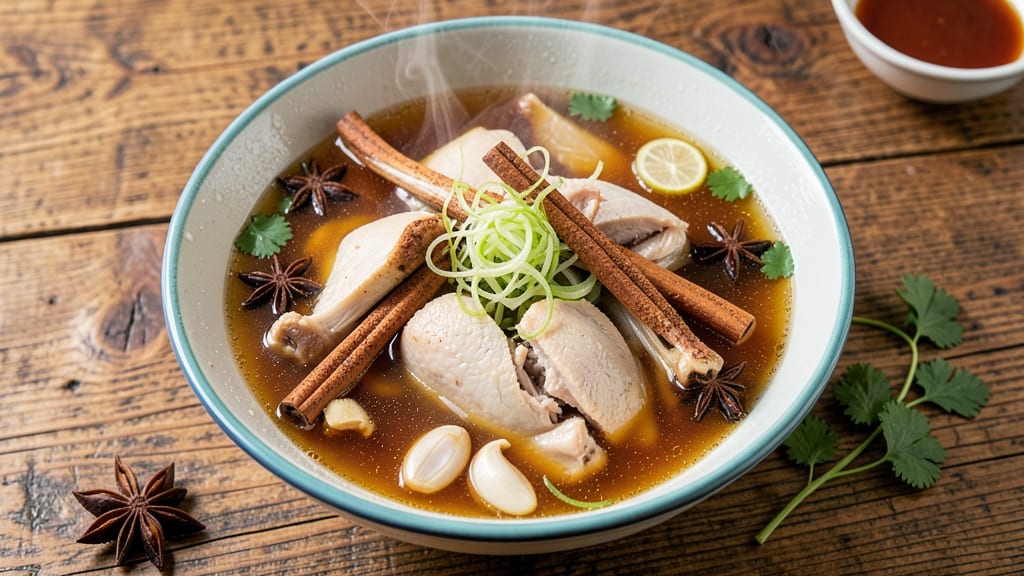
This Asian-style chicken soup recipe transforms a simple weeknight dinner into a fragrant, comforting bowl of silky noodles and aromatic broth. 🌟 The secret lies in balancing ginger, lime, and star anise to create a broth that's both bright and deeply savory—inspired by the best elements of Japanese ramen, Thai tom kha, and Vietnamese pho.
What makes this recipe special is its adaptability: use store-bought noodles for convenience or fresh rice noodles for authenticity.
The foundation is a rich, ginger-lime broth that simmers for hours, extracting maximum flavor from chicken bones and aromatics. While traditional versions require long cooking times, this method delivers restaurant-quality depth in just 90 minutes without sacrificing authenticity.
The chicken cooks tender and flavorful, absorbing the broth's essence, while the noodles soak up every drop of that fragrant liquid.
What you'll end up with is a bowl that's equal parts comforting and sophisticated—golden broth with tender chicken, silky noodles, and a garnish of fresh herbs that adds brightness.
The lime zest and chili oil finish bring a perfect balance of heat and freshness, making each spoonful feel like a little vacation. This soup is hearty enough for a cold evening but light enough for a quick lunch.
Whether you're serving a family dinner or meal prepping for the week, this recipe scales beautifully. The broth freezes well, and the noodles can be cooked separately, making it a versatile addition to your weekly menu. Let's get started on creating this aromatic, soul-warming bowl.
Ingredients for asian style chicken soup
The aromatic foundation of this Asian-style chicken soup relies on fresh ginger, star anise, and lime zest.
| Ingredient | Amount | Notes |
|---|---|---|
| Chicken Bones 🍗 | 2 lb | With meat attached, for broth |
| Fresh Ginger Root 🧄 | 3 tbsp | Grated, peeled, fresh preferred |
| Lime Zest 🍋 | 1 tbsp | Freshly zested, bright flavor |
| Star Anise Pods 🌿 | 2 whole | Whole pods, aromatic depth |
| Garlic Cloves 🧄 | 6 cloves | Peeled, smashed for infusion |
| Cinnamon Sticks 🌿 | 1 whole | 1-inch piece, for warmth |
| Chicken Breast 🍗 | 1 ½ lb | Boneless, skinless, cut into pieces |
| Rice Noodles 🍜 | 8 oz | Fresh or dried, silky texture |
| Green Onions 🧅 | ¼ cup | Thinly sliced, for garnish |
| Fresh Cilantro 🌿 | ¼ cup | Chopped, for freshness |
| Chili Oil 🌶️ | 2 tbsp | Store-bought or homemade |
| Fish Sauce 🥫 | 1 tbsp | Umami depth, authentic flavor |
| Soy Sauce 🥫 | 2 tbsp | Light or dark, for balance |
| Sesame Oil 🫒 | 1 tsp | Toasted, for aroma |
| Salt 🧂 | 2 tsp | Kosher or sea salt |
The chicken bones are the heart of this broth, so choose high-quality, meaty bones from your butcher or grocery store's meat department. If you can't find chicken bones, substitute with chicken thighs and backs—just remove the meat first. For star anise, Whole Foods or Asian markets carry the best quality, but regular grocery stores often stock them too. Fresh ginger and lime are non-negotiable here—their bright flavors define the broth. If you can't find fresh ginger, substitute with 1 tbsp ginger juice, but fresh is always better. The fish sauce adds that essential umami punch, and Red Boat or Three Crabs are top-tier brands worth investing in for authentic flavor.
No fish sauce? Soy sauce plus a pinch of sugar works as a substitute, though it won't be identical. Fresh ginger too strong? Toast the grated ginger for 1 minute to mellow its heat. The rice noodles can be dried or fresh—if using dried, soak them separately for 10-15 minutes before adding to the soup. For extra depth, toast the star anise and cinnamon sticks lightly in a dry pan before adding to the broth. The chili oil can be store-bought (like Lao Gan Ma), but homemade is easier than you think—just blend chili flakes with neutral oil and a pinch of sugar. If you're missing sesame oil, toasted sesame seeds can be sprinkled on top instead for a similar aroma.
This soup tastes even better the next day as the flavors meld, so double the broth if you're meal prepping. Store the broth in the fridge for up to 5 days or freeze it for 3 months—it reheats beautifully. The noodles can be cooked separately and stored in the fridge for 3 days or frozen for 1 month. To serve, simply reheat the broth, add the noodles, and top with fresh herbs and chili oil. The lime zest and green onions should always be added fresh at the end to preserve their bright flavors.
Why You'll Love This Recipe
- No-Chop Necessary: I swear by this trick—just toss in whole ginger slices and star anise pods. The bones simmer down to rich broth while I’m still chopping veggies for dinner, and the lime zest adds that bright kick without any extra work. Honestly, I’ve made it with pre-minced garlic too, but the whole cloves infuse deeper flavor.
- Umami Bomb: That first sip of broth—savory, slightly sweet from the star anise, with a zing from the lime—it’s like a flavor explosion. The chicken bones melt into the pot, creating a depth you won’t find in store-bought broth, and the garlic? Oh, it caramelizes just enough to make the whole thing sing.
- Leftovers That Beg for More: This soup tastes even better the next day. Between us, I often make a double batch because the leftovers are my secret weapon for lazy mornings—just reheat and add a splash of soy sauce. My kids (yes, even the picky one) fight over the last bowl.
- Budget-Friendly Bone Magic: Chicken bones are cheap, and they turn into liquid gold. I buy them in bulk, freeze them, and pull them out whenever I need a quick, nourishing meal. The star anise and ginger stretch the flavor further, so you’re not just feeding stomachs—you’re filling them with something special.
Step-by-step instructions for Asian style chicken soup
Here's how to craft a vibrant, aromatic broth with tender chicken and silky noodles.
🔥 Step 1: Build the Aromatic Broth Base
In a large stockpot, combine the 2 lb chicken bones with 3 tbsp freshly grated ginger root, 6 smashed garlic cloves, 2 whole star anise pods, and 1 whole cinnamon stick. Add 8 cups cold water and bring to a boil over high heat. Once boiling, reduce to a gentle simmer and skim off any foam that rises to the surface for 10 minutes—this ensures clarity in your broth.
Simmer uncovered for 60-75 minutes until the liquid reduces slightly and develops a deep golden color. The broth should smell rich with aromatic notes from the spices. Here's the thing—don't rush this step. The longer the spices infuse, the more complex the flavor becomes. I like to check periodically and add 1 cup hot water if the broth reduces too much during simmering.
🍳 Step 2: Add Chicken and Seasonings
While the broth simmers, cut the 1.5 lb chicken breast into 1-inch cubes and set aside. After the initial 75 minutes of simmering, add the chicken cubes to the pot. Increase heat to medium-high and bring back to a boil. Once boiling, reduce heat to medium-low and simmer for 15-20 minutes until the chicken is fully cooked and no longer pink in the center.
Strain the broth through a fine-mesh sieve into a clean pot, pressing gently on the solids to extract maximum flavor. Discard the solids. Return the broth to the pot and stir in 1 tbsp lime zest, 2 tbsp soy sauce, 1 tbsp fish sauce, and 2 tsp salt. Taste and adjust seasoning—this is where the broth comes together. The lime zest adds brightness that balances the rich umami from the fish and soy sauces.
🥘 Step 3: Prepare and Cook the Rice Noodles
While the broth finishes, prepare the 8 oz rice noodles according to package instructions. I prefer to use hot broth instead of boiling water for cooking the noodles—this infuses them with flavor immediately. Divide the noodles between 4 bowls and ladle 1 cup hot broth over each portion. Let them soak for 3-5 minutes until tender but still slightly firm to the bite. Drain any excess liquid.
Here's a pro tip: Don't overcook the noodles. They'll continue to soften as they absorb the warm broth when served. The ideal texture should be silky but still with a slight resistance—this prevents a mushy final dish. Keep the cooked noodles covered with a damp towel to prevent drying.
🍽️ Step 4: Assemble and Finish the Soup
Return the broth to a gentle simmer and stir in 1 tsp sesame oil and 2 tbsp chili oil. The chili oil should be swirled in just before serving—this preserves its vibrant color and heat. Divide the cooked noodles among 4 bowls, then ladle the hot broth evenly over each portion. The broth should cover about ¾ of the noodles, leaving room for garnishes.
Top each bowl with 1 tbsp chopped green onions and 1 tbsp chopped fresh cilantro. The green onions add a fresh, crisp contrast to the rich broth, while the cilantro brings a bright herbal note. Serve immediately with extra chili oil on the side if desired. The contrast of temperatures—hot broth against cool garnishes—creates a truly satisfying dining experience.
Pro Tips For Making Asian Style Chicken Soup
- BLANCH BONES FIRST: Toss your chicken bones in boiling water for 2-3 minutes before simmering—this removes impurities and keeps your broth crystal clear. I learned this the hard way when my first batch turned cloudy mid-cook, and it’s the difference between a restaurant-quality broth and something that looks homemade (in the bad way).
- GRATE GINGER FINE: Skip the thick slices—grate your ginger root as finely as you can, almost like a paste. It dissolves better and infuses the broth with that deep, warm kick without floating as chunks. Yes, it takes 30 seconds extra, but your soup will taste like it simmered for hours instead of one.
- DON’T CRUSH STAR ANISE: Leave those pods whole and toss them in a spice bag or cheesecloth—crushing them releases too much bitterness and overpowers the broth. My grandmother swore by this, and she was right: the subtle aroma lingers without dominating, like a whisper instead of a shout.
- ADD LIME ZEST LAST: Stir in the lime zest right at the end—heating it too long turns it bitter, and you’ll end up with a soup that tastes like cleaning solvent. Save it for the final 5 minutes, and it’ll brighten the dish like a fresh breeze on a hot day. (Trust me, you’ll notice the difference.)
Regional styles of this asian style chicken soup
Japanese Ramen-Inspired
For a richer, more umami-forward broth, add 2 tbsp miso paste (white or red) when straining the broth. Use chashu pork belly instead of chicken breast for the classic ramen experience—simmer 1 lb pork belly in the broth for 2 hours before adding noodles.
Garnish with soft-boiled eggs and nori strips for that iconic ramen touch. I love using thin wheat noodles instead of rice noodles for this variation. 🍜
Thai Tom Kha Style
Transform this soup into a creamy, coconut-infused Thai-style broth by adding 1 can (13.5 oz) coconut milk after straining the broth. Stir in 2 tbsp galangal paste (or ginger if unavailable) and 1 tbsp lemongrass paste for that signature Thai aroma.
Swap the fish sauce for 1 tbsp palm sugar and add ½ cup mushrooms (straw or oyster) for texture. Top with kaffir lime leaves and Thai basil for authenticity. 🌿
Vietnamese Pho Twist
Bring the essence of pho to your kitchen by adding 1 cinnamon stick and 3 star anise pods to the broth base. After simmering, strain and return the broth to the pot, then add 1 tbsp fish sauce and 1 tbsp rock sugar (or brown sugar).
Use rice noodles and serve with thinly sliced raw beef (like flank steak) on the side for diners to cook in their bowls. Garnish with bean sprouts, Thai basil, and hoisin sauce for that classic pho experience. 🥗
Korean Gukbu Style
For a Korean-inspired gukbu, add 1 tbsp gochugaru (Korean chili flakes) and 1 tbsp soy sauce to the broth after straining. Use dried wheat gluten (dasan) for texture and top with kimchi and sesame seeds.
Serve with steamed rice on the side, as Koreans often do. The gochugaru adds a subtle heat that pairs perfectly with the ginger-lime broth. 🌶️
Chinese Congee Fusion
Turn your soup into a comforting congee by reducing the broth to a thick, porridge-like consistency. Use jasmine rice instead of noodles, and add 1 tbsp shaoxing wine to the broth. Stir in 1 tbsp ginger juice and ½ cup shredded chicken for a hearty, warming bowl.
Top with pickled vegetables and scallions for a Chinese-inspired twist. This version is perfect for breakfast or a light dinner. 🍚
Spicy Szechuan Kick
Add a fiery Szechuan twist by incorporating 2 tbsp Szechuan peppercorns (toasted and crushed) into the broth base. Stir in 1 tbsp doubanjiang (fermented chili bean paste) after straining the broth.
Use wide rice noodles and garnish with pickled mustard greens and chili oil. The Szechuan peppercorns bring a tingling, numbing heat that’s uniquely addictive. 🔥
Nutrition facts
Frequently asked questions
Can I use chicken thighs instead of chicken breast?
Chicken thighs add even more flavor and richness to the broth. Use 1.5 lb bone-in, skin-on thighs instead of breast, and simmer them directly in the broth for 25-30 minutes until tender. The skin will render fat that enhances the soup's depth, while the bones contribute extra collagen for a silkier texture. Just remove the skin before serving if preferred.
What if I don't have fish sauce?
No problem! Fish sauce provides umami, so substitute with 1 tbsp soy sauce plus ½ tsp sugar for a similar savory-sweet balance. For a vegetarian version, use 1 tbsp soy sauce plus ½ tsp mushroom powder (or 1 tsp nutritional yeast). The broth will still be delicious, though the depth of flavor will differ slightly. Always taste and adjust after adding these substitutes.
How can I make this soup spicier?
For extra heat, add 1-2 tbsp chili flakes to the broth while simmering, or increase the chili oil to 3 tbsp when finishing. For a smoky kick, stir in ½ tsp smoked paprika with the seasonings. If you love fresh heat, serve with sliced jalapeños or Thai bird's eye chilies on the side for diners to adjust to their preference.
Can I prepare this soup ahead of time?
Yes! The broth freezes beautifully for up to 3 months—just store it in airtight containers and thaw overnight in the fridge. For meal prep, cook the noodles separately and store them in the fridge for 3 days or freeze for 1 month. Reheat the broth separately, then assemble bowls with fresh noodles and garnishes. The flavors actually improve after resting overnight!
What's the best way to store leftovers?
Store leftovers in the fridge for 3-4 days in airtight containers. Keep the broth and noodles separate until reheating to maintain texture. When ready to serve, warm the broth on the stove (don't boil) and add fresh noodles and garnishes. For longer storage, freeze the broth alone—it reheats perfectly and keeps its vibrant flavor. Never freeze the noodles with broth, as they'll turn mushy upon thawing.