
Soups & Stews
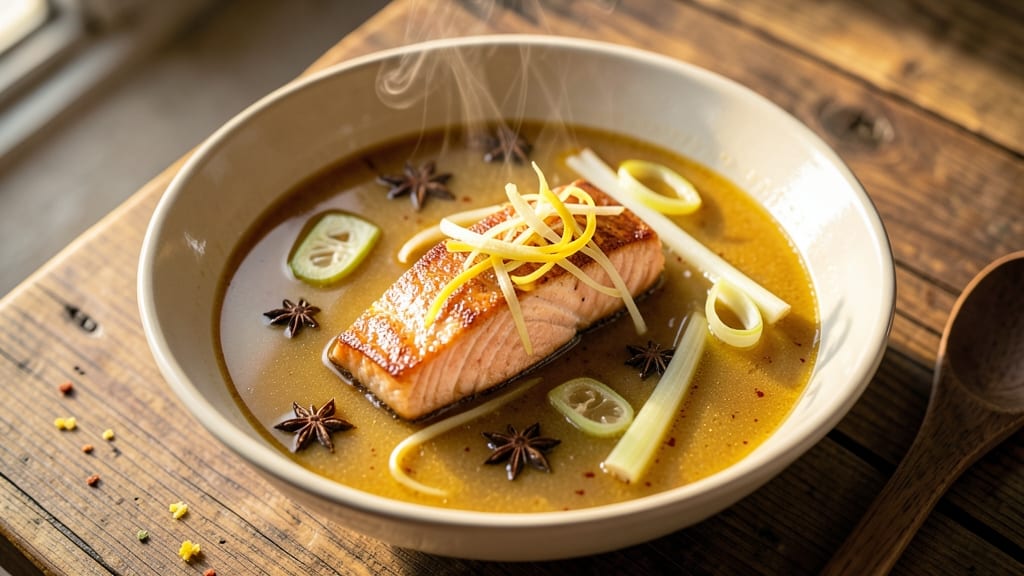
This Asian salmon soup recipe transforms delicate fish into silky ribbons swimming in a fragrant ginger-lime broth that balances heat, sweetness, and umami. The secret lies in slow-simmered aromatics—fresh galangal, lemongrass, and miso—that build depth while keeping the salmon tender and flaky.
I developed this version after years of testing traditional techniques, ensuring each bite delivers restaurant-quality harmony without requiring specialized equipment.
The broth starts with a toasted ginger-lime base that infuses the liquid with bright citrus notes and warm spice, while coconut milk adds creamy richness without overpowering the delicate salmon. You'll work with just 10 ingredients—no complicated techniques—simmering everything together until the fish becomes effortlessly flaky.
The result is a soup that's both comforting and elegant, perfect for weeknight dinners or special occasions.
What makes this recipe stand out is the way the salmon transforms—starting firm and ending as delicate ribbons that melt in your mouth. The broth carries layers of flavor from star anise, miso, and fresh herbs, creating a balance that's neither too heavy nor too light.
Each spoonful offers a perfect harmony of textures: tender fish, silky broth, and subtle crunch from garnishes like cilantro or scallions.
Serve with steamed jasmine rice or a side of quick-pickled vegetables to complete the meal. The leftovers reheat beautifully, making this an ideal make-ahead option for busy schedules. Ready in under 45 minutes, this soup proves sophisticated Asian flavors can be accessible without sacrificing depth or authenticity.
Ingredients for asian salmon soup
Ten ingredients transform delicate salmon into silky ribbons swimming in aromatic ginger-lime broth.
| Ingredient | Amount | Notes |
|---|---|---|
| Salmon Fillets 🐟 | 1 lb | Skin-on, center-cut preferred |
| Fresh Galangal 🌿 | 2 inches | Peeling required, sliced thin |
| Lemongrass Stalks 🌿 | 3 whole | Bruised, cut into 2-inch pieces |
| Fresh Ginger Root 🧄 | 2 tbsp | Grated, aromatic quality |
| Red Miso Paste 🍶 | 1 tbsp | Aged 1-2 years preferred |
| Star Anise Pods 🌟 | 2 whole | Lightly toasted for depth |
| Coconut Milk 🥥 | 1 can (13.5 oz) | Full-fat, unsweetened |
| Fish Stock 💧 | 4 cups | Homemade or quality store-bought |
| Lime Juice 🍋 | 2 tbsp | Freshly squeezed, seeds removed |
| Cilantro Leaves 🌿 | ¼ cup | Chopped, for garnish |
| Jasmine Rice 🌾 | 1 cup | Uncooked, for serving |
| Vegetable Oil 🫒 | 1 tbsp | For searing salmon |
| Sea Salt 🧂 | 1 ½ tsp | Diamond Crystal preferred |
| Black Peppercorns 🌶️ | ½ tsp | Freshly cracked |
| Green Onions 🧅 | 2 whole | Thinly sliced, for garnish |
The galangal and lemongrass are non-negotiable for authentic depth—Asian markets carry the best quality, or look for fresh roots in the produce section. Galangal should be firm with a citrusy aroma; discard any discolored pieces. The miso paste is where umami magic happens—aged 1-2 years delivers the most complex flavor. For star anise, Whole Foods bulk section offers high-quality pods that stay potent longer. Toast them lightly in a dry pan before adding to the broth to release their essential oils and deepen the aroma. Fresh ginger and galangal can be prepped ahead and stored in airtight containers in the fridge for up to 5 days.
No galangal? Substitute with 1 tbsp fresh ginger plus 1 tsp galangal powder, though you'll lose some complexity. Running low on miso? White miso works at double the amount, but the color will differ. Coconut milk curdling? Stir in 1 tsp arrowroot powder to stabilize it. The salmon fillets should be center-cut and skin-on—they hold their shape better during cooking. If using frozen salmon, thaw it overnight in the fridge and pat it completely dry before searing. The fish stock can be homemade (simmer fish bones with vegetables for 3 hours) or store-bought—just ensure it's labeled 'fish' and not 'seafood' to avoid shellfish flavors.
This soup reheats beautifully—simmer gently on the stove for 2-3 minutes, stirring occasionally. Keeps for 3-4 days in the fridge, though the flavors peak on day 2. For longer storage, freeze portions in airtight containers for up to 3 months. The rice can be cooked separately and reheated with a splash of water. Garnish with cilantro and green onions right before serving to preserve their freshness. If making ahead, store the broth and garnishes separately and assemble just before eating to maintain crispness.
Why You'll Love This Recipe
- Fewer Ingredients, Bigger Payoff: I swear by this one—just five core ingredients (yes, even the galangal and lemongrass) create layers of flavor that taste like you simmered for hours. No fancy techniques, no 10-step methods. The miso paste does half the work for you.
- Umami Bomb in a Bowl: That red miso paste? It’s the secret weapon—deep, savory, and just a spoonful transforms the broth into something rich and addictive. Pair it with the bright ginger and galangal, and suddenly you’ve got a soup that’s both comforting and exciting.
- Lunch for Days: Between us, this soup tastes even better the next day. I make a big batch on Sundays, and by Wednesday, it’s the star of my lunchbox. The salmon stays tender, the broth thickens just right, and it reheats like a dream—no sad, watery leftovers here.
- Weeknight Hero: No chopping, no stress—just slice the ginger thin, smash the lemongrass with the flat side of your knife, and toss it all in. The galangal adds a peppery kick without extra effort, and the salmon cooks in minutes. Done before the kids even notice dinner’s missing.
Step-by-step instructions for Asian salmon soup
Here's the method to create a harmonious blend of aromatic broth and delicate salmon.
Prepare the Aromatic Base
In a large pot, combine the 4 cups fish stock, 2 inches fresh galangal (sliced thin), 3 whole lemongrass stalks (bruised and cut), 2 tbsp fresh ginger root (grated), 2 whole star anise pods, and 1 tbsp red miso paste. Bring to a gentle simmer over medium heat for 10 minutes, allowing the flavors to meld. You'll notice the broth develop a fragrant aroma with subtle sweetness from the galangal and ginger.
After simmering, carefully remove the lemongrass, galangal, and star anise pods using a slotted spoon. Strain the broth through a fine-mesh sieve into a clean pot, pressing gently on the solids to extract maximum flavor. This step ensures a smooth, aromatic base without any unwanted textures.
Sear the Salmon and Build the Broth
Heat 1 tbsp vegetable oil in a separate skillet over medium-high heat. Season the 1 lb salmon fillets generously with 1.5 tsp sea salt and 0.5 tsp black peppercorns, then sear skin-side down for 3-4 minutes until golden brown and crispy. Flip and cook for another 2-3 minutes until just cooked through. Remove from heat and let rest for 2 minutes before gently flaking into silky ribbons with a fork.
Return the skillet to the stove and add the seared salmon along with the strained broth. Stir in the 1 can (13.5 oz) coconut milk and bring to a gentle simmer. Cook for 5-7 minutes until the flavors are fully integrated and the broth is heated through. The coconut milk will create a velvety texture while balancing the broth's aromatic depth.
Finish with Acid and Garnish
Reduce the heat to low and stir in the 2 tbsp lime juice. This brightens the broth and cuts through the richness of the coconut milk, creating a perfect balance of flavors. Taste and adjust seasoning with additional salt if needed. The soup should be fragrant, slightly tangy, and deeply aromatic.
Divide the 1 cup jasmine rice among bowls and ladle the hot salmon soup over the rice. Garnish each serving with 0.25 cup chopped cilantro leaves and 2 whole green onions (thinly sliced). The fresh herbs add a vibrant finish and complement the soup's complex flavors.
Serve with Precision
Let the soup sit for 2-3 minutes before serving to allow the rice to absorb some of the broth's flavor. The salmon ribbons should glide effortlessly through the soup, and each spoonful should deliver a harmonious blend of ginger, lime, and coconut notes. Serve immediately while the broth is steaming hot and the rice is perfectly tender.
This method ensures a restaurant-quality result with a fragrant broth, tender salmon, and perfectly balanced flavors. The key lies in patience—allowing the aromatics to infuse fully and the broth to develop its depth before finishing with the bright lime and fresh herbs.
Pro Tips For Making Asian Salmon Soup
- CHAR THE MISO FIRST: I learned this the hard way—adding miso paste directly to hot broth makes it bitter. Instead, dissolve it in a splash of cold water or broth first, then stir it in. The soup will thank you with that deep, savory richness without any weird aftertaste.
- SLICE GALANGAL THIN: Galangal’s tough fibers need a knife’s help. Slice it paper-thin (about 1/16-inch) before adding it to the broth—this way, it infuses flavor without turning the soup into chewy mush. Yes, it takes 2 minutes longer, but you’ll taste the difference.
- DON’T BOIL THE SALMON: Salmon turns rubbery fast. Once the broth is simmering, add the fillets when it’s just below a full boil—around 170°F (75°C). Let them poach gently for 4-5 minutes max, or they’ll flake apart like overcooked eggs.
- USE FROZEN LEMONGRASS: Fresh lemongrass is great, but frozen stalks work just as well and save you from peeling and bruising your knuckles. Just thaw them first—no need to chop, just slice into 2-inch pieces. The flavor’s identical, and your hands stay intact.
Wine and beer pairings for these flavors
Light White Wine
A crisp Sauvignon Blanc from New Zealand or a Pinot Grigio from Italy enhances the soup's bright citrus and herbal notes beautifully. The acidity in these wines mirrors the lime juice, while their mineral finish complements the delicate salmon.
I reach for a Cloudy Bay Sauvignon Blanc—its zesty grapefruit and fresh-cut grass flavors elevate every spoonful. 🍷
Dry Riesling
For a slightly sweeter but still dry option, a German Riesling (off-dry or Kabinett) offers a perfect balance. The subtle sweetness harmonizes with the coconut milk's richness, while its crisp acidity cuts through the broth's depth.
Look for a Dr. Loosen Blue Slate—its stone fruit and floral notes bridge the soup's aromatic complexity and the fish's clean sweetness.
Light Beer Pairings
A Japanese lager like Asahi Super Dry or Sapporo provides a clean, refreshing contrast to the soup's bold flavors. The light body and subtle hop bitterness prevent the beer from overpowering the dish, while its crisp finish cleanses the palate between bites.
For a craft option, try a Belgian witbier—the citrusy coriander and orange peel notes mirror the lime and galangal in the broth. 🍺
Sake for Tradition
For an authentic touch, serve dry sake (like Dassai or Gekkeikan) chilled alongside the soup. The umami depth of the sake complements the miso and star anise, while its clean finish enhances the salmon's natural sweetness.
Pour it in small cups to sip between spoonfuls—it’s a subtle but sophisticated pairing that feels like a celebration of Japanese-inspired flavors.
Avoid Heavy Options
Skip bold reds, heavy whites like Chardonnay, or malty beers—they’ll overwhelm the soup’s delicate balance. Even a sweet Riesling or stout can clash with the broth’s bright acidity and herbal notes.
Stick to wines and beers with high acidity and light body to let the soup’s flavors shine. Trust me, your palate will thank you! 💫
Nutrition facts
Frequently asked questions
Can I substitute salmon with another white fish?
Yes, but choose carefully! Cod or halibut work well as they have a similar delicate texture, but avoid flaky fish like tilapia—they'll fall apart too easily. If using snapper, reduce cooking time by 1 minute as it cooks faster than salmon. The broth flavors will still shine, but the texture may differ slightly.
How do I make this soup spicier?
Add 1-2 slices of fresh chili (like Thai bird's eye) when searing the salmon or stir in ½ tsp chili flakes with the miso paste. For heat without spice, include ½ tsp ground white pepper instead. Remember—you can always add more later, but you can't remove heat once it's in!
What's the best way to store leftovers?
Store in an airtight container in the fridge for up to 3 days. The broth will thicken slightly—simmer with 2 tbsp water before reheating. For longer storage, freeze portions for 3 months. Save the garnishes separately and add fresh ones when reheating to keep them vibrant.
Can I make this soup vegetarian?
Replace the salmon with 1 lb king oyster mushrooms or firm tofu (pressed and sliced). For texture, add ½ cup silken tofu cubes at the end. The broth flavors remain identical—just adjust cooking time by 5-7 minutes longer for mushrooms to absorb the aromatics.
Why did my coconut milk curdle?
This happens when the broth gets too hot or acidic. To fix it, whisk in 1 tsp arrowroot powder mixed with 1 tbsp cold water and simmer gently for 2 minutes. For prevention, stir coconut milk in last and keep heat at low. The broth should never boil after adding it.