
Soups & Stews
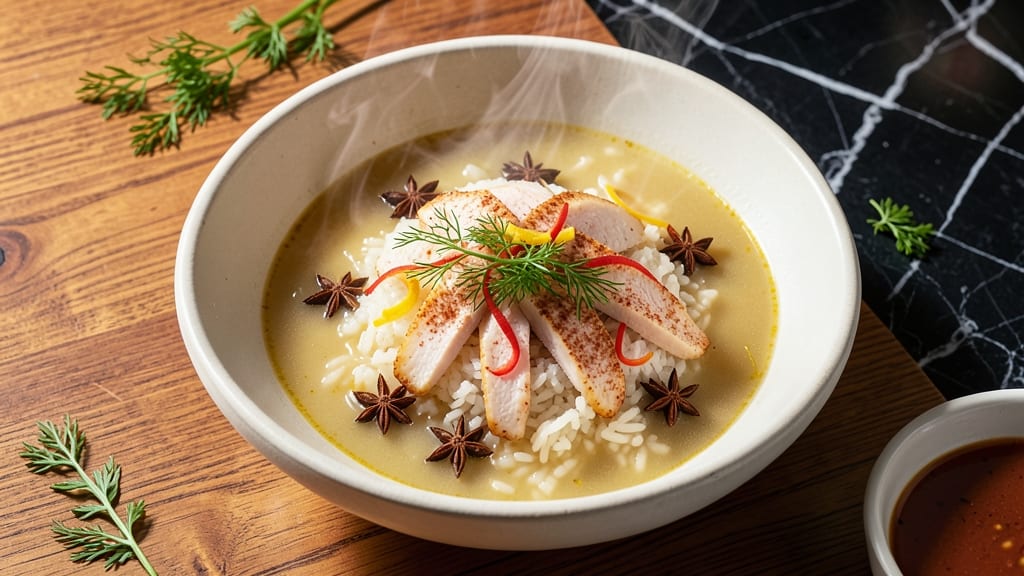
This Asian rice soup recipe delivers a fragrant five-spice broth infused with star anise and ginger, transforming simple ingredients into a deeply comforting bowl.
The key lies in simmering aromatic spices with rice and broth until the grains soften into a creamy texture, while the broth develops layers of warmth from cinnamon, fennel, and cloves.
What starts as a humble pot of rice and water becomes a restaurant-quality dish with just a few carefully balanced spices.
The result is a luscious, creamy rice soup with tender grains floating in a rich, golden broth that’s savory yet subtly sweet. Perfect for chilly evenings or as a soothing meal when you crave something hearty yet light, this recipe builds flavor through slow simmering—no blending required.
Serve it as-is for simplicity or add protein like shredded chicken or tofu for extra substance. The beauty of this dish is in its adaptability while maintaining that essential Asian soul.
Ingredients for asian rice soup
Simple ingredients, aromatic spices, and slow simmering create this restaurant-quality Asian rice soup.
| Ingredient | Amount | Notes |
|---|---|---|
| Jasmine Rice 🍚 | 1 cup | Uncooked, long-grain preferred |
| Chicken Broth 💧 | 4 cups | Low-sodium preferred |
| Fresh Ginger 🧄 | ½ inch | Peeled, sliced thin |
| Star Anise 🌟 | 2 whole | Whole pods, not powder |
| Ground Cinnamon 🌿 | ½ tsp | Freshly ground preferred |
| Fennel Seeds 🌱 | ½ tsp | Lightly toasted |
| Cloves 🌶️ | 3 whole | Whole, not ground |
| Garlic Cloves 🧄 | 3 cloves | Peeled, minced |
| Soy Sauce 🍶 | 1 tbsp | Light or dark preferred |
| Sesame Oil 🫒 | 1 tsp | Toasted sesame preferred |
| Green Onions 🧅 | ¼ cup | Sliced, for garnish |
| Salt 🧂 | ½ tsp | Kosher or sea salt |
| Black Pepper 🌶️ | ¼ tsp | Freshly ground |
The star anise and cinnamon are non-negotiable for that authentic depth. Whole spices work best—buy them in bulk from Penzeys or Asian markets for freshness. Fennel seeds can be tricky to find, but Trader Joe's usually carries them. Ginger should be firm and aromatic—skip any with soft spots. For the broth, low-sodium versions let you control the saltiness better. If you're using store-bought, look for ones with minimal additives.
No star anise? Anise seeds or a pinch of anise extract works in a pinch. Running out of fennel? Extra cinnamon or a dash of licorice root adds similar warmth. The ginger can be swapped for ginger paste at half the amount, but fresh is ideal. Soy sauce? Coconut aminos for a gluten-free version. Sesame oil is optional but adds incredible aroma—use the toasted version if you can find it. For the rice, jasmine is traditional, but brown rice or short-grain white both work well.
This soup tastes even better the next day as flavors meld. Store in an airtight container for up to 5 days. Freezes beautifully for 3 months—just thaw overnight in the fridge. For meal prep, make a double batch and portion into containers. The spices lose potency over time, so store them in a cool, dark place. If you're making this for a crowd, scale up the broth and rice proportionally—1 cup rice per 3 cups broth is the golden ratio.
Why You'll Love This Recipe
- No Chopping Needed: I swear by this—just measure the jasmine rice and toss it straight into simmering broth with a knob of ginger. The star anise and cinnamon do all the work while you stir for five minutes. Honestly, my busiest nights thank me for this.
- Warm Spice Magic: That first sip of broth—ginger zing, cinnamon depth, star anise lingering like a secret—makes me pause mid-lunch. It’s the kind of flavor that turns a basic rice soup into something you’d order at a tiny street-side stall. (Yes, even on a Tuesday night.)
- Lunchbox Hero: Pack it cold or reheat it—this soup keeps its texture perfectly for days. I’ve sent it to work in a thermos, packed it for kids’ school lunches (they eat it), and even served it at potlucks where people asked for the recipe. No one bats an eye at jasmine rice in a jar.
- Pantry Stash Winner: Star anise and cinnamon last forever, chicken broth freezes like a dream, and ginger stays fresh longer than most veggies. Between us, this is my go-to when I’ve got random spices but nothing else. It costs next to nothing to make but tastes like I slaved over it.
Step-by-step instructions for Asian rice soup
Here's how to build a rich, aromatic broth that transforms simple rice into a comforting, fragrant soup.
Toast the Spices for Maximum Flavor
Heat a dry skillet over medium heat and add the 2 whole star anise, 3 whole cloves, and 0.5 tsp fennel seeds. Toast them for 1-2 minutes until fragrant and just beginning to darken—you should smell their warm, earthy aromas filling your kitchen. This step unlocks their full potential in the broth.
Immediately transfer the toasted spices to a small bowl and set aside. Next, add the 0.5 inch fresh ginger and 3 cloves garlic cloves to the same skillet and cook for another 30 seconds until the ginger softens and the garlic becomes golden. This prevents the broth from developing a raw garlic taste later.
Build the Fragrant Broth Base
Pour the 4 cups chicken broth into a medium pot and bring to a gentle boil over medium-high heat. Add the toasted spices, ginger, and garlic, then reduce heat to medium-low and let it simmer for 10 minutes—this infuses the broth with deep, complex flavors.
After 10 minutes, strain the broth through a fine-mesh sieve into a clean pot, pressing gently on the spices to extract every last bit of flavor. Discard the solids. Return the broth to a simmer and stir in the 0.5 tsp ground cinnamon, 0.5 tsp salt, and 0.25 tsp black pepper. The broth should smell warmly sweet with hints of licorice from the star anise and earthy depth from the cinnamon.
Cook the Jasmine Rice to Perfection
Add the 1 cup jasmine rice to the simmering broth and stir gently to prevent clumping. Bring the mixture back to a gentle boil, then immediately reduce heat to low. Cover the pot with a tight-fitting lid and let it cook for 15 minutes—this low-and-slow approach ensures each grain absorbs the aromatic broth evenly.
After 15 minutes, check the rice for doneness. The grains should be tender but still hold their shape with a slight bite. If needed, continue cooking for another 2-3 minutes—undercooking is better than mushy rice in this dish. The broth should now be fully infused with the rice's natural starch, creating a naturally thickened soup.
Finish with Umami and Garnish
Remove the pot from heat and stir in the 1 tbsp soy sauce and 1 tsp sesame oil. The soy sauce adds depth while the sesame oil contributes a nutty aroma that ties all the flavors together. Let the soup sit covered for 5 minutes to allow the flavors to meld completely.
Just before serving, divide the soup among bowls and garnish each portion with 0.25 cup sliced green onions. The bright green color contrasts beautifully with the golden broth, adding both visual appeal and a fresh finish. Serve immediately while the rice is still warm and the broth maintains its rich, aromatic quality.
Pro Tips For Making Asian Rice Soup
- TOAST THE SPICES FIRST: Toss whole star anise and ground cinnamon in a dry pan over medium heat for 30 seconds until fragrant—this unlocks their flavor without burning. I learned this the hard way when my soup tasted like sawdust instead of warm spices.
- RINSE THE RICE: Give jasmine rice a quick cold-water rinse before cooking to remove excess starch—it prevents a gummy, gluey soup. Skip this, and you’ll end up with rice that clumps like a sad, overworked dumpling.
- SIMMER GENTLY AFTER BOIL: Once the rice starts cooking, drop the heat to a bare simmer (tiny bubbles, occasional swirls) or it’ll turn mushy. I used to rush it, and the result was sad, broken grains instead of plump, individual kernels.
- PEEL THE GINGER THICK: Leave a 1/8-inch layer of skin on fresh ginger—it adds subtle bitterness that balances sweetness and prevents the broth from tasting like plain soap. (Yes, I’ve burned ginger down to nothing before.)
Pro cooking tips for this recipe
Spice Toasting Secrets
Toast your whole spices in a dry skillet over medium heat for just 1-2 minutes—this releases their essential oils and creates that irresistible depth. I always use whole star anise, cloves, and fennel seeds because their toasted aroma is far superior to ground versions.
The moment they start to darken slightly and fill your kitchen with warmth, you've unlocked their full potential. 🌟
Broth Infusion Time
Simmer your broth with the toasted spices for at least 10 minutes—this is where the magic happens. The longer you infuse, the more complex the flavors become. I strain through a fine-mesh sieve to remove all solids, ensuring a perfectly smooth broth.
Don't skip this step—it makes the difference between a good soup and a great one.
Rice Cooking Precision
Cook your rice at a gentle simmer with the lid tightly sealed for 15 minutes—this prevents the rice from turning mushy while allowing it to absorb the aromatic broth. If you're using jasmine rice, it should be tender but still hold its shape with a slight bite.
The broth will naturally thicken as the rice releases starch, creating that perfect creamy texture without any blending required.
Umami Boost Finish
Finish your soup with 1 tablespoon soy sauce and 1 teaspoon toasted sesame oil—this combination adds the final layer of depth. The soy sauce brings umami richness, while the sesame oil contributes a nutty aroma that ties everything together.
Let the soup rest for 5 minutes before serving, allowing the flavors to meld completely. This simple step elevates the dish from good to restaurant-quality. 💛
Garnish Like a Pro
Top your soup with sliced green onions just before serving—their bright green color contrasts beautifully with the golden broth, adding both visual appeal and a fresh finish. I also love adding a drizzle of toasted sesame oil or a sprinkle of crushed peanuts for extra texture and flavor.
These finishing touches make your soup look as good as it tastes.
Make-Ahead Magic
This soup tastes even better the next day as the flavors meld together. Store in an airtight container in the fridge for up to 5 days or freeze for 3 months. When reheating, add a splash of water or broth to prevent the rice from drying out.
The longer it sits, the more complex and comforting the flavors become—perfect for meal prep or busy weeknights. ✨
Nutrition facts
Frequently asked questions
Can I make this Asian-style rice soup without chicken broth?
For a vegetarian version, use 4 cups vegetable broth instead—just ensure it's well-seasoned with soy sauce and a pinch of mushroom powder for depth. For extra richness, add 1 cup coconut milk at the end of cooking. Seafood lovers can substitute with fish or shrimp stock for a briny twist.
Why does my rice soup turn out mushy?
Mushy rice usually means either too much liquid or cooking at too high heat. Use 1 cup rice to 3 cups broth and maintain a gentle simmer—not a boil—after adding the rice. If using short-grain rice, reduce cooking time by 2-3 minutes to prevent over-softening. Always stir once before covering to distribute heat evenly.
What are some traditional variations of this dish?
This recipe draws from multiple Asian traditions: Japanese chankonabe (with miso and pork), Korean juk (often with anchovy broth), and Thai jok (using lemongrass and kaffir lime). For a Thai twist, add 1 stalk lemongrass and 2 kaffir lime leaves to the broth. For a Japanese version, swap star anise for 1 tsp shichimi togarashi (chili flakes).
Can I add protein to this soup?
Yes! Stir in 1 cup shredded chicken or ½ pound cubed tofu during the last 5 minutes of cooking. For seafood, add ½ pound shrimp or scallops in the final 2 minutes to prevent overcooking. Pro tip: Season proteins with ½ tsp salt and ¼ tsp white pepper before adding to the broth.
How do I adjust the spice level?
For milder flavor, reduce the cinnamon and fennel seeds to ¼ tsp each. For extra heat, add ½ tsp chili flakes or 1 sliced Thai chili with the ginger. To balance spice, increase the sesame oil to 1½ tsp—its nutty richness helps mellow sharp flavors. Always taste the broth before adding rice to adjust seasoning.