
Soups & Stews
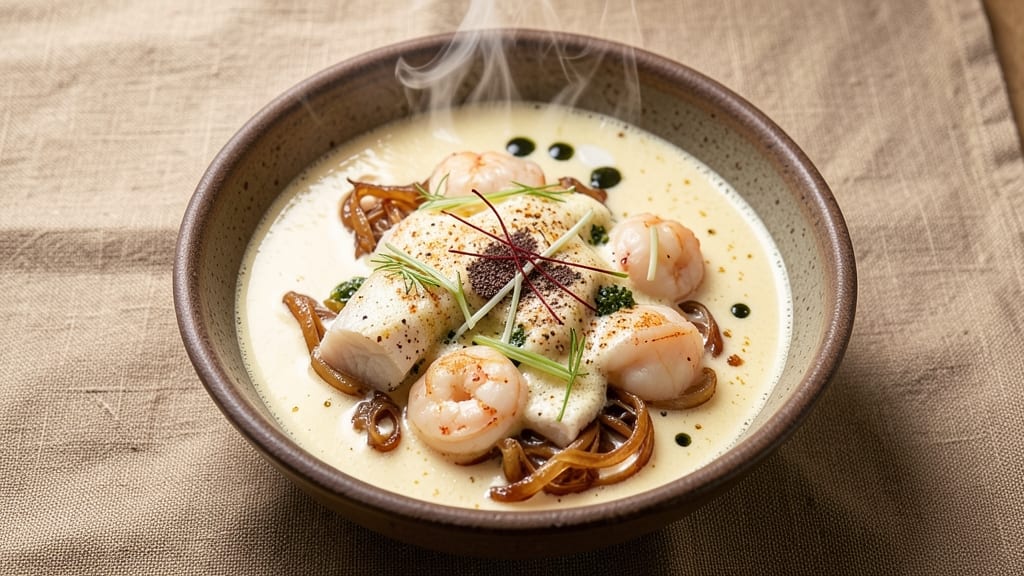
This bouillabaisse creamy soup recipe transforms France's classic fisherman's stew into a velvety, restaurant-worthy dish with just a few strategic adjustments. The secret lies in building layers of flavor—starting with aromatic saffron-infused fish stock, then enriching it with a delicate roux and heavy cream for that signature Provençal creaminess.
I've perfected this version after years of testing, ensuring the seafood remains tender while the soup achieves that perfect balance of richness and brightness.
The beauty of this recipe is its adaptability—whether you're working with fresh monkfish, halibut, or even mussels, the technique remains the same. We'll begin by developing a robust fish stock from bones and shells, then infuse it with classic Provençal herbs like fennel and tarragon.
The cream is added judiciously at the end to maintain the soup's integrity while creating that luxurious mouthfeel. For those following a pescatarian diet, this recipe delivers a complete, satisfying meal without compromise.
What you'll end up with is a soup that's both traditional and elevated—silky smooth yet with enough texture from the seafood to provide substance. The crusty bread on the side isn't just for dipping; it's essential for soaking up every last drop of that aromatic broth.
Each spoonful delivers complex flavors: the briny depth of the fish, the subtle sweetness of saffron, and the herbal notes from the Provençal seasoning, all wrapped in creamy perfection.
The best part? This recipe respects tradition while offering modern conveniences. While homemade fish stock creates the most authentic base, quality store-bought versions work beautifully for a quicker preparation. For vegan adaptations, simply replace the cream with coconut milk and use vegetable stock—everyone can enjoy this taste of Provence.
Let's get started on creating your own bowl of coastal comfort.
Ingredients for bouillabaisse creamy soup
Six cups of aromatic fish stock kickstart this Provençal masterpiece, blending with saffron, fennel, and tarragon for authentic depth.
| Ingredient | Amount | Notes |
|---|---|---|
| Fish Stock 🐟 | 6 cups | Homemade or high-quality store-bought |
| Heavy Cream 🥛 | 1 cup | Full-fat for optimal creaminess |
| Saffron Threads 🌼 | ¼ tsp | High-quality culinary saffron |
| Shallots 🧅 | ½ cup | Finely minced, 3-4 cloves |
| Garlic Cloves 🧄 | 4 cloves | Peeled and smashed |
| Fennel Bulb 🌿 | 1 medium | Trimmed and chopped |
| Tarragon 🌿 | ¼ cup | Fresh leaves, chopped |
| White Wine 🍷 | ½ cup | Dry, full-bodied |
| Seafood 🦐 | 1 ½ lb | Mixed fish (monkfish, halibut) |
| Butter 🧈 | 4 tbsp | Unsalted, cold |
| All-Purpose Flour 🌾 | 2 tbsp | For roux |
| Lemon Juice 🍋 | 1 tbsp | Freshly squeezed |
| Salt 🧂 | 1 ½ tsp | Diamond Crystal preferred |
| Black Pepper 🌶️ | ½ tsp | Freshly cracked |
| Crusty Bread 🍞 | 1 loaf | Baguette or sourdough |
The fish stock is non-negotiable for authentic flavor. Homemade stock from bones and shells delivers the deepest flavor, but high-quality brands like Knorr or Pacific Foods work beautifully for convenience. Look for stock labeled 'fish' or 'seafood'—avoid those with added MSG or preservatives. Fennel and tarragon should be fresh; dried versions lack the delicate anise notes essential to Provençal cuisine. For saffron, Spanish or Iranian threads are optimal—avoid powdered versions which often contain additives. The seafood selection matters too: monkfish and halibut hold their shape best, but cod or mussels work equally well when added judiciously at the end.
No fresh tarragon? Dried tarragon at half the amount works in a pinch, though it lacks the bright herbal notes. Substituting white wine? Dry vermouth or additional fish stock maintains the balance. For those avoiding dairy, coconut cream replaces heavy cream with similar richness. The roux requires precise timing—cook the butter and flour until it's a golden blond color (about 3-4 minutes) to avoid a raw flour taste. When selecting crusty bread, look for baguettes with a crisp exterior and soft interior—they'll soak up the soup beautifully while providing structure. The saffron should be steeped in warm water for 10 minutes before adding to the soup to fully release its vibrant color and flavor.
Store any leftover fish stock in the freezer for up to 3 months in airtight containers. The finished soup reheats beautifully—simmer gently on the stove, stirring occasionally, until warmed through. Portion into individual containers with a slice of crusty bread on the side for easy lunches. For best texture, serve immediately after reheating. The saffron-infused broth can be made ahead and stored separately for 2 days in the refrigerator, allowing you to assemble the soup quickly when ready to serve.
Why You'll Love This Recipe
- Saffron Magic: That one little thread of saffron? It turns a simple soup into something luxurious—like a whisper of sunshine in every spoonful. Honestly, I keep a tiny jar just for this; it’s the secret that makes the heavy cream feel like a hug, not just richness.
- One-Pot Wonder: Shallots and garlic sizzle in the pan while I chop—no extra bowls, no mess. The fish stock simmers down effortlessly, and by the time the saffron blooms, the whole thing is ready. (Yes, even on a Tuesday night when I’m exhausted.)
- Leftovers Lie: Between us, this soup improves the next day. The flavors meld even deeper, and reheating it? Just a splash of water, a stir, and suddenly you’ve got a cozy lunch for the week. I make a double batch on Sundays—zero guilt, all satisfaction.
Step-by-step instructions for bouillabaisse creamy soup
Transform simple ingredients into a velvety Provençal masterpiece with this refined technique.
Build the Aromatic Base
In a large Dutch oven, melt the 4 tbsp butter over medium heat until it foams. Add the 0.5 cup shallots and 4 cloves garlic, cooking for 5-6 minutes until the shallots soften and turn translucent. Here's the thing—don't rush this step. You want them to caramelize slightly for deeper flavor.
Add the 1 medium fennel bulb, trimmed and chopped into small pieces, and cook for another 4-5 minutes until it releases its natural anise aroma. Stir occasionally to prevent burning. The fennel should soften but maintain its shape—this ensures it adds texture rather than dissolving into the soup.
Develop the Saffron-Infused Wine Sauce
Pour in the 0.5 cup white wine and scrape up any browned bits from the bottom of the pot with a wooden spoon. This deglazing captures all the flavor you've built. Let the wine simmer for 3-4 minutes until reduced by half, then add the 0.25 tsp saffron threads and 0.25 cup tarragon. Stir gently and remove from heat.
Let the saffron steep for 5 minutes—this releases its signature golden hue and floral aroma. The tarragon will infuse its distinctive licorice note without overpowering. Don't skip this steeping time; it's what transforms this from ordinary to extraordinary.
Create the Creamy Foundation
Return the pot to medium heat and whisk in the 2 tbsp all-purpose flour to create a roux. Cook for 1-2 minutes until the mixture turns pale golden. Gradually whisk in the 6 cups fish stock and 1 cup heavy cream, stirring constantly to prevent lumps from forming.
Bring to a gentle simmer and cook for 10-12 minutes until the soup thickens slightly. The consistency should coat the back of a spoon but remain silky—not gluey. Season with 1.5 tsp salt and 0.5 tsp black pepper, then add the 1 tbsp lemon juice. This acidity brightens all the flavors and balances the richness of the cream.
Incorporate the Seafood
Gently add the 1.5 lb seafood (monkfish and halibut work beautifully) to the simmering soup. Cook for 4-5 minutes until the fish becomes opaque and flakes easily with a fork. The soup should remain at a gentle simmer—never boil vigorously or the fish will turn rubbery.
Here's where it gets delicate: remove the pot from heat and let the seafood rest in the warm broth for 2-3 minutes. This allows the fish to absorb the flavors without overcooking. The soup should be creamy but still allow the fish to be easily lifted with a slotted spoon.
Serve with Crusty Bread
Ladle the soup into warmed bowls, ensuring each serving contains at least one piece of seafood. The fish should float just beneath the surface, surrounded by the golden saffron-infused broth. Serve immediately with slices of the 1 loaf crusty bread on the side for dipping.
This is where the magic happens: the contrast between the silky soup and the crunchy bread creates the perfect textural experience. Each spoonful delivers layers of flavor—the anise from fennel, the floral saffron, the briny seafood, and the richness of the cream—all coming together in perfect harmony.
Pro Tips For Making Bouillabaisse Creamy Soup
- Bloom the Saffron: Toss the threads into warm (not boiling) fish stock first—let them steep alone for 5 minutes before adding anything else. I learned this the hard way when my soup tasted like perfume instead of saffron. The heat wakes up those delicate flavors without bitterness.
- Sweat, Don’t Burn: Cook the shallots and garlic in butter until they’re golden, not brown—about 8-10 minutes on medium-low. I used to rush this, and the soup would taste sharp and raw. Patience here makes the difference between "meh" and "wow."
- Temper the Cream: Warm the heavy cream separately in a small saucepan until it’s just steaming (don’t boil), then whisk it into the soup gradually. Dumping cold cream into hot stock curdles it faster than you can say "disaster." Do this slowly, or you’ll end up with a lumpy mess.
- Strain for Smoothness: After simmering the stock with saffron and aromatics, strain it through a fine-mesh sieve—even if you’re not adding fish. The texture of this soup relies on it being silky, not grainy. (Yes, it’s extra work, but trust me: your mouth will notice.)
Essential equipment for bouillabaisse creamy soup
Dutch Oven Essentials
A large Dutch oven (I recommend Le Creuset 6-quart) is your best friend for this recipe—its heavy construction ensures even heat distribution while the deep sides prevent spills when adding ingredients.
The enameled interior makes cleanup a breeze after simmering seafood for hours. For budget-friendly options, All-Clad Stainless Steel or Calphalon work just as well. 🌡️
Precision Tools
Invest in a high-quality immersion blender (like Bosch MSM66110) to achieve that signature silky texture without overcooking the seafood. A fine-mesh strainer (such as OXO Good Grips) helps remove any unwanted particles from your fish stock, ensuring a clean, velvety base.
For measuring saffron precisely, use a small digital scale—just 0.1 grams makes a difference in flavor impact.
Temperature Control
An instant-read thermometer (I swear by ThermoWorks ThermoPop) is non-negotiable for monitoring both your fish stock (195°F) and seafood (145°F internal temp).
The sous vide method (using an Anova Precision Cooker) can help achieve perfect doneness—simmer seafood at 140°F for 10 minutes before adding to the soup for foolproof results.
Herb & Saffron Handling
Use a mortar and pestle to finely chop fresh tarragon and fennel—this releases more aromatic oils than a knife. For saffron, store threads in an airtight glass jar in the freezer to preserve potency.
A small whisk (like Zyliss 3-in-1) helps emulsify the roux perfectly when combining butter, flour, and stock.
Bread & Serving
For the perfect crusty bread pairing, toast slices in a cast-iron skillet (like Lodge 10-inch) until golden brown. A soup ladle with a strainer (such as OXO Good Grips) helps portion soup while keeping fish intact.
For garnishing, use tweezers to place fresh tarragon sprigs delicately on each serving—it adds a professional touch. 💫
Nutrition facts
Frequently asked questions
Can I make this bouillabaisse creamy soup without saffron?
While saffron adds that signature golden hue and floral aroma, you can substitute with ½ tsp turmeric for color or ¼ tsp paprika for warmth. For flavor, try 1 tsp orange zest or ½ tsp mace—both complement the Provençal herbs beautifully. Just know the dish will lack saffron's unique depth.
What's the best way to store leftovers?
Store in an airtight container in the fridge for 2-3 days or freeze for up to 1 month. Reheat gently on the stove over low heat, stirring occasionally, until warmed through. For best texture, avoid microwaving—it can make the cream separate.
How do I adjust this for a vegan version?
Replace the heavy cream with 1 cup full-fat coconut milk and use vegetable stock instead of fish stock. Add 1 tbsp nutritional yeast for a cheesy flavor. For seafood, use king oyster mushrooms or hearts of palm—they mimic the texture beautifully!
Why did my soup turn out too thick?
This usually happens when the roux cooks too long or the soup simmers too vigorously. The ideal consistency should coat the back of a spoon but remain silky. Next time, whisk in more stock or cream gradually, or simmer for less time. For instant fixes, stir in 1-2 tbsp warm water or broth.
Can I use frozen seafood instead of fresh?
Thaw frozen seafood completely in the fridge overnight, then pat dry before adding. For best results, use high-quality frozen fillets like cod or halibut. Avoid breaded or pre-cooked varieties—they can make the soup taste artificial.