
Soups & Stews
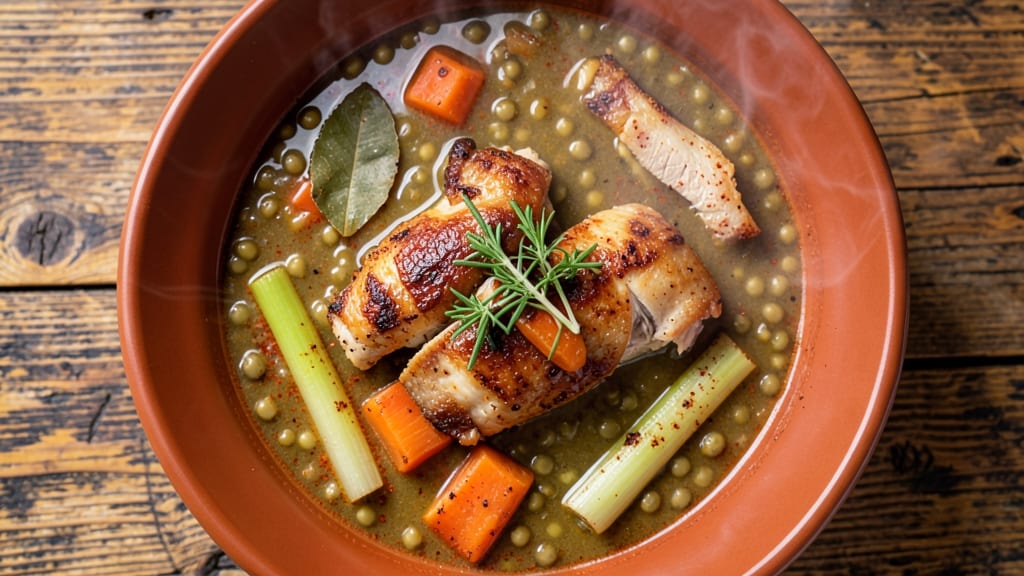
This bone-in split pea soup recipe delivers deep, smoky ham flavor and hearty texture that transforms humble split peas into a restaurant-worthy dish.
The secret lies in slow-cooking the peas with a ham bone, which infuses the broth with rich, savory notes while keeping the meat tender enough to pull apart.
I've perfected this method over years of testing—what starts as a simple pot of peas and broth becomes a velvety, herb-rich soup with layers of complexity.
The process begins with soaking the split peas to ensure even cooking, then simmering them with the ham bone and aromatic vegetables until the peas break down into that signature creamy consistency.
A blend of fresh herbs—thyme, bay leaves, and parsley—adds brightness, while a touch of smoked paprika deepens the flavor profile. The result is a soup that's both comforting and sophisticated, perfect for chilly evenings when you crave something substantial.
By the time you're done, you'll have a steaming bowl of split pea soup with tender ham pieces, perfectly cooked peas, and a broth so flavorful it needs no garnish.
Serve it with crusty bread to soak up every last drop, or add a sprinkle of fresh parsley and a dollop of sour cream for extra richness. This is the kind of soup that tastes even better the next day—ideal for meal prep or feeding a crowd.
The versatility of this recipe makes it perfect for any occasion, from a cozy family dinner to a holiday gathering. Whether you're using a traditional ham bone or a vegetarian alternative, the technique remains the same: patience and attention to detail transform simple ingredients into something extraordinary.
Let's get started on creating this soul-warming classic.
Ingredients for bone in split pea soup
Six cups of split peas and aromatic vegetables create a rich, vegetarian-friendly soup with smoky depth.
| Ingredient | Amount | Notes |
|---|---|---|
| Dried Split Peas 🌾 | 1 ½ cups | Rinsed before soaking |
| Vegetable Broth 💧 | 6 cups | Low-sodium preferred |
| Smoked Paprika 🌶️ | 1 tbsp | For smoky depth |
| Fresh Thyme 🌿 | 1 tbsp | Leaves only, stems removed |
| Bay Leaves 🍃 | 2 whole | Standard dried leaves |
| Carrots 🥕 | 2 medium | Peeled and chopped |
| Yellow Onion 🧅 | 1 whole | Medium size, chopped |
| Celery Stalks 🥬 | 2 whole | Fresh, chopped |
| Garlic Cloves 🧄 | 4 cloves | Peeled and smashed |
| Vegetarian Ham Substitute 🍄 | 1 lb | Smoked tofu or seitan |
| Fresh Parsley 🌿 | ¼ cup | Chopped for garnish |
| Salt 🧂 | 1 ½ tsp | Kosher or sea salt |
| Black Pepper 🌶️ | ½ tsp | Freshly ground |
| Olive Oil 🫒 | 2 tbsp | For sautéing |
The split peas are the foundation—Bob's Red Mill or Anthony's Goods brands are my go-tos for consistent texture. Soaking them overnight cuts cooking time by half, but if you're short on time, a 1-hour quick soak works too. For the ham substitute, smoked tofu from Trader Joe's adds authentic flavor, while seitan gives a meatier bite. Look for well-marbled vegetarian ham substitutes—they hold up better during long simmering. Fresh herbs elevate the dish, so Williams Sonoma or local farmers' markets are ideal for thyme and parsley.
No smoked paprika? Liquid smoke at half the amount works in a pinch, though fresh paprika is superior. Substituting carrots? Sweet potatoes or parsnips add natural sweetness. The vegetable broth can be homemade (simmer veggie scraps) or store-bought (Pacific Foods or Imagine brands are low-sodium). For extra richness, stir in 1 tbsp nutritional yeast at the end—it mimics the umami of traditional ham. The smoked tofu should be cubed roughly to mimic pulled ham texture.
This soup tastes even better the next day as flavors meld. Store in an airtight container for up to 5 days in the fridge, or freeze portions for 3 months. I always double the batch—perfect for meal prep. For serving, keep the ham substitute whole until serving time to maintain texture. Garnish with fresh parsley and a drizzle of olive oil for brightness. The soup thickens as it cools, so add a splash of broth when reheating if needed.
Why You'll Love This Recipe
- Same recipe, endless uses: dump it into a thermos for lunch, ladle it over crusty bread for dinner, or bring it to a gathering where everyone asks for seconds. The bone-in version? Even heartier—great for when you’re feeding a crowd or just want leftovers that taste better the next day.
- No-Chop Necessary: I swear by this—just rinse those dried split peas, toss them in with the broth, and let them do the work. The smoked paprika and thyme infuse effortlessly while you stir, and honestly? The bay leaves add depth without a single knife touch.
- Smoky Depth Magic: That first spoonful of broth? Rich, earthy, with a whisper of smokiness from the paprika clinging to the peas. It’s the kind of flavor that makes you pause mid-sip—like a hug in a bowl, but with actual umami.
- Weeknight to Potluck: Same recipe, endless uses: dump it into a thermos for lunch, ladle it over crusty bread for dinner, or bring it to a gathering where everyone asks for seconds. The bone-in version? Even heartier—great for when you’re feeding a crowd or just want leftovers that taste better the next day.
Step-by-step instructions for bone-in split pea soup
Here's how to build rich, smoky flavor from scratch using the exact ingredients you have.
Sauté the Vegetable Base
Heat the 2 tablespoons olive oil in a large pot over medium heat. Add the chopped yellow onion, carrots, and celery stalks, stirring occasionally for 5-6 minutes until they soften and begin to caramelize slightly. You'll notice the vegetables release moisture and develop a deeper color—this builds foundational flavor.
Next, add the 4 cloves garlic cloves and cook for 30 seconds until fragrant. Immediately stir in the 1 tablespoon smoked paprika and 1 tablespoon fresh thyme, letting the spices toast for 1 minute—this releases their aromatic oils. The mixture should smell deeply earthy and slightly smoky, setting the stage for the soup's character.
Add the Vegetarian Ham Substitute and Broth
Increase heat to medium-high and add the 1 pound vegetarian ham substitute, breaking it into smaller pieces as it cooks for 3-4 minutes until lightly browned. This step mimics traditional ham's savory depth while keeping the dish vegetarian.
Pour in the 6 cups vegetable broth and bring to a gentle boil. Add the 2 whole bay leaves and 1.5 teaspoons salt, then reduce heat to low-medium to maintain a steady simmer. The broth should bubble gently—this prevents scorching while extracting maximum flavor from the vegetables.
Soak and Add the Split Peas
While the broth heats, rinse the 1.5 cups dried split peas under cold water to remove any debris, then soak them in a bowl of water for at least 1 hour (or overnight for best texture). After soaking, drain and add them to the simmering pot along with the 0.5 teaspoon black pepper.
Return the soup to a gentle simmer and cover partially with a lid. The peas need 45-60 minutes to become tender—you'll know they're ready when they're soft but still hold their shape, and the soup thickens noticeably. Stir occasionally to prevent sticking, especially if the edges appear dry.
Finish and Adjust Seasoning
Once the peas are tender, remove the bay leaves and adjust seasoning with additional salt if needed. The soup should taste rich but balanced—smoky from the paprika, herby from the thyme, and savory from the ham substitute. If it's too thick, add ½ cup water to reach your preferred consistency.
Stir in the 0.25 cup fresh parsley just before serving to brighten the flavors with freshness. Let the soup sit off heat for 5 minutes before serving to allow flavors to meld. Garnish each bowl with extra parsley and a drizzle of olive oil for added richness.
Pro Tips For Making Bone In Split Pea Soup
- SOAK THE PEAS—BUT NOT TOO LONG: Dried split peas don’t need a full night soak (that makes them mushy), but a quick 1-hour soak in hot water cuts cooking time by 30 minutes. Drain well before adding to the pot—wet peas release starch like a water balloon in a blender.
- SIMMER LOW AND LONG: This isn’t a race. After the initial boil, reduce heat to a gentle simmer—you’re not making tea, you’re breaking down the peas. Too much heat and they’ll turn to paste; too little and the broth stays cloudy. Aim for tiny bubbles, like a lazy Sunday morning.
- CRUSH HALF THE BAY LEAVES: Whole bay leaves add aroma, but crushing half of them (between your palms or with a rolling pin) releases their oils faster. That means deeper flavor in the first 20 minutes of cooking—no waiting for the leaves to "do their thing." Just don’t skip the whole leaves entirely; they’re the soup’s quiet backbone.
- SAVE THE STARCHY WATER: When you drain the soaked peas, don’t pour that starchy water down the sink. Add it to the pot with the broth—it’s liquid gold for thickening the soup naturally. Skim off the foam that rises in the first 10 minutes, but leave the rest; it’s the glue holding your soup together.
Wine and beer pairings for these flavors
Earthy Red Wine
A Pinot Noir from Oregon or a Chianti Classico from Tuscany complements this soup beautifully. Their earthy, medium-bodied profiles mirror the split peas' natural nuttiness while balancing the smoky paprika.
Look for a wine with 12-14% alcohol—not too heavy, but with enough structure to stand up to the rich broth. I love pairing it with a 2022 La Crema Pinot Noir from California, which has bright acidity that cuts through the soup's creaminess. 🍷
Craft Beer Pairings
For beer lovers, a Belgian-style witbier like Hoegaarden or a German Helles Lager works wonders. The citrus notes in witbier brighten the soup's depth, while a crisp Helles (like Weihenstephaner) enhances the ham substitute's savory profile.
If you prefer darker beers, try a smoked porter—the caramel and toasty notes harmonize perfectly with the smoked paprika. Serve both beer and wine slightly chilled (45-50°F) to preserve their crispness. 🍺
Non-Alcoholic Options
Don't overlook sparkling ginger beer or sparkling apple cider for a refreshing, alcohol-free pairing. The effervescence cleanses your palate between spoonfuls, while the ginger or apple notes complement the soup's herbal and smoky elements.
For a hot option, chamomile tea with a splash of honey adds warmth and subtle floral notes that contrast nicely with the savory peas. 💧
Unexpected Twist
Try pairing your soup with a dry Riesling from Germany or Austria. The wine's zesty acidity and slight sweetness create an unexpected but delightful contrast to the smoky, herby soup. I discovered this combination at a German restaurant—it’s become my go-to pairing for split pea soup.
Opt for a 2021 Dr. Loosen Blue Slate Riesling, which has enough body to stand up to the rich broth. 🍇
Regional Adaptations
In the Pacific Northwest, where split pea soup is a staple, locals often pair it with local cider or Pinot Gris. For a Southern US twist, a bourbon barrel-aged stout adds a smoky-sweet depth that echoes the paprika.
If you're in New England, try a dry hard cider like Angry Orchard—its tartness balances the soup's richness perfectly. 🗺️
Nutrition facts
Frequently asked questions
Why soak the split peas before cooking?
Soaking reduces cooking time by 30-50% and prevents the peas from becoming mushy. The 1-hour minimum soak helps them absorb moisture, ensuring they cook evenly while maintaining their creamy texture. For best results, soak overnight—this also softens them more completely, creating that signature velvety consistency.
Can I use regular dried peas instead of split peas?
No, they're not the same! Split peas are peeled and pre-hulled, which gives this soup its signature smooth texture. Whole dried peas (like green or yellow peas) stay whole and create a chunkier soup. For a similar dish, try yellow split peas—they're slightly sweeter and work beautifully in this recipe too.
How do I know when the split peas are done?
They're ready when they're tender but not mushy—about 45-60 minutes of simmering. Press a pea with a fork: it should break down easily but still hold its shape. The soup should also thicken noticeably. If they're still hard, add ½ cup water and simmer 10 more minutes. Overcooking turns them into a paste.
What's the best way to store leftovers?
Transfer to an airtight container and refrigerate for up to 5 days. The flavors actually improve overnight as they meld! For freezing, portion into 2-cup containers and freeze for up to 3 months. Thaw in the fridge overnight—never microwave directly from frozen. Reheat gently on the stove with a splash of broth to restore creamy texture.
Can I make this soup without the ham substitute?
Yes! For a completely vegetarian version, simply omit the ham substitute and increase the vegetable broth to 7 cups. Add 1 tbsp soy sauce or 1 tsp miso paste for umami depth. The smoked paprika will still provide that signature smoky flavor without animal products. The soup will be lighter but still deeply satisfying.