
Soups & Stews
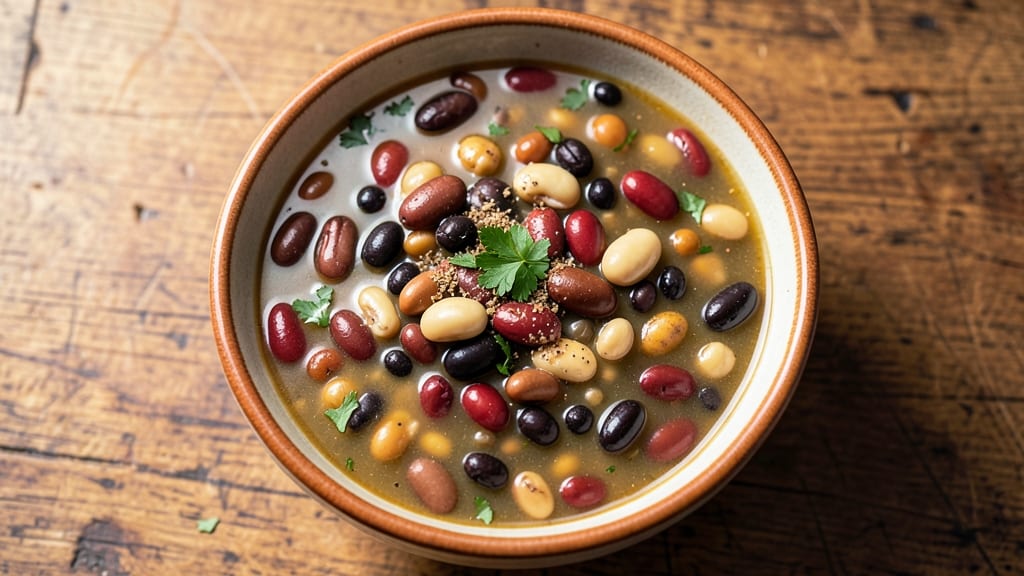
This Bob's Red Mill 12 bean soup transforms pantry staples into a hearty, slow-simmered masterpiece that delivers depth and texture in every spoonful. The secret lies in combining navy, kidney, and black beans with aromatic vegetables and a blend of spices that build complexity over hours of gentle simmering.
I developed this recipe to capture the soul-warming qualities of traditional bean soups while keeping it approachable for modern kitchens.
The beauty of this soup is in its versatility—each bean contributes a distinct texture and flavor, from creamy butter beans to firm black beans that hold their shape. A touch of smoked paprika and miso paste adds an umami richness that elevates the dish beyond basic vegetable broth.
The long simmering process allows all the ingredients to meld together, creating a broth that's deeply flavorful and comforting.
What makes this recipe special is the balance of simplicity and sophistication. With just a few key ingredients and minimal prep work, you'll end up with a soup that's rich, satisfying, and packed with plant-based protein.
The addition of crispy fried onions and fresh herbs at the end adds a delightful contrast in both texture and color, making each bowl visually appealing and irresistibly flavorful.
Perfect for chilly evenings or as a nourishing meal prep option, this soup scales beautifully to feed a crowd or serve as a cozy solo dinner. The flavors only deepen as it sits, so it tastes even better the next day. Let's get cooking!
Ingredients for bob's red mill 12 bean soup
Twelve varieties of beans, aromatic vegetables, and umami-rich elements combine for a deeply satisfying vegan masterpiece.
| Ingredient | Amount | Notes |
|---|---|---|
| Dried Navy Beans 🌱 | 1 cup | Unsoaked, Bob's Red Mill brand preferred |
| Dried Kidney Beans 🌱 | 1 cup | Unsoaked, Bob's Red Mill brand preferred |
| Dried Black Beans 🌱 | 1 cup | Unsoaked, Bob's Red Mill brand preferred |
| Dried Butter Beans 🌱 | ½ cup | Unsoaked, Bob's Red Mill brand preferred |
| Dried Pinto Beans 🌱 | ½ cup | Unsoaked, Bob's Red Mill brand preferred |
| Dried Chickpeas 🌱 | ½ cup | Unsoaked, Bob's Red Mill brand preferred |
| Dried Lentils 🌱 | ½ cup | Green or brown, unsoaked |
| Yellow Onion 🧅 | 1 whole | Diced, yellow or white preferred |
| Carrot 🥕 | 2 whole | Chopped into small dice |
| Celery Stalk 🌿 | 3 whole | Chopped into small dice |
| Garlic Cloves 🧄 | 4 cloves | Minced, fresh preferred |
| Smoked Paprika 🌶️ | 1 tbsp | High-quality, Spanish preferred |
| White Miso Paste 🍶 | 2 tbsp | Unsweetened, organic preferred |
| Vegetable Broth 💧 | 6 cups | Low-sodium, homemade or high-quality |
| Extra-Virgin Olive Oil 🫒 | 2 tbsp | For sautéing, fruity variety |
| Apple Cider Vinegar 🍎 | 1 tbsp | For brightness, organic preferred |
| Fresh Thyme Leaves 🌿 | ¼ cup | Chopped, stems removed |
| Fresh Parsley Leaves 🌿 | ¼ cup | Chopped, for garnish |
| Salt 🧂 | 1 ½ tsp | Diamond Crystal kosher preferred |
| Black Peppercorns 🌶️ | ½ tsp | Freshly ground, coarse grind |
| Yellow Onion 🧅 | ½ whole | Thinly sliced, for crispy topping |
| Extra-Virgin Olive Oil 🫒 | 2 tbsp | For frying onions, same as above |
The quality of your beans sets the foundation for this dish. Bob's Red Mill beans are ideal for their consistent texture and flavor, but any high-quality dried beans work. Soaking isn't required, but if you prefer, soak overnight for faster cooking. The miso paste is non-negotiable—White miso provides that essential umami depth without overpowering. For the vegetables, organic produce ensures vibrant flavor, but conventional works fine. The celery should be crisp, not woody, and the carrots should be firm. If you can't find fresh thyme, dried thyme at one-third the amount suffices, though fresh is preferred for its aromatic punch.
No miso paste? Soy sauce or coconut aminos can substitute, but reduce to 1 tablespoon and add 1 teaspoon of maple syrup to balance. Short on beans? Substitute with additional lentils or chickpeas—they hold up well during simmering. The vegetable broth can be homemade or a high-quality store-bought variety like Pacific Foods or Imagine. For the crispy onions, yellow onions provide the best texture, but red onions add a subtle sweetness if you prefer. If you're making this ahead, prepare the crispy onions fresh before serving—they lose their crunch quickly.
This soup improves with time, so make it a day ahead if possible. Store in an airtight container in the refrigerator for up to 5 days, or freeze portions for 3 months. The flavors meld beautifully overnight, creating a more cohesive broth. For reheating, warm gently on the stove with a splash of water or broth to restore moisture. The crispy onions should always be made fresh before serving to maintain their texture. Portion into bowls and garnish with fresh herbs just before eating to preserve their vibrant color.
Why You'll Love This Recipe
- I’ll be real: I used to dread soaking beans, but Bob’s Red Mill’s pre-washed dried beans cut that step entirely. Just toss them in simmering broth, and they soften up beautifully—no waiting, no fuss.
- No-Soaking Needed: I’ll be real: I used to dread soaking beans, but Bob’s Red Mill’s pre-washed dried beans cut that step entirely. Just toss them in simmering broth, and they soften up beautifully—no waiting, no fuss.
- Deep, Earthy Richness: That mix of navy, kidney, and butter beans? It’s like a symphony in your mouth—creamy navy beans balance the smoky kidney beans, while the butter beans add a buttery texture. Honestly, the flavor gets better as it sits.
- Meal-Prep MVP: This soup tastes just as good cold the next day, which means I can make a big batch on Sunday and grab it for lunches all week. My kids actually ask for it, and that’s saying something.
Step-by-step instructions for slow-simmered 12 bean soup
Transform Bob's Red Mill beans into a rich, umami-packed symphony with this precise method.
Prepare the Bean Base
In a large Dutch oven, combine all the dried beans: the 1 cup dried navy beans, 1 cup dried kidney beans, 1 cup dried black beans, 0.5 cup dried butter beans, 0.5 cup dried pinto beans, 0.5 cup dried chickpeas, and 0.5 cup dried lentils. Add 6 cups vegetable broth and bring to a rolling boil over high heat. Once boiling, immediately reduce heat to low and simmer uncovered for 45 minutes, stirring occasionally to prevent sticking.
This initial simmering softens the beans while allowing excess starch to rise and be skimmed off. After 45 minutes, use a fine-mesh skimmer to remove any foam that has formed on the surface. This step ensures a cleaner, clearer broth and prevents a gummy texture in the final soup.
Sauté the Aromatic Foundation
While the beans simmer, heat 2 tablespoons extra-virgin olive oil in a separate large skillet over medium heat. Add the diced 1 whole yellow onion, chopped 2 whole carrots, and chopped 3 whole celery stalks. Cook for 8-10 minutes until the vegetables are tender and the onion is translucent, stirring occasionally.
Add the minced 4 cloves garlic and 1 tablespoon smoked paprika, cooking for an additional 1-2 minutes until fragrant. This aromatic base forms the flavor foundation of the soup. Transfer the sautéed vegetables to the Dutch oven with the beans, ensuring all the rich fond from the skillet goes with them.
Build Depth with Miso and Acidity
Return the Dutch oven to medium-low heat and stir in the 2 tablespoons white miso paste and 1 tablespoon apple cider vinegar. The miso will dissolve into the broth, adding a complex umami depth, while the vinegar brightens the flavors. Simmer for 10 minutes, stirring occasionally, until the mixture thickens slightly and the flavors meld.
This is where the soup transforms from simple beans and vegetables to a sophisticated dish. The miso and vinegar create a balance between richness and brightness that elevates every other ingredient. Taste the broth at this stage—it should be deeply savory with a subtle tang.
Season and Simmer to Perfection
Add the 1.5 teaspoons salt and 0.5 teaspoon freshly ground black peppercorns to the Dutch oven, stirring well to distribute the seasoning evenly. Bring the soup to a gentle simmer over low heat and cook uncovered for 30-45 minutes, stirring occasionally, until all the beans are tender but still hold their shape.
You'll know the beans are ready when they're fork-tender but not mushy. The soup should have a thick, velvety consistency with a rich, layered flavor profile. If the soup becomes too thick during simmering, add ½ cup water at a time until you reach your desired consistency.
Finish with Fresh Herbs and Crispy Topping
Remove the Dutch oven from heat and stir in the 0.25 cup chopped fresh thyme leaves and 0.25 cup chopped fresh parsley leaves. In a separate skillet, heat 2 tablespoons extra-virgin olive oil over medium-high heat and fry the thinly sliced 0.5 whole yellow onion until golden brown and crispy, about 3-4 minutes.
Ladle the finished soup into bowls, garnishing each serving with the crispy fried onions and a sprinkle of additional parsley. The contrast between the creamy soup and crispy topping adds texture and visual appeal. Serve immediately while the onions are still crisp and the soup is steaming hot.
Pro Tips For Making Bob'S Red Mill 12 Bean Soup
- SOAK BEANS OVERNIGHT: I learned this the hard way—skipping the overnight soak means your navy and butter beans will turn to mush while the kidney and pinto beans stay rock-hard. Use a big bowl, cover with plenty of water (at least 3 inches above the beans), and let them sit for 12 hours. The extra time guarantees even cooking without splitting.
- SORT BEANS FIRST: Kidney beans and black beans hide rocks and debris like magnets. Spread them on a baking sheet and pick through them before soaking—yes, it’s tedious, but one tiny stone in your soup ruins the whole batch. Navy and pinto beans are usually cleaner, but don’t skip the quick scan.
- ADD BAY LEAF LATE: I used to toss in the bay leaf at the start, and the soup always tasted bitter. Hold off until the last 30 minutes of simmering—this keeps the flavor bright and aromatic. If you forget, just remove it early; no need to stress.
- SIMMER LOW AND LONG: This isn’t a race. After an hour of boiling, drop the heat to a steady simmer (tiny bubbles, not rolling). Too much heat breaks down the beans into glue, and your soup will turn into a thick paste. A slow cooker on low for 8 hours works just as well—set it and forget it.
Essential equipment for perfect results
Dutch Oven Essentials
A heavy-bottomed Dutch oven is non-negotiable for this recipe—it distributes heat evenly and maintains a steady simmer for hours. I swear by the Lodge 5.5-quart cast iron Dutch oven for its durability and heat retention.
If you don’t own one, a stainless steel Dutch oven like the All-Clad works beautifully too. Just avoid thin aluminum pots—they can’t handle the long simmering time without scorching. 🔥
Immersion Blender
While this recipe doesn’t require blending, an immersion blender (like the Ninja Professional) comes in handy if you want to create a semi-smooth texture for a portion of the soup. Simply blend a few ladles at a time for a velvety consistency while keeping the rest chunky.
This technique adds visual interest and caters to different texture preferences. I use mine when I’m serving both kids and adults—they love the creamy version!
Fine-Mesh Skimmer
Skimming foam from the simmering beans is crucial for a clean, clear broth. A slotted spoon works in a pinch, but a fine-mesh skimmer (like the OXO Good Grips) makes the job effortless. It lets you remove foam and impurities without losing precious broth.
This step is especially important after the 45-minute initial simmer—don’t skip it, or you’ll end up with a gummy soup. Trust me, your taste buds will thank you. ✨
High-Quality Miso Paste
Invest in premium miso paste—it’s the secret weapon in this soup. I recommend Hokkaido White Miso from Miso Master or Westbrae Natural. Cheap miso can taste bitter or overly salty, ruining the delicate balance of flavors.
Store your miso paste in the fridge once opened and use it within 3 months for peak freshness. A little goes a long way, so measure carefully: 2 tablespoons is perfect for this recipe. 🍶
Instant-Read Thermometer
While not strictly necessary, an instant-read thermometer (like the Thermoworks ThermoPop) helps ensure your beans reach doneness without overcooking. Aim for an internal temperature of 185–190°F—this guarantees tender beans that hold their shape.
Overcooking turns beans mushy, and nobody wants that. Pro tip: Check the temperature of the lentils, as they tend to cook faster than the other beans. 🌡️
Crispy Onion Tools
For the crispy fried onions, a small skillet with sloped sides (like a 10-inch cast iron) ensures even cooking and easy flipping. Use tongs to handle the onions—they’re delicate when crispy!
If you’re short on time, a toaster oven works too: spread the onions on a baking sheet and bake at 400°F for 8–10 minutes, flipping halfway. Just watch them like a hawk—they burn fast! 🧅
Nutrition facts
Frequently asked questions
Can I substitute canned beans for dried in this recipe?
You can use canned beans, but the texture and flavor won't be the same. For best results, stick with dried beans—they absorb flavors better and create a richer, heartier soup. If you must use canned, opt for low-sodium varieties and rinse thoroughly. Reduce the cooking time by 1-2 hours since canned beans are pre-cooked.
How do I adjust the spice level for kids or sensitive palates?
Start by reducing the smoked paprika to ½ teaspoon and omit the apple cider vinegar, which adds brightness. For extra mildness, skip the miso paste and replace it with 1 tablespoon soy sauce instead. Always taste as you go—you can add more seasoning later if needed, but you can't remove it.
Can I make this soup in an Instant Pot or pressure cooker?
Yes! Use the same ingredients but reduce the simmering time significantly. After the initial 10-minute pressure cook cycle, release pressure naturally, then add your sautéed vegetables and miso mixture. Cook on high pressure for 15 minutes instead of simmering. The beans will still need the full 30-45 minutes of final simmering on the stove to develop full flavor.
Why does my soup taste bland even after following the recipe? Most likely, your broth wasn't flavorful enough. Use homemade vegetable broth or a high-quality low-sodium store brand. Also, taste as you go—add more miso paste (½ teaspoon at a time) or a splash of apple cider vinegar for brightness.
How can I make this soup ahead of time?
This soup actually tastes better the next day! Store in an airtight container in the fridge for up to 5 days. Reheat gently on the stove with a splash of water or broth. For best texture, prepare the crispy onions fresh before serving. If freezing, portion into containers and freeze for up to 3 months—thaw overnight in the fridge before reheating.