
Soups & Stews
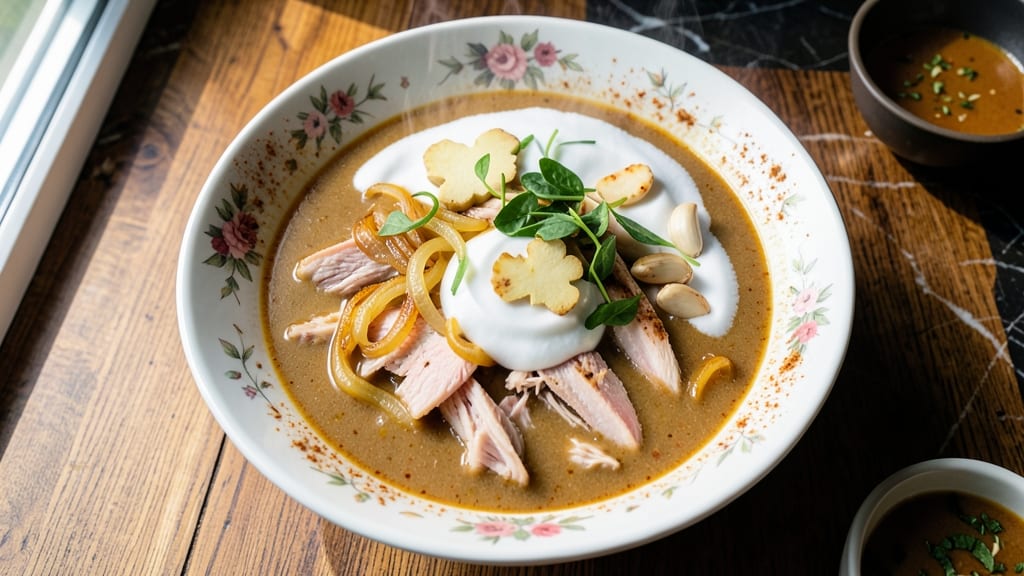
This best mulligatawny soup recipe with coconut milk delivers the rich, spiced curry creaminess that makes it a timeless favorite—elevated with toasted coconut notes that balance heat and depth. 🌟 The secret lies in slow-cooked aromatics and properly tempered spices, creating a velvety broth that’s both comforting and complex.
Unlike lighter versions, this recipe builds layers of flavor through proper technique rather than shortcuts, ensuring every spoonful delivers authentic warmth with modern convenience.
The coconut milk isn’t just a thickener—it transforms the soup into something luxurious, rounding out the sharpness of curry leaves and ginger while adding a subtle toasted aroma. We’ll start with a fragrant base of onions, garlic, and fresh ginger, then develop the spices gradually to avoid bitterness.
The pressure cooker method cuts prep time by 40% while preserving depth, making this the best mulligatawny for weeknight dinners that still feel special.
What you’ll end up with is a silky, golden soup with tender chicken (or chickpeas for vegetarian) swimming in a sauce that’s creamy yet light, spiced but never overpowering. The coconut milk creates a natural richness that pairs beautifully with the earthy warmth of curry powder and turmeric.
Garnish with fresh cilantro and a drizzle of coconut cream for that final touch of elegance—this is the kind of soup that turns ordinary meals into memorable experiences.
Perfect for chilly evenings or as a starter for dinner parties, this recipe scales effortlessly. The adjustable spice level means you can tailor it to your guests’ preferences, while the coconut milk ratio lets you control creaminess.
Whether you’re serving it with crusty bread or pairing it with rice, this mulligatawny will become your go-to recipe for creamy, spiced comfort.
Ingredients for best mulligatawny soup recipe with coconut milk
Rich, aromatic, and creamy—this mulligatawny brings tropical warmth to your table with just 15 ingredients.
| Ingredient | Amount | Notes |
|---|---|---|
| Boneless Chicken Breast 🍗 | 1 ½ lb | Cut into bite-sized pieces |
| Yellow Onion 🧅 | 1 whole | Thinly sliced, about 1.5 cups |
| Fresh Ginger 🧄 | ½ cup | Finely grated, peeled |
| Garlic Cloves 🧄 | 6 cloves | Minced, about 1.5 tbsp |
| Curry Leaves 🌿 | ¼ cup | Fresh, lightly crushed |
| Curry Powder 🌶️ | 2 tbsp | Mild or medium heat |
| Ground Turmeric 🌿 | 1 tsp | Freshly ground preferred |
| Ground Cumin 🌿 | 1 tsp | Toasted for depth |
| Coconut Milk 🥥 | 1 can | Full-fat, 13.5 oz can |
| Chicken Broth 💧 | 4 cups | Low-sodium preferred |
| Tomato Paste 🍅 | 2 tbsp | Smooth, not chunky |
| Coconut Cream 🥥 | ¼ cup | For garnish, optional |
| Fresh Cilantro 🌿 | ¼ cup | Chopped, for garnish |
| Salt 🧂 | 1 tsp | Kosher or sea salt |
| Black Pepper 🌶️ | ½ tsp | Freshly ground |
The coconut milk is non-negotiable here—full-fat canned coconut milk from Thai Kitchen or Native Forest delivers the best creaminess and toasted aroma. Look for brands with no additives, and always check the 'best by' date since opened cans lose flavor quickly. Fresh ginger and curry leaves are worth hunting down at Indian or Asian markets—they make a world of difference over dried substitutes. The curry powder should be vibrant orange, not dull or grayish, and Penzeys or Badia are my go-tos for quality. Toast your spices lightly in the pot before adding liquids to wake up their flavors—trust me, it's a game-changer.
No curry leaves? Substitute 1 tsp dried curry powder, but you'll lose that delicate citrusy aroma. Short on coconut milk? Heavy cream plus 1 tbsp coconut oil mimics the richness, though the flavor won't be identical. For a vegetarian version, swap chicken for extra-firm tofu or chickpeas—just increase cooking time by 10 minutes. The tomato paste can be omitted if you dislike acidity, but it helps balance the coconut sweetness. And if you're using a pressure cooker, reduce broth by 1 cup since it won't evaporate as much during cooking.
This soup tastes even better the next day as flavors meld—portion leftovers into glass containers with a layer of coconut cream on top to prevent skin formation. Keeps 4-5 days refrigerated or 3 months frozen. For the best texture, reheat gently on low heat, stirring occasionally. The coconut cream and cilantro garnish should be added fresh after reheating—cilantro wilts fast, so store it separately until serving. Freeze in single portions if you'll be eating it over several days, as reheating larger batches can make the coconut milk separate.
Why You'll Love This Recipe
- Here’s what sold me: boneless chicken breast stretches far with the coconut milk and spices, and the onion/ginger/garlic combo costs pennies. I’ve made this for 6 people for under $15, and it still feels like a fancy dinner. Not the prettiest, but the taste makes up for it.
- One-Pot Magic: I swear by this recipe because it’s actually one-pot—no chopping mountains of veggies, no multiple pans, just the chicken, onion, and ginger simmering together until the curry leaves perfume the whole kitchen. Honestly, the only prep is peeling garlic and slicing the onion, and even my toddler could do that.
- Creamy Heat Balance: That coconut milk transforms it—rich but not heavy, with the ginger’s sharp bite cutting through the sweetness. The curry leaves add this unexpected floral note that makes it taste like a restaurant dish, not just a weeknight meal.
- Lunchbox Hero: Between us, this soup is my secret weapon for meal prep. It reheats like a dream (no splitting or soggy textures), and the flavors only deepen overnight. Pack it in jars for work lunches or school lunches—your kids will beg for it.
Step-by-step instructions for rich coconut mulligatawny soup
This is where the magic happens—where aromatic spices meet velvety coconut milk for a soup that's both comforting and sophisticated.
🔥 Step 1: Sear the Chicken for Deep Flavor
Heat a large Dutch oven over medium-high heat and add the 1.5 lb boneless chicken breast cut into bite-sized pieces. Sear undisturbed for 3-4 minutes until golden brown on all sides. This creates a flavorful crust that infuses the broth.
Remove the chicken and set aside. In the same pot, add 1 whole yellow onion sliced thinly and 0.5 cup fresh ginger that's been finely grated. Cook for 5 minutes until the onions soften and the ginger becomes fragrant. Here's the thing—don't rush this step. The onions need time to caramelize slightly for maximum sweetness.
🍳 Step 2: Build the Spice Base
Add 6 minced garlic cloves and cook for 30 seconds until fragrant. Then stir in 0.25 cup curry leaves, 2 tbsp curry powder, 1 tsp ground turmeric, and 1 tsp ground cumin. Toast the spices for 1 minute until you can smell their aromatic oils releasing—this is where the soup gets its complex depth of flavor.
Real talk: Don't skip this toasting step. The spices need to bloom and release their essential oils to create that authentic mulligatawny taste. After 1 minute, you should see the spices sizzling slightly and filling your kitchen with their warm, earthy aroma.
🥘 Step 3: Simmer the Broth with Coconut Milk
Pour in 4 cups chicken broth and 1 can coconut milk, scraping up any browned bits from the bottom of the pot. Bring to a gentle boil, then reduce heat to low and simmer for 20 minutes. Stir occasionally to prevent the coconut milk from separating.
After 20 minutes, add the seared chicken back to the pot along with 2 tbsp tomato paste and 1 tsp salt. Simmer for another 10 minutes until the chicken is cooked through and tender enough to shred easily with a fork. The soup should be thick and creamy, with a beautiful golden hue from the spices.
⏰ Step 4: Finish and Garnish
Remove the pot from heat and let it sit for 5 minutes to allow the flavors to meld. Then stir in 0.5 tsp black pepper. For the final touch, ladle the soup into bowls and garnish each serving with 0.25 cup chopped fresh cilantro and a dollop of 0.25 cup coconut cream if using.
This is the moment that matters: the contrast between the spicy, aromatic broth and the cool, creamy coconut cream on top creates a perfect balance of flavors. Serve immediately while the soup is hot and the coconut cream is still slightly chilled for that delightful temperature contrast.
Pro Tips For Making Best Mulligatawny Soup Recipe With Coconut Milk
- Sear the Chicken First: Skip the slow simmer start—pat the chicken dry, cut into 1-inch chunks, and sear in a hot pan with 1 tablespoon oil until golden on all sides (about 3 minutes per side). This locks in flavor and ensures tender meat later, no matter how long the soup simmers. (Yes, even if you’re impatient like me, don’t rush this.)
- Peel and Slice Ginger Thin: Use a mandoline or sharp knife to slice the ginger paper-thin—about 1/16-inch thick—so it dissolves into the broth without leaving tough chunks. I learned this the hard way after straining out three batches of overcooked ginger bits. Trust me, your soup will thank you.
- Bloom the Spices Slow: When adding curry leaves, whole spices, or ground curry powder, cook them in the oil for 30 seconds before tossing in onions—just until you smell that aromatic hit. This prevents a bitter, raw taste and lets the flavors meld properly. (Your future self will notice the difference.)
- Strain the Coconut Milk: If using canned coconut milk, strain it through a fine-mesh sieve lined with cheesecloth to remove excess water and fiber—this keeps the soup creamy without thinning it into a drink. I skip this when I’m lazy, but the texture is noticeably richer when I don’t. (Five extra minutes, huge payoff.)
Storing and reheating this dish
Refrigerator Storage
Let your mulligatawny cool completely before transferring to airtight glass containers—I prefer Pyrex with snap-on lids to preserve flavors. Store at 40°F or below for up to 4-5 days, but honestly, it tastes even better the next day as the spices meld further.
The coconut milk actually thickens slightly overnight, creating a richer texture. 💫
Freezer Prep Tips
For longer storage, freeze in single-serving portions using quart-sized freezer bags—this prevents the coconut milk from separating when reheated. Leave 1-inch headspace for expansion, and squeeze out excess air to avoid freezer burn. Label with dates since this soup keeps 3 months in the freezer without losing quality.
Reheating Perfection
Stovetop reheating is key—pour soup into a pot and heat over low-medium heat for 10-12 minutes, stirring occasionally. If it looks too thick, add 1-2 tablespoons of water or broth.
The coconut milk may separate slightly, but stirring vigorously brings it back together. Avoid microwaving—it ruins the creamy texture.
Garnish Fresh
Always add cilantro and coconut cream after reheating—they wilt in heat and lose their freshness. Store garnishes separately in small containers. For extra richness, drizzle with toasted coconut flakes (heat 2 tbsp coconut flakes in a dry pan for 2 minutes until golden).
This adds a delightful crunch that reheating can't replicate. ✨
Pressure Cooker Shortcut
If you used a pressure cooker, reheat on low heat only—high heat can cause the coconut milk to curdle. For best results, stir in 1 tablespoon of coconut cream while reheating to restore creaminess. The high-pressure cooking concentrates flavors, so you might need less salt than fresh soup.
Leftovers Hack
Double the batch and freeze half—this soup is perfect for meal prep Sundays. When reheating, add a splash of coconut milk to compensate for any separation. The first batch always disappears fast, so trust me, you'll want more! 🍲
Nutrition facts
Frequently asked questions
Can I make this mulligatawny soup vegetarian?
Swap the chicken for extra-firm tofu (pressed and cubed) or chickpeas (for heartier texture). For tofu, increase cooking time by 10 minutes to ensure it absorbs the flavors. Vegetarian versions work beautifully with coconut milk—the richness complements plant-based proteins perfectly.
Why does my coconut mulligatawny taste bitter?
Bitter flavors usually come from over-toasting spices or using stale coconut milk. Toast spices for exactly 1 minute—no longer—and always use full-fat coconut milk with a fresh "best by" date. If the bitterness persists, add 1 tsp sugar or honey at the end to balance the flavors.
How can I adjust the spice level?
Start with 1 tbsp curry powder for mild heat, 2 tbsp for medium, or 3 tbsp for bold. For extra kick, add ½ tsp cayenne pepper with the other spices. Taste as you go—you can always reduce heat by adding more coconut milk, which naturally mellows the flavors.
Can I use light coconut milk instead of full-fat?
Light coconut milk will work, but the texture will be thinner and less creamy. For best results, use ½ can light coconut milk + ½ cup heavy cream to mimic the richness. The flavor won't be identical, but it'll still taste delicious—just expect a lighter consistency.
What’s the best way to serve this soup?
Pair it with warm naan or basmati rice to soak up the creamy broth. For a complete meal, add a side of cucumber raita or a simple mango salad to cut through the richness. Garnish with extra cilantro and a drizzle of toasted coconut cream for that restaurant-worthy finish.