
Soups & Stews
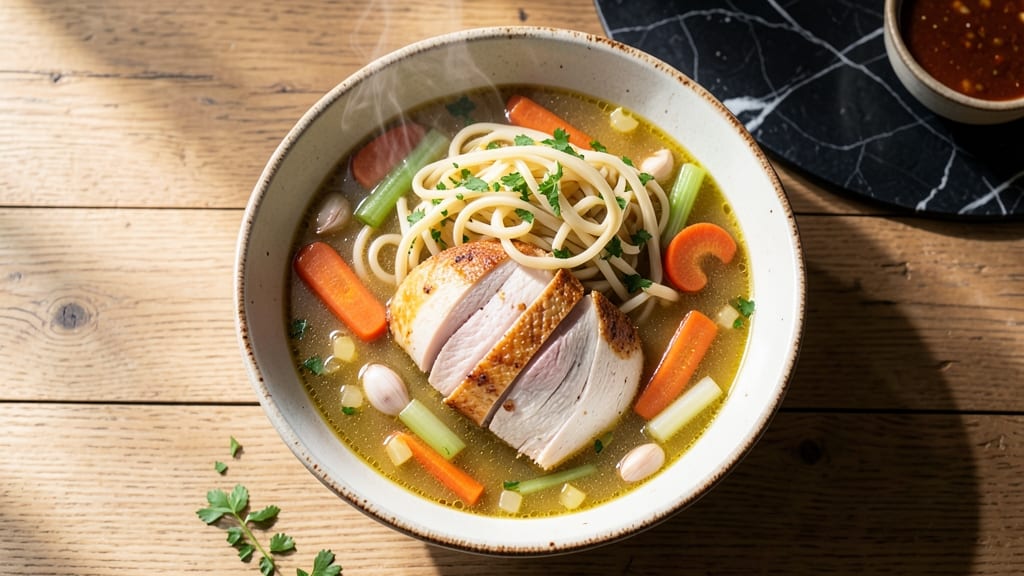
This best homemade chicken noodle soup recipe ever brings back memories of Grandma's kitchen—warm, comforting, and packed with soulful flavor in every spoonful. The secret lies in slow-simmered chicken broth infused with aromatic vegetables, creating a rich foundation that transforms simple ingredients into something extraordinary.
After years of perfecting this recipe, I've developed a method that balances tradition with modern convenience, ensuring you get restaurant-quality results without the fuss.
The magic starts with a foolproof broth made from chicken bones and vegetables, simmered low and slow to extract maximum flavor. Tender chicken pieces add protein, while egg noodles cook directly in the broth, absorbing all that delicious liquid.
This one-pot approach means minimal cleanup and maximum comfort—ideal for chilly evenings or when you need a nourishing meal that feels like a hug in a bowl.
What makes this recipe truly special is how it delivers on both taste and texture—tender chicken, silky broth, and perfectly al dente noodles that hold up to every slurp.
The aroma alone will have your whole family gathering around the table, and the first bite delivers that familiar warmth and satisfaction that only homemade soup can provide.
Whether you're serving this classic to a crowd or treating yourself to a cozy solo meal, this recipe is designed to impress. The best part? It's versatile enough to adapt with your favorite herbs or vegetables while keeping the heart of Grandma's tradition intact.
Let's get started on creating your own bowl of pure comfort.
Ingredients for best homemade chicken noodle soup recipe ever
Grandma's pantry staples meet restaurant-quality broth in this soul-warming chicken noodle masterpiece.
| Ingredient | Amount | Notes |
|---|---|---|
| Chicken Breasts 🍗 | 2 lb | Bone-in, skin-on for flavor |
| Chicken Carcasses 🍗 | 2 whole | For rich broth base |
| Yellow Onions 🧅 | 2 whole | Chopped, medium size |
| Carrots 🥕 | 4 whole | Medium, peeled and chopped |
| Celery Stalks 🌿 | 4 whole | Fresh, trimmed and chopped |
| Garlic Cloves 🧄 | 6 cloves | Fresh, minced |
| Fresh Parsley 🌿 | ¼ cup | Chopped, for garnish |
| Dried Thyme 🍃 | 1 tsp | Or 1 tbsp fresh |
| Bay Leaves 🌿 | 2 whole | Fresh preferred |
| Salt 🧂 | 2 tsp | Kosher or sea salt |
| Black Peppercorns 🌶️ | 1 tsp | Freshly cracked |
| Egg Noodles 🍜 | 1 lb | Medium or wide egg noodles |
| Extra-Virgin Olive Oil 🫒 | ½ cup | For browning chicken |
| Fresh Lemon Juice 🍋 | 1 tbsp | Brightens flavor |
The chicken carcasses are non-negotiable for that deep, golden broth—ask your butcher for the bones after roasting a chicken, or grab a rotisserie chicken from Trader Joe's for free bones. Fresh herbs make all the difference, so pick up thyme and bay leaves at a specialty market if you can—dried works in a pinch, but fresh is where the magic happens. For the carrots and celery, organic is ideal since you're not peeling them, but regular works too. The egg noodles? Barilla or De Cecco are my go-tos—they hold up beautifully in broth without turning mushy.
No fresh parsley? Dried works at half the amount, but trust me on the fresh—it adds that bright pop. Short on bay leaves? Dried oregano at one-third the amount does the trick. The olive oil matters here—use something fruity and peppery, not that cheap stuff. For the chicken, bone-in and skin-on is key—it renders fat for extra richness. If you can't find carcasses, chicken thighs with skin will give you a similar depth of flavor. And if you're feeling fancy, add a splash of white wine when deglazing the pan—it cuts through the richness beautifully.
This soup tastes even better the next day—make a double batch so you have leftovers for lunch. Store in the fridge for up to 5 days, or freeze portions for 3 months. I like to portion it into glass jars for easy reheating—just pop them in the microwave with a splash of water. The noodles will soften slightly, but that's part of the charm. Garnish with extra parsley and a crack of black pepper right before serving—don't skip this step—it makes all the difference.
Why You'll Love This Recipe
- One-Pot Magic: I swear by this—just toss everything in one pot, walk away, and come back to a fragrant, golden broth that practically cooks itself. The carcasses? They’re the secret weapon here, turning what would be dry chicken into melt-in-your-mouth meat while infusing the broth with depth. No extra pots, no stress.
- Soul-Warming Depth: Between us, store-bought broth can’t compete with this. The onions caramelize just enough to add sweetness, the carrots and celery soften into the broth for natural sweetness, and the chicken? It’s so tender it falls apart at the touch. Honestly, the first sip is like a hug in a bowl—especially when you’re tired or under the weather.
- Meal Prep MVP: Make a double batch on Sunday, and you’ve got lunch or dinner covered for days. The flavors actually improve after a day or two in the fridge—yes, really. My kids grab it for school lunches, and I freeze portions for those nights when takeout feels like too much effort. It’s the ultimate lazy-person’s solution.
- Budget-Friendly Luxury: Using chicken carcasses (save those from roast chicken!) and simple veggies keeps costs low, but the result tastes like you spent hours simmering. I’ll be real: it’s the kind of soup that makes you feel fancy without breaking the bank. Plus, the leftovers stretch into sandwiches or a quick stir-fry—zero waste, all win.
Step-by-step instructions for grandma-style chicken noodle soup
This is the method that delivers soul-warming, restaurant-quality soup with deep flavor and tender chicken every single time.
🍳 Step 1: Brown the Chicken for Maximum Flavor
Heat the 0.5 cup extra-virgin olive oil in a large Dutch oven over medium-high heat. Pat the 2 lb chicken breasts completely dry with paper towels—this ensures a proper sear. Working in batches, add the chicken breasts skin-side down and cook for 6-8 minutes per side until the skin is deep golden brown and crispy, and the internal temperature reaches 165°F.
Real talk: This browning step is non-negotiable. The Maillard reaction happening here creates layers of flavor that no store-bought broth can match. Don't rush it—if the oil starts smoking excessively, reduce heat slightly. Transfer the cooked chicken to a plate and tent with foil to keep warm.
🍳 Step 2: Build the Rich Broth Base
In the same Dutch oven, add the 2 whole chicken carcasses and cook for 5 minutes to render fat and deepen flavor. Add the 2 whole yellow onions, 4 whole carrots, 4 whole celery stalks (all chopped), and 6 cloves garlic cloves (minced). Cook for 5 minutes until the vegetables begin to soften and the garlic becomes fragrant.
Pour in 8 cups cold water (enough to cover everything by about 1 inch) and bring to a boil. Once boiling, reduce heat to low, add the 2 whole bay leaves, 1 tsp dried thyme, 2 tsp salt, and 1 tsp black peppercorns, then return the browned chicken breasts to the pot. Simmer uncovered for 45-60 minutes until the broth develops a deep golden color and the chicken is fork-tender.
🥘 Step 3: Strain and Season the Broth
Using a fine-mesh strainer, carefully strain the broth through a colander lined with cheesecloth or a clean kitchen towel. This removes any impurities and gives you that silky texture grandma's soup had. Return the strained broth to the pot and discard the solids (or save for compost).
Taste and adjust seasoning—this is where the magic happens. The broth should be deeply flavorful but not salty. Add a splash of 1 tbsp fresh lemon juice to brighten the flavors and bring the total volume back to 6 cups. Keep the broth warm over low heat while you prepare the noodles.
🍳 Step 4: Cook the Noodles Al Dente
In a separate pot, bring 4 cups fresh water to a rolling boil. Add the 1 lb egg noodles and cook according to package directions until 1 minute shy of al dente—you want them to finish cooking in the hot broth. Drain and rinse briefly under cold water to stop the cooking process, then add the noodles to the warm broth.
Here's the thing—cooking the noodles separately prevents them from turning mushy in the broth. The brief rinse removes excess starch, which keeps the soup clear and the noodles distinct. If the broth seems too thin after adding noodles, simmer uncovered for 5-10 minutes to reduce slightly.
🍽️ Step 5: Finish and Serve with Fresh Herbs
Return the shredded chicken (from the carcasses and breasts) to the pot and gently stir to combine. The chicken should break apart easily with two forks. Taste and adjust seasoning one final time—this is your chance to perfect the balance of salt, acid, and umami.
Ladle the soup into bowls and garnish each serving with 0.25 cup fresh parsley (chopped) and a drizzle of the reserved olive oil. Serve immediately with crusty bread on the side. The aroma alone will transport you to grandma's kitchen—warm, comforting, and utterly irresistible.
Pro Tips For Making Best Homemade Chicken Noodle Soup Recipe Ever
- CRANK THE HEAT FIRST: Don’t simmer the carcasses and veggies gently—start with a rolling boil for 10 minutes. I used to play it safe with low heat, but that just means you’re waiting longer for flavor. The initial hard boil extracts more collagen from the bones and softens the onions faster. (Yes, even if you’re impatient like me.)
- CHOP ONIONS LIKE YOU MEAN IT: Tiny dice, not thick slices—aim for ¼-inch cubes. Big chunks of onion turn mushy and cloying, while fine dice melt into the broth without overpowering. My grandmother swore by this, and she was right: the soup tastes brighter when the onion disappears completely.
- SALT THE WATER LIKE THE OCEAN: Add 2 tablespoons of salt to the broth before adding the noodles—more than you think, especially if using unsalted butter or broth. I learned this the hard way: underseasoned soup is sad soup. Taste and adjust mid-cook; you can’t fix bland later.
- POACH THE BREASTS SEPARATELY: Skip tossing chicken breasts into the pot with the carcasses—poach them first in the hot broth for 12 minutes, then shred. This keeps them juicy and lets the broth infuse with their flavor without overcooking. (Your future self will thank you for not dealing with dry, rubbery chicken.)
Pro cooking tips for best homemade chicken noodle soup recipe ever
Broth Perfection Secrets
Start by browning your chicken carcasses in the Dutch oven for 5 minutes—this renders fat that creates a rich, golden base for your broth. I like to use a heavy-bottomed pot like a Le Creuset Dutch oven because it distributes heat evenly and prevents scorching.
The key is patience: let the bones sizzle until they develop a deep brown crust before adding any liquid. 🌡️
After adding your vegetables and water, bring the broth to a rolling boil for 5 minutes to blanch the vegetables and remove any impurities. Then reduce to a gentle simmer—never a full boil after this point.
A slow simmer (small bubbles, 180-190°F) extracts maximum flavor without breaking down the vegetables into mush. I use a thermometer to monitor this because visual cues can be deceiving.
Chicken Tenderizing
For perfectly tender chicken, remove the breasts from the broth when they reach 165°F internal temperature—about 25-30 minutes of simmering. Let them rest 10 minutes before shredding to retain moisture.
I shred mine with two forks right in the broth, letting the heat work with me to break down the fibers. For extra tenderness, add 1 tsp apple cider vinegar to the broth during the final 10 minutes of cooking—it helps break down collagen in the chicken bones.
Noodle Texture Control
Cook your noodles 1 minute less than package instructions suggest, then finish them in the hot broth. This ensures they absorb flavor without turning mushy. I rinse them briefly under cold water after draining to remove surface starch, which prevents the broth from turning cloudy.
For a restaurant-quality finish, add 1 tbsp butter to the broth with the noodles during the final 2 minutes of cooking—it coats them beautifully and adds richness. 🍜
Seasoning Like a Pro
Taste your broth at 30-minute intervals during simmering—this is where most home cooks go wrong by assuming seasoning can be fixed at the end. I start with 1 tsp salt per quart of broth and adjust from there.
The lemon juice at the end isn't just for acidity—it brightens all the flavors and cuts through any richness. For an extra layer, add ½ tsp fish sauce when straining the broth—it adds umami depth without overpowering.
Equipment Must-Haves
Invest in a fine-mesh strainer with a cheesecloth lining for silky-smooth broth—it removes impurities that cloud homemade soups. A wooden spoon (like Oxo Good Grips) prevents scratching your pot and helps scrape up flavorful browned bits.
For measuring, use a liquid measuring cup for broth volume and a kitchen scale for precise noodle portions—this ensures consistency every time. 💡
Nutrition facts
Frequently asked questions
Can I make this soup without chicken carcasses?
If you don't have carcasses, use 2 extra chicken thighs with skin (about 1 lb total) and add 1 tbsp chicken bouillon powder to the broth for depth. The skin adds richness, and the bouillon replaces the natural umami from bones. For even more flavor, brown the thighs first for 8-10 minutes per side until crispy.
How do I prevent the noodles from getting mushy?
Cook the noodles 1 minute less than package instructions, then finish them in the hot broth. Rinse them briefly under cold water after draining to remove surface starch, which prevents cloudiness. For extra insurance, add the noodles to the broth when it's still simmering vigorously—this keeps them firm.
Can I use store-bought broth instead of homemade?
Yes, but with adjustments! Use 6 cups high-quality low-sodium chicken broth (like Pacific Foods or Kettle & Fire) and add 1 extra bay leaf and ½ tsp apple cider vinegar to deepen flavor. For richness, whisk in 1 tbsp butter at the end. The broth will taste homemade but save 2 hours of simmering time.
What's the best way to reheat leftovers?
Reheat gently on the stove over low heat for 5-7 minutes, stirring occasionally. Add 1-2 tbsp water if the soup seems too thick. For microwave reheating, cover with a damp paper towel and heat in 1-minute intervals, stirring between each. Never reheat to a full boil—this can make noodles rubbery.
Can I make this soup gluten-free?
Easy! Swap the egg noodles for gluten-free noodles (like Barilla GF or brown rice noodles) and ensure your broth has no wheat additives. For extra heartiness, add ½ cup cooked quinoa per serving. The broth recipe remains exactly the same—just adjust the noodle cooking time to package instructions.