
Soups & Stews
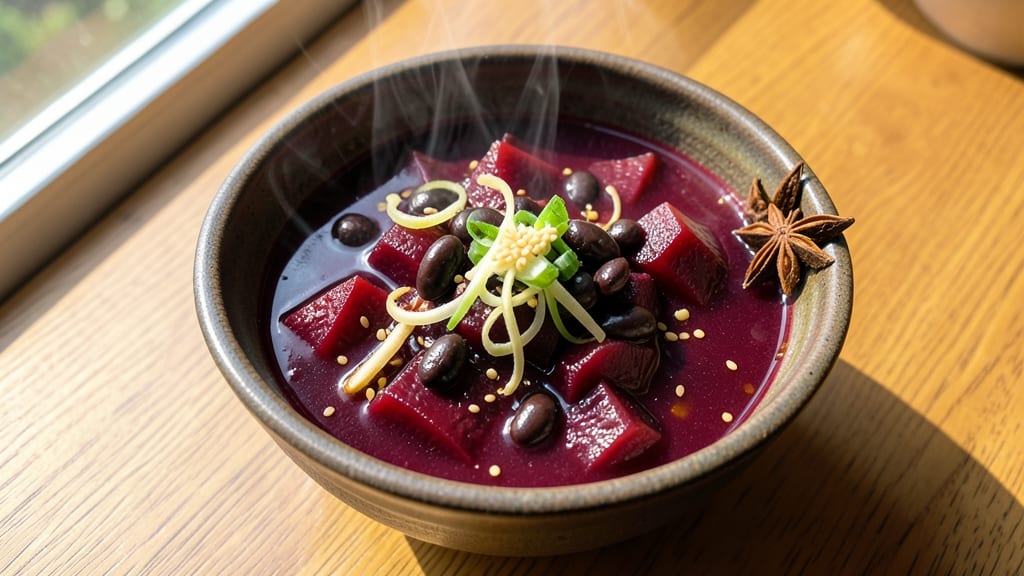
This Chinese-inspired beetroot soup transforms humble vegetables into a complex, aromatic dish that balances earthy sweetness with bold umami. The secret lies in star anise and ginger—classic Chinese flavor builders that elevate simple beetroot into something deeply satisfying.
What makes this recipe special is how it merges traditional Chinese techniques with a modern vegetarian approach, creating a soup that's both comforting and sophisticated.
The foundation starts with slow-cooked beetroot, its natural sweetness deepening as it simmers with ginger and garlic. Star anise infuses the broth with a subtle licorice-like warmth, while fermented black beans add that signature Chinese umami depth without overpowering the beetroot's earthy character.
The result is a velvety soup with layers of flavor that develop as it cooks.
By the time you're done, you'll have a restaurant-quality soup that's rich, aromatic, and packed with texture—creamy from the beets, slightly chewy from the black beans, and brightened by a final touch of chili oil.
This isn't just another beetroot soup; it's a fusion of Chinese culinary tradition and modern vegetable-forward cooking that proves vegetables can be just as hearty and flavorful as meat-based dishes.
Perfect for chilly evenings or as a starter that leaves a lasting impression, this soup pairs beautifully with steamed rice or crusty bread. The best part? Every spoonful delivers that perfect balance of sweet, spicy, and savory that makes it unforgettable. Let's get cooking!
Ingredients for beetroot soup chinese
Humble ingredients transform into a velvety, aromatic Chinese-inspired beetroot masterpiece.
| Ingredient | Amount | Notes |
|---|---|---|
| Beetroot 🍠 | 2 lbs | Medium-sized, peeled and chopped |
| Fresh Ginger Root 🌿 | 1 inch | Peeled and sliced thinly |
| Garlic Cloves 🧄 | 6 cloves | Minced for aromatic depth |
| Star Anise Pods 🌟 | 2 whole | For licorice-like warmth |
| Fermented Black Beans 🫘 | ½ cup | Drained and rinsed |
| Vegetable Stock 💧 | 4 cups | Homemade or high-quality |
| Soy Sauce 🍶 | 1 tbsp | Dark soy for color depth |
| Sesame Oil 🫒 | 1 tsp | Toasted for nutty aroma |
| Chili Oil 🌶️ | 1 tbsp | For final spicy brightness |
| Green Onions 🧅 | 3 whole | Sliced for garnish |
| Sesame Seeds 🌾 | 1 tsp | Toasted for crunch |
| Vegetable Oil 🫒 | 2 tbsp | For sautéing |
| White Peppercorns 🌶️ | ½ tsp | Freshly cracked |
| Sugar 🍚 | 1 tbsp | Balances earthy flavors |
The star anise and fermented black beans are non-negotiable for that signature Chinese umami depth. Whole Foods or Asian markets have the best quality star anise—look for pods that are plump and slightly glossy. Fermented black beans? Trader Joe's carries them, but if you can't find them, substitute with a teaspoon of soy sauce plus a dash of fish sauce (vegetarian version uses extra soy). The beetroot should be vibrant magenta—organic is ideal to avoid earthy soil flavors. For ginger, grab the freshest root you can find; it makes all the difference in aroma. Store your star anise pods in a cool, dark place—they'll keep for 1 year and infuse flavor into everything they touch.
No fermented black beans? Miso paste at half the amount works in a pinch, though it won't be identical. Running low on star anise? Cinnamon sticks or fennel seeds can mimic some of that licorice warmth, but nothing beats the real thing. The vegetable stock is where flavor builds—homemade is best, but even bouillon cubes work if you boost the salt. For the chili oil, Lao Gan Ma from any Asian market is legendary, but homemade (chili flakes + oil) is just as good. The sugar might seem odd, but it's essential to balance the beetroot's earthiness—brown sugar adds depth if you're feeling fancy.
This soup tastes even better the next day as flavors meld. Store it in the fridge for up to 5 days, or freeze portions for 3 months. The chili oil should always be added fresh—it doesn't store well mixed in. For extra richness, blend a portion before serving. Garnish with toasted sesame seeds and green onions right before eating—they add that final pop of color and texture. Leftovers reheat beautifully; just add a splash of water if it thickens too much.
Why You'll Love This Recipe
- Fewer Ingredients, Bigger Impact: I swear by this—just five core ingredients transform into something rich and complex. That fermented black bean paste? Slides in like a savory shortcut, packing umami without the fuss of multiple sauces. Honestly, my pantry’s been stocked with these for years, and this soup finally gave them a reason to shine.
- Earthy-Sweet Heat: The star anise and ginger root create this deep, warming aroma that hits you before the first sip. Roasted beetroot adds natural sweetness, while the garlic cloves—lightly toasted—bring that crisp, aromatic punch. It’s the kind of flavor that lingers, making you want to savor every spoonful.
- Leftover Magic: This soup only gets better after a day in the fridge. The flavors meld into something even more cohesive, and the texture? Creamy perfection. I’ll be real: I often make a double batch just so I can enjoy it twice—once fresh, once reheated with a sprinkle of chili oil.
- Pantry Staple Power: Between us, this is my go-to when I’m low on fresh ingredients but still want something impressive. Fermented black beans and star anise last forever, and beets? They’re one of those vegetables that stay crisp in the crisper for ages. Budget-friendly, reliable, and never lets me down.
Step-by-step instructions for star anise and ginger beetroot soup
This vibrant Chinese-inspired soup delivers deep umami complexity through star anise and ginger—here's how to build it layer by layer.
Sauté the Aromatic Foundation
Heat the 2 tablespoons vegetable oil in a heavy-bottomed pot over medium heat until shimmering but not smoking. Add the 1-inch fresh ginger root (sliced) and 6 cloves garlic (minced), cooking for 2-3 minutes until the ginger becomes fragrant and the garlic turns golden—this is your flavor base. The moment you catch that warm, spicy aroma, it's time to add the 2 whole star anise pods and 0.5 teaspoon white peppercorns. Stir for 30 seconds until the star anise releases its licorice-like essence into the oil.
Here's the thing—star anise needs gentle treatment. If the oil gets too hot, it'll burn before releasing its full flavor. Watch for the pods to turn slightly darker around the edges—that's your cue they're ready to infuse the soup with their signature warmth.
Build the Umami Depth with Fermented Black Beans
Add the 0.5 cup fermented black beans (drained and rinsed) to the pot and stir for 1 minute until they begin to soften slightly. This step is where the magic happens—the fermented beans bring a funky, savory depth that balances the earthy beets. After 1 minute, pour in the 4 cups vegetable stock and bring everything to a gentle simmer over medium-low heat. The stock should just bubble softly—no vigorous boiling, or the star anise will become bitter.
Simmer for 10 minutes to let the aromatics meld with the stock. You'll notice the liquid turning a pale golden color and developing a rich, almost brothy aroma. This is your signal that the foundation is ready for the star of the show—the beets.
Incorporate the Beets and Balance Flavors
Add the 2 lbs chopped beetroot to the simmering broth and stir gently to distribute evenly. Return to a simmer and cook uncovered for 25-30 minutes, stirring occasionally, until the beets are fork-tender and the soup thickens slightly. The beets should soften completely but still hold their shape—no mushy texture. Here's where the 1 tablespoon sugar comes into play. Stir it in during the last 5 minutes of cooking to balance the earthy beets with a touch of sweetness.
Taste the soup at this stage—it should be rich and slightly sweet, with the star anise and ginger notes lingering in the background. If it needs more depth, add 1 tablespoon soy sauce now. The dark soy will add color and another layer of umami without overpowering the natural sweetness of the beets.
Finish with Sesame and Chili for Brightness
Remove the pot from heat and let it sit for 5 minutes to allow the flavors to settle. Stir in the 1 teaspoon sesame oil and 1 tablespoon chili oil, then taste again. The sesame oil adds nutty warmth, while the chili oil brings a bright, spicy finish that cuts through the richness. Adjust the seasoning if needed—you want a balance of sweet, spicy, and umami in every spoonful.
For serving, ladle the soup into bowls and garnish with 3 whole green onions (sliced) and 1 teaspoon toasted sesame seeds. The green onions add a fresh contrast, while the sesame seeds provide a satisfying crunch. Serve immediately while the star anise aroma is still vibrant.
Pro Tips For Making Beetroot Soup Chinese
- PEEL BEETS AFTER COOKING: I learned this the hard way—peeling raw beetroot is a pain, and you’ll lose half the flesh to the knife. Roast or boil them whole first, then cool slightly before peeling. The skins slide off like magic, and you keep all that vibrant color and sweetness where it belongs.
- TOAST STAR ANISE FIRST: Skip the whole pod straight into the pot—it’ll just sit there like a lazy flavor ghost. Dry-toast the star anise in a hot pan for 30 seconds until fragrant. That’s when it releases its deep, licorice-like aroma, which actually makes the soup sing instead of just whispering in the background.
- SOAK BLACK BEANS 10 MINUTES: Fermented black beans pack a punch, but if you chuck them in dry, they’ll turn the soup into a muddy, bitter mess. Give them a quick 10-minute soak in warm water to soften and mellow their funk. Rinse well before adding—trust me, your soup won’t taste like a misplaced pickled experiment.
- SIMMER LOW AND SLOW: This isn’t a race. After the initial boil, drop the heat to a gentle simmer and let the soup work its magic for at least 20 minutes. Rushing it leaves the ginger and garlic harsh, and the beetroot flavor stays dull. Patience here turns a good soup into something deeply comforting—like a hug in a bowl.
Troubleshooting your beetroot soup chinese
Overcooked Beets
If your beets turn mushy and disintegrate, you’ve likely simmered them too long or stirred too aggressively. The key is gentle heat—once the beets are fork-tender (25-30 minutes), remove them from the pot and mash a few with a fork to thicken the broth naturally.
For extra insurance, add 1 tablespoon cornstarch mixed with 2 tablespoons water to the soup and simmer for 2-3 minutes to restore creaminess. 💡
Star Anise Bitterness
Star anise can turn bitter if cooked too long or at high heat. Remove the pods immediately after adding them to the oil (30 seconds max), then strain them out before adding stock.
For extra flavor without bitterness, crush the pods lightly with the side of your knife before adding—this releases aroma without overcooking. If bitterness sneaks in, balance it with ½ teaspoon sugar or a splash of rice vinegar. 🌟
Broth Too Thin
A watery broth often means the beets weren’t cooked long enough to release starches. Simmer uncovered for 5-10 extra minutes to thicken naturally. If it’s still too thin, blend ½ cup of the soup and stir it back in—this adds body without altering texture.
For a quick fix, mix 1 tablespoon soy sauce with 1 teaspoon cornstarch, stir into the broth, and simmer for 2 minutes. 💧
Fermented Beans Too Strong
Fermented black beans add umami, but their funk can overpower if used in excess. If the flavor feels too intense, reduce the amount to ¼ cup (instead of ½ cup). For a milder taste, soak the beans in ½ cup warm water for 10 minutes before draining and using.
Alternatively, substitute with 1 tablespoon miso paste—it’s less pungent but still delivers depth. 🫘
Lacking Depth
If your soup tastes flat, it likely needs more umami or acidity. Boost flavor by adding 1 extra tablespoon soy sauce (dark soy for color) or a pinch of white miso paste.
For brightness, finish with ½ teaspoon rice vinegar or a squeeze of lemon juice. A final touch of toasted sesame oil (½ teaspoon) also enhances complexity. 💛
Chili Oil Too Hot
If the chili oil’s heat overwhelms the soup, reduce the amount to ½ tablespoon or swap it for mild chili flakes (½ teaspoon) mixed with 1 teaspoon neutral oil. For a sweeter finish, drizzle with honey (½ teaspoon) or a pinch of sugar to balance the spice.
Always add chili oil after removing the pot from heat to control the intensity. 🌶️
Nutrition facts
Frequently asked questions
Can I make this soup without fermented black beans?
Yes! If you don’t have fermented black beans, substitute with 1 tablespoon miso paste or ½ teaspoon fish sauce (for non-vegetarian). For a milder taste, use 1 extra tablespoon soy sauce and a pinch of white pepper to mimic the umami depth. The flavor won’t be identical, but it’ll still be delicious.
How can I make this soup spicier?
Increase the chili oil to 2 tablespoons or add ½ teaspoon chili flakes during cooking. For a smoky kick, stir in ½ teaspoon smoked paprika with the sesame oil at the end. Always taste first—you can adjust heat to your preference!
Is this soup gluten-free?
Mostly! Check your soy sauce and vegetable stock for gluten—use tamari or gluten-free versions if needed. All other ingredients (beetroot, ginger, star anise, etc.) are naturally gluten-free. Always verify labels to ensure safety.
Can I use canned beets instead of fresh?
Fresh beets give the best texture and flavor, but you can use canned in a pinch. Drain and rinse them well, then simmer for 15-20 minutes instead of 25-30 minutes—they’re pre-cooked! For extra richness, mash ½ cup of the soup and stir it back in to thicken.
What’s the best way to store leftovers?
Store in an airtight container in the fridge for up to 5 days. For freezing, cool completely, then portion into freezer-safe bags for up to 3 months. Reheat gently on the stove—add a splash of water if it thickens too much.