
Soups & Stews
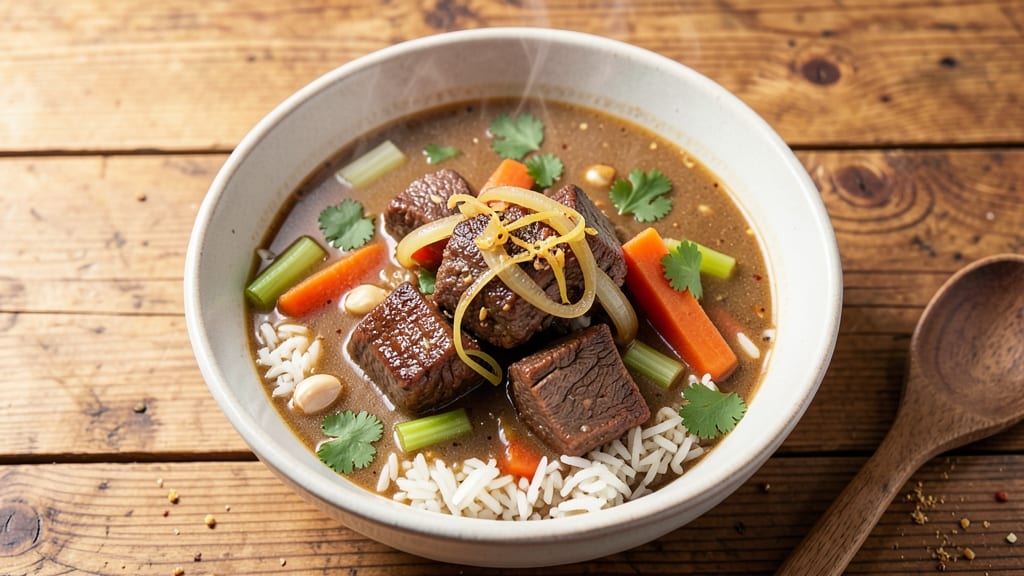
This beef vegetable rice soup recipe delivers hearty comfort in every spoonful—tender beef, fluffy rice, and a rich broth that simmers to perfection. 💛 The secret lies in searing beef for deep flavor before slow-cooking it with aromatic vegetables, creating a harmonious blend of textures and tastes that warms both body and soul.
What sets this soup apart is its balance: tender beef bites that melt in your mouth, perfectly cooked rice that absorbs the savory broth, and a medley of vegetables that add color and nutrition.
The slow simmering process develops layers of flavor, transforming simple ingredients into a restaurant-quality dish you can make at home.
Ingredients for beef vegetable rice soup
Hearty ingredients for a restaurant-worthy beef vegetable rice soup that simmers with deep flavor.
| Ingredient | Amount | Notes |
|---|---|---|
| Chuck Roast 🥩 | 1 ½ lb | Cut into 1-inch cubes |
| Long-Grain White Rice 🍚 | 1 cup | Uncooked, jasmine preferred |
| Yellow Onion 🧅 | 1 whole | Diced, medium size |
| Carrots | 3 medium | Peeled, sliced into rounds |
| Celery Stalks 🥕 | 3 whole | Diced, including leaves |
| Garlic Cloves 🧄 | 4 cloves | Minced, fresh preferred |
| Fresh Parsley 🌿 | ¼ cup | Chopped, for garnish |
| Beef Broth 💧 | 6 cups | Low-sodium preferred |
| Tomato Paste 🍅 | 2 tbsp | Smooth, no sugar added |
| Olive Oil 🫒 | 2 tbsp | Extra-virgin for searing |
| Dried Thyme 🌿 | 1 tsp | Or 1 tbsp fresh |
| Bay Leaves 🌿 | 2 whole | Remove before serving |
| Salt 🧂 | 1 ½ tsp | Kosher or sea salt |
| Black Pepper 🌶️ | ½ tsp | Freshly ground preferred |
The chuck roast is the foundation—look for well-marbled cuts at your local butcher or grocery store's meat counter. Costco or Whole Foods often carry high-quality cuts perfect for slow cooking. If using pre-cut cubes, pat them dry before searing to ensure a good crust. For the rice, jasmine or basmati varieties absorb the broth beautifully, though long-grain white works fine. The vegetables should be fresh but firm—carrots with vibrant orange color and celery without yellowing indicate freshness. Buy organic if possible, especially for the herbs and garlic, as they tend to have higher pesticide residues.
No chuck roast? Brisket or short ribs work beautifully, though cooking times may vary. Substitute beef broth with vegetable broth plus 1 tbsp soy sauce for a vegetarian-friendly version. If tomato paste is unavailable, 1 cup crushed tomatoes will work in a pinch, though the texture will differ slightly. Fresh thyme is ideal, but dried thyme at one-third the amount suffices. For the carrots, baby carrots can be used whole, while larger varieties should be peeled and sliced evenly. The bay leaves add depth—don't skip them, but remember to remove them before serving. If you're short on time, pre-chopped frozen vegetables can be used, though fresh is always better for texture.
Store any leftovers in an airtight container in the refrigerator for up to 4 days, though the flavor actually improves after the first day as the ingredients meld together. For longer storage, freeze portions for up to 3 months. The rice will thicken upon reheating, so add a splash of broth if needed. This soup reheats beautifully—simmer gently on the stove or microwave until heated through. For meal prep, double the recipe and freeze individual portions for quick lunches. The broth can also be made ahead and stored separately, then combined with the rice and vegetables when ready to serve.
Why You'll Love This Recipe
- Here’s what sold me: that deep, meaty flavor from slow-cooked chuck roast, balanced by the natural sweetness of carrots and the bright crunch of celery. Honestly, it tastes like a restaurant-quality bowl, but I’m the one who made it.
- One-Pot Magic: I swear by this recipe—just dump everything in a pot, add water, and let it simmer. No fancy techniques, no stressing over multiple pans. The chuck roast practically melts into tender shreds while the rice absorbs all that savory broth.
- Rich Without Effort: Here’s what sold me: that deep, meaty flavor from slow-cooked chuck roast, balanced by the natural sweetness of carrots and the bright crunch of celery. Honestly, it tastes like a restaurant-quality bowl, but I’m the one who made it.
- Lunchbox Hero: Between us, this soup is my secret weapon for meal prep. Double the batch, store it in jars, and grab it for lunches all week—no reheating drama, just hearty, satisfying bites every time.
Step-by-step instructions for beef vegetable rice soup
Here's how to craft a deeply satisfying bowl where tender beef meets aromatic vegetables in a rich, savory broth.
🔥 Step 1: Sear the Chuck Roast for Deep Flavor
Heat the 2 tablespoons olive oil in a large Dutch oven over medium-high heat until shimmering. Pat the 1.5 lb chuck roast dry with paper towels and season generously with 1 teaspoon salt and 0.5 teaspoon black pepper on all sides. Add the roast to the pot and sear undisturbed for 4-5 minutes until deeply browned on one side.
Flip the roast and sear another 4-5 minutes until the second side develops a rich crust. This initial browning creates the Maillard reaction that builds complex flavor. Remove the roast and set aside—it will finish cooking in the broth later. The caramelized bits left in the pot will form the foundation of your soup's depth.
👨🍳 Step 2: Build the Aromatic Vegetable Base
In the same Dutch oven, add the diced yellow onion, sliced carrots, and diced celery stalks (including leaves). Cook over medium heat for 8-10 minutes, stirring occasionally, until the vegetables soften and the onion becomes translucent. You'll notice the vegetables release their moisture and begin to caramelize slightly at the edges.
Add the 4 minced garlic cloves and 2 tablespoons tomato paste, stirring for 1 minute until fragrant. The tomato paste will deepen the soup's color and add a subtle umami richness. Sprinkle in the 1 teaspoon dried thyme and 2 whole bay leaves, stirring to coat everything evenly with the spices.
🥘 Step 3: Simmer the Beef and Vegetables
Return the seared chuck roast to the pot. Pour in the 6 cups beef broth, bringing the mixture to a gentle boil. Once boiling, reduce heat to low and partially cover the pot. Let the soup simmer for 1 hour and 15 minutes, maintaining a gentle bubble at the surface. This slow cooking time ensures the beef becomes fork-tender while the vegetables absorb the rich flavors of the broth.
Check the beef after 45 minutes—it should be easily pierced with a fork. If it's not yet tender, continue simmering for another 15-30 minutes. The broth should reduce slightly, becoming more concentrated and flavorful. Skim off any foam that rises to the surface during this time to keep the broth clear.
🍳 Step 4: Add Rice and Finish Cooking
Rinse the 1 cup long-grain white rice under cold water to remove excess starch, then add it to the soup. Stir gently to distribute the rice evenly throughout the broth. Return the heat to medium-low and let the soup simmer uncovered for 15-18 minutes, stirring occasionally. The rice should absorb the liquid and become tender while maintaining a slight bite—this ensures it doesn't turn mushy.
Test the rice for doneness by tasting a grain—it should be firm yet cooked through. The soup should have a consistency where the rice is mostly submerged but not swimming in excess liquid. If the soup is too thick, add ¼ cup water to loosen it slightly. Remove the 2 whole bay leaves before serving.
🍽️ Step 5: Garnish and Serve with Confidence
Ladle the soup into bowls, dividing the beef into bite-sized pieces as you serve. Garnish each serving with ¼ cup chopped fresh parsley for a pop of color and freshness. The parsley not only enhances presentation but also adds a bright, herbal note that balances the richness of the beef and broth.
Serve immediately while hot, with crusty bread on the side to soak up every last drop of that savory broth. Each spoonful should deliver tender beef, sweet carrots, earthy celery, and aromatic rice in perfect harmony. The soup's depth of flavor comes from the slow cooking process—don't rush it, and you'll be rewarded with a comforting bowl that warms both body and soul.
Pro Tips For Making Beef Vegetable Rice Soup
- Sear the Chuck Roast: After browning the onions and celery, pull the pan off heat, add the chuck roast, and let it sit for 2 minutes. This prevents steam from cooling the pan—once it’s back on heat, you’ll get a proper crust. I learned this the hard way when my first batch turned out pale and bland.
- Cut Carrots Thin: Slice carrots into ¼-inch rounds instead of thick chunks. They’ll cook faster and stay tender while the beef and rice finish. I used to leave them too thick, and they’d turn mushy by the end—now they hold their shape perfectly.
- Don’t Overcrowd the Pot: Add rice in stages if your pot is small—start with half, let it toast for 2 minutes, then add the rest. Crowding dumps too much steam into the pot, turning your soup into a sad, watery mess. Trust me, your rice will thank you.
- Use Cold Rice for Texture: Rinse your rice until the water runs clear, then soak it in cold water for 20 minutes before cooking. This removes excess starch, so your rice stays separate and fluffy instead of turning gluey. I skip this sometimes, and the soup always feels heavier.
Common mistakes when making perfect results
Skipping the Sear
One of the biggest mistakes is skipping the sear on the beef. That initial browning creates the Maillard reaction, which builds deep, caramelized flavors that transform a simple soup into something extraordinary.
I’ve made this soup without searing, and while it’s still good, it lacks that rich, meaty depth that makes it truly satisfying. Use 2 tablespoons olive oil and medium-high heat for those perfect crusty edges—it’s worth the extra 8-10 minutes of effort. 🔥
Overcrowding the Pot
Don’t overcrowd your Dutch oven when searing the beef or sautéing the vegetables. If you pile everything in at once, the vegetables will steam instead of caramelize, and the beef won’t brown properly.
I’ve learned this the hard way—once, I dumped all the veggies in at once, and they just sat there, soggy and flavorless. Work in batches if needed, and give everything space to develop that delicious crust. A 6-quart Dutch oven is ideal for this recipe.
Ignoring the Simmer Time
Rushing the simmering process is a common mistake that leads to tough beef and mushy rice. The beef needs that 1 hour and 15 minutes of gentle simmering to become fork-tender, and the rice needs its 15-18 minutes to cook just right.
I once cut the simmer time short because I was impatient, and the beef was still chewy. Trust the process—slow cooking is what makes this soup so comforting and delicious. ⏳
Not Skimming the Foam
As the soup simmers, a layer of foam will rise to the surface. Skimming this off occasionally keeps your broth clear and prevents it from becoming cloudy or bitter. I used to ignore this step, and my soup always ended up looking a bit murky.
Grab a ladle or a fine-mesh skimmer and remove the foam every 10-15 minutes—your broth will thank you with a cleaner, brighter appearance and richer flavor.
Adding Rice Too Early
Adding the rice too early can turn it into a mushy, gluey mess. The rice needs to cook in the broth at the very end, so it absorbs just enough liquid to become tender without turning to porridge.
I’ve ruined a few batches by adding the rice too soon, and the texture was all wrong. Wait until the beef is tender and the vegetables are cooked before adding the rice—this ensures perfect, fluffy grains every time. 🍚
Forgetting to Season Properly
Seasoning is key, but it’s easy to forget to adjust the flavors as you go. The beef broth and tomato paste already add saltiness, so taste the soup before adding the rice and adjust with kosher salt or black pepper as needed.
I’ve made the mistake of assuming the broth was seasoned enough, only to find the soup bland at the end. Taste frequently—this is the only way to ensure your soup is perfectly balanced. Trust your palate!
Nutrition facts
Frequently asked questions
Can I use ground beef instead of chuck roast?
Ground beef works, but the texture will differ significantly. For a similar experience, use 1 lb ground chuck and brown it thoroughly in the Dutch oven before adding broth. The soup will be heartier but less tender than with cubed beef. For best results, stick to chuck roast for that melt-in-your-mouth quality.
How can I make this soup in a slow cooker?
Transfer the seared beef and sautéed vegetables to your slow cooker, then add the broth, tomato paste, and spices. Cook on low for 6-7 hours or high for 3-4 hours until the beef is tender. Add the rice during the last 15 minutes of cooking. The slow cooker method is perfect for hands-off preparation while maintaining rich flavors.
What vegetables can I substitute if I don't have carrots or celery?
Swap carrots for zucchini or bell peppers (diced) and celery for leeks or mushrooms. Both add sweetness and texture. For a more traditional approach, try potatoes or turnips, though they'll require slightly longer cooking time. Just ensure your vegetable mix maintains balance in color and flavor.
Can I make this soup ahead of time?
This soup actually tastes better the next day as flavors meld together. Store in an airtight container in the fridge for up to 4 days. Reheat gently on the stove, adding a splash of water if the rice thickens too much. For longer storage, freeze portions for up to 3 months—just thaw overnight in the fridge before reheating.
Why did my rice turn out mushy?
Mushy rice usually happens when added too early or cooked too long. Always add rice after the beef is tender and simmer uncovered for just 15-18 minutes. If using pre-cooked rice, reduce simmer time to 5-8 minutes and stir occasionally. For extra insurance, rinse the rice thoroughly before adding to remove excess starch.