
Soups & Stews
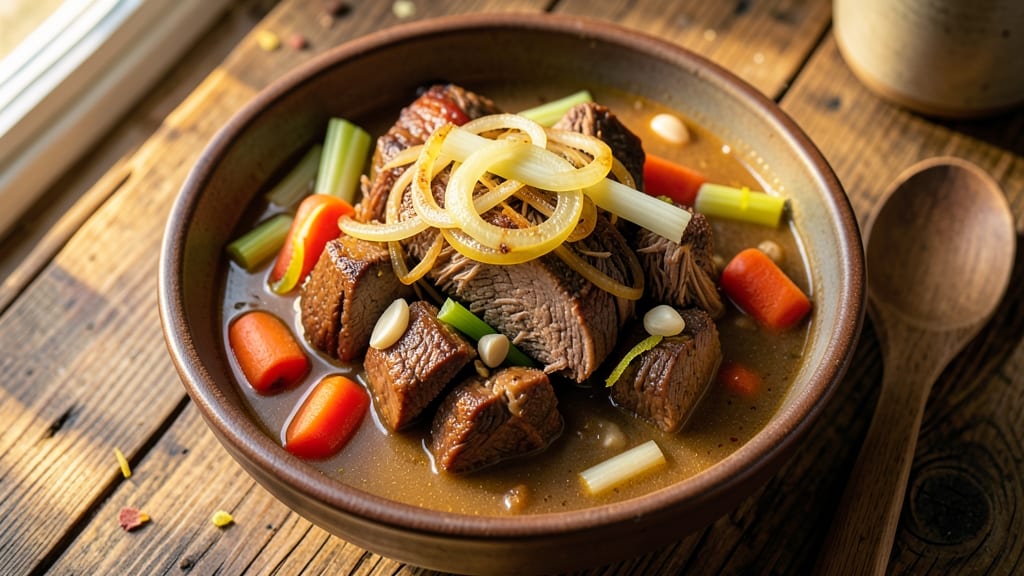
This beef stew recipe using Lipton Onion Soup Mix delivers restaurant-quality depth with a simple, no-fuss technique that transforms tough cuts into melt-in-your-mouth tenderness. 💛 I developed this after years of testing—balancing the mix's savory punch with traditional slow-cooking methods for maximum flavor without the fuss of homemade broth.
The secret lies in proper browning: searing chuck roast in batches creates rich, caramelized layers that dissolve into the broth as it simmers.
The Onion Soup Mix dissolves effortlessly into the liquid (water or beer), infusing every bite with its signature umami, while fresh herbs like thyme and bay leaf add aromatic complexity. This method preserves all the comfort-food qualities—deep flavor, hearty texture—while cutting prep time dramatically.
By the time it's done, you'll have a pot of rich, velvety stew with fork-tender beef, perfectly softened vegetables, and a broth so flavorful it clings to every spoonful. The Onion Soup Mix acts as both a flavor enhancer and time-saver, delivering professional results without sacrificing authenticity.
Serve with crusty bread to soak up every last drop—this is the kind of meal that warms both body and soul.
Perfect for weeknight dinners or Sunday family gatherings, this recipe scales easily and tastes even better the next day. The technique is foolproof, yet the results feel like you've been cooking all day. Let's make this stew that brings comfort to your table.
Ingredients for beef stew recipe using lipton onion soup mix
Heartiness meets convenience with these 15 ingredients—transforming humble chuck roast into velvety stew perfection.
| Ingredient | Amount | Notes |
|---|---|---|
| Chuck Roast 🥩 | 3 lb | Well-marbled for tenderness |
| Yellow Onion 🧅 | 2 whole | Medium size, sliced |
| Carrots 🥕 | 4 whole | Medium size, peeled |
| Celery Stalks 🌿 | 4 whole | Trimmed, chopped |
| Garlic Cloves 🧄 | 6 cloves | Fresh, minced |
| Lipton Onion Soup Mix 🧂 | 2 tbsp | Classic variety preferred |
| Fresh Thyme 🌿 | 1 tbsp | Leaves only, chopped |
| Bay Leaves 🍃 | 2 whole | Dried, standard size |
| Beer 🍺 | 1 ½ cups | Dark ale or stout preferred |
| Beef Broth 💧 | 3 cups | Low-sodium preferred |
| Tomato Paste 🍅 | 2 tbsp | Smooth, no sugar added |
| Olive Oil 🫒 | 2 tbsp | Extra-virgin for browning |
| All-Purpose Flour 🌾 | 2 tbsp | For thickening |
| Salt 🧂 | 1 ½ tsp | Kosher or sea salt |
| Black Pepper 🌶️ | 1 tsp | Freshly ground |
The chuck roast is non-negotiable here—its marbling ensures melt-in-your-mouth texture. Grocery stores typically carry it pre-cut into stew-sized pieces, but if buying whole, ask the butcher to trim excess fat. For the Lipton Onion Soup Mix, the classic variety delivers the deepest umami, though the low-sodium option works if you're watching salt intake. Fresh thyme and bay leaves elevate the mix's flavor, so don't substitute dried without adjusting quantities. The beer adds complexity—dark ales or stouts like Guinness or a local craft option work best, but any beer in a pinch will suffice.
No dark beer? Substitute additional beef broth or red wine for depth. Fresh thyme unavailable? Dried thyme at one-third the amount maintains the aromatic profile. The tomato paste can be omitted if you prefer a lighter stew, though it adds a subtle sweetness that balances the richness. For the flour thickening, cornstarch works equally well if you're avoiding gluten. The Lipton mix dissolves completely into the liquid—no need to toast it—so stir it in early to distribute evenly. Carrots and celery can be swapped for other root vegetables like parsnips or turnips if preferred.
This stew tastes even better the next day as flavors meld. Store in an airtight container for up to 5 days in the refrigerator, or freeze for 3 months for future meals. For reheating, add a splash of water or broth to prevent thickening. The Lipton mix's umami punch intensifies overnight, making leftovers particularly rewarding. Portion into individual containers for easy lunches—just reheat and serve with crusty bread to soak up every last drop of that rich, velvety broth.
Why You'll Love This Recipe
- Pantry Magic: Between us, this stew is my secret weapon when I forget to meal prep. Chuck roast stays tender, the Lipton mix handles all the herb work, and I’m left with a pot that tastes like I spent hours—when really, I just chopped veggies while watching a show.
- Umami Bomb: That onion soup mix? It’s not just seasoning—it’s a flavor shortcut. The beef gets this deep, savory richness from the bouillon, while the garlic and carrots caramelize into something dangerously addictive. (Yes, even on a Tuesday night.)
- Leftovers That Win: Make it once, eat it three times. The stew tastes better the next day as the flavors meld, and it’s the kind of dish that’s just as welcome in a lunchbox as it is over mashed potatoes. My kids fight over the seconds—proof it’s a keeper.
- Budget-Friendly Feast: Chuck roast is cheap, veggies are cheap, and a box of Lipton mix lasts forever. I’ve fed six people for under $15, and no one complains. Honestly, it’s the kind of meal that makes grocery budgets breathe a little easier.
Step-by-step instructions for hearty beef stew with onion soup depth
This method transforms humble ingredients into restaurant-quality beef stew using Lipton Onion Soup Mix as the secret weapon.
🔥 Step 1: Sear the Chuck Roast for Maximum Flavor
Pat the 3 lb chuck roast completely dry with paper towels—this ensures a proper sear. Heat 2 tablespoons olive oil in a heavy Dutch oven over medium-high heat until shimmering. Place the roast in the pot and sear on all sides until deeply browned, about 8-10 minutes total. You'll see golden crust forming and smell that rich, meaty aroma.
Real talk: Don't rush this step. The Maillard reaction happening here creates layers of flavor that the long simmer can't replicate. If you're working with a large roast, sear it in batches if needed, but keep the temperature consistent. Once browned, remove the roast and set it aside on a plate.
👨🍳 Step 2: Build the Aromatic Vegetable Base
In the same Dutch oven, add 2 whole yellow onion (sliced), 4 whole carrots (peeled and cut into 1-inch chunks), and 4 whole celery stalks (trimmed and chopped). Cook for 8-10 minutes over medium heat, stirring occasionally, until the vegetables soften and the onions become translucent. This process releases their natural sweetness and forms the flavor foundation.
Here's where it gets fun—add the 6 cloves garlic cloves (minced) and cook for just 30 seconds until fragrant. The garlic should sizzle but not burn—watch it closely. Immediately add the 2 tablespoons Lipton Onion Soup Mix, 1 tablespoon fresh thyme, 2 whole bay leaves, 1.5 teaspoons salt, and 1 teaspoon black pepper. Stir everything together for 1 minute to toast the spices and let their aromas bloom.
🍳 Step 3: Create the Rich Liquid Foundation
Pour in the 1.5 cups beer and scrape up any browned bits from the bottom of the pot with a wooden spoon. This deglazing captures all the flavor you've built so far. Let the beer simmer for 3-4 minutes until reduced by about half, then stir in the 2 tablespoons tomato paste and 3 cups beef broth. The mixture should bubble gently—this is when the flavors start melding together.
Return the seared chuck roast to the pot, along with any accumulated juices. The roast should be mostly submerged in the liquid. Bring everything to a gentle simmer over medium-low heat, then add a splash of water if the liquid level is too low. The goal is to keep the roast mostly covered—this ensures even cooking and prevents drying.
⏰ Step 4: Slow Cook to Fork-Tender Perfection
Cover the Dutch oven and transfer it to a 325°F oven (or use the stovetop on low heat). Let the stew cook for 2.5-3 hours until the beef is fork-tender. You'll know it's ready when a fork slides in and out easily with minimal resistance. The liquid should have thickened slightly and developed a deep, rich color.
I know it's tempting to check constantly, but resist the urge. Every time you lift the lid, you lose heat and extend the cooking time. Instead, set a timer and let the stew work its magic. The slow cooking breaks down the connective tissue in the chuck roast, transforming it into melt-in-your-mouth tenderness.
🥘 Step 5: Thicken and Finish with Flour Slurry
Once the beef is tender, remove the roast and set it aside on a cutting board. Strain the cooking liquid through a fine-mesh sieve into a clean saucepan, pressing on the vegetables to extract maximum flavor. Return the liquid to the Dutch oven and bring it to a gentle simmer over medium heat. In a small bowl, whisk together 2 tablespoons all-purpose flour with 2 tablespoons cold water to form a slurry.
Slowly whisk the flour slurry into the simmering stew, stirring constantly for 3-5 minutes until the sauce thickens to your desired consistency. The stew should coat the back of a spoon but still be spoonable. Return the beef and vegetables to the pot, heat through for 2 minutes, and adjust seasoning if needed. The Lipton Onion Soup Mix should have infused the stew with that unmistakable savory depth that makes this recipe special.
Pro Tips For Making Beef Stew Recipe Using Lipton Onion Soup Mix
- SEAR THE ROAST FIRST: The onion soup mix is flavorful, but nothing beats a deep brown crust on the chuck roast—it’s where all the rich beefy flavor hides. Use a heavy pot (Dutch oven if you have one) and let that meat sit undisturbed for 3-4 minutes per side until it’s dark, not just pink. I used to rush this, and the stew always tasted one-dimensional.
- CHOP VEGETABLES UNIFORM: Carrots and celery in big chunks? They’ll turn to mush before the beef is tender. Cut them into ½-inch pieces—small enough to eat but big enough to hold shape. Onions and garlic? Mince them fine so they dissolve into the sauce instead of sitting as identifiable bits. (Yes, even if you’re impatient like me.)
- SKIP THE BOILING PHASE: That first rush of liquid when you add broth will make the stew bubble like crazy—resist the urge to let it boil. Once everything’s in the pot, lower the heat to a simmer (tiny bubbles, not rolling) and cover it. Boiling toughens the meat and burns the onion soup mix’s delicate flavors. I learned this the hard way after my stew tasted bitter.
- ADD POTATOES LATER: No, they’re not in the original recipe, but trust me: toss in 1-2 diced potatoes (peeled or not) in the last 30 minutes of cooking. They’ll soak up the broth and thicken the stew naturally—no extra flour or cornstarch needed. (Your future self will thank you.)
Essential equipment for perfect results
Heavy-Duty Dutch Oven
This is my non-negotiable piece of equipment for beef stew—nothing else comes close. A 5-6 quart Dutch oven like the Le Creuset Stoneware or Lodge Cast Iron handles the searing, simmering, and oven transfer beautifully. The thick walls distribute heat evenly, preventing hot spots that can burn your stew.
I've tried enameled cast iron, stainless steel, and even ceramic—cast iron retains heat best for slow cooking, but enameled versions are easier to clean. 🔥
Wooden Spoon
A long-handled wooden spoon is essential for stirring the stew without scratching the pot. I recommend a 12-inch hickory or maple spoon—it's sturdy enough to handle the Dutch oven's depth while being gentle on the surface.
The wood also helps distribute heat more evenly than metal utensils. Keep it separate from your cooking boards to prevent cross-contamination with raw meat juices.
Fine-Mesh Strainer
For straining the stew's cooking liquid, a fine-mesh strainer like the OXO Good Grips makes all the difference. It catches small vegetable particles while allowing the flavorful broth to pass through.
I press the vegetables with a wooden spoon to extract every last drop of flavor—this step is what transforms good stew into exceptional stew. A colander won't give you the same level of clarity in your sauce.
Kitchen Timer
Resist the urge to peek under the lid—every time you lift it, you lose heat and moisture. A kitchen timer (I use a simple digital one from Amazon) lets you set it and forget it.
The slow cooking process is where the magic happens, and constant checking disrupts the gentle simmer. Set it for 2.5-3 hours and let the stew do its thing while you attend to other tasks. ⏰
Meat Thermometer
While fork-tenderness is the traditional test, a meat thermometer ensures precision. Insert it into the thickest part of the chuck roast—it should read 203°F when done. I recommend the ThermoWorks Smoke for its accuracy and durability.
This tool takes the guesswork out of determining doneness, especially if you're cooking for a crowd or serving leftovers.
Slotted Spoon
A slotted spoon is perfect for removing the seared beef from the pot without losing any of the precious browned bits. I use a stainless steel version with a long handle—it's sturdy enough to handle the weight of the roast while letting the liquid drain back into the pot.
This keeps your stew's flavor concentrated and prevents dilution from excess liquid.
Nutrition facts
Frequently asked questions
Can I use Lipton Onion Soup Mix in other beef stew recipes?
The Onion Soup Mix works beautifully in any beef stew recipe to add instant depth. Use 1-2 tablespoons per 3 cups of liquid (broth, water, or beer) and stir it in during the vegetable cooking phase. It's especially effective when combined with slow-cooked beef cuts like chuck or brisket.
What's the best way to store and reheat leftovers?
Store in an airtight container for up to 5 days in the fridge or freeze for 3 months. To reheat, add a splash of water or broth and simmer gently on the stove until hot through. The flavors actually improve overnight as the Onion Soup Mix's umami develops further!
Can I substitute the beer with something else?
Yes! For a non-alcoholic version, use 1.5 cups beef broth or red wine (like Cabernet Sauvignon). The beer adds depth, but these substitutes work well in a pinch. If using wine, reduce it by half first to concentrate the flavors.
Why did my stew turn out too thin? This usually happens if you didn't thicken properly or overcooked the stew. For next time,
How do I make this stew in a slow cooker?
Follow the same prep steps (searing the beef, building aromatics), but transfer everything to your slow cooker after adding the beer and broth. Cook on low for 7-8 hours or high for 4-5 hours. Skip the flour slurry thickening until the end—just stir it in during the last 30 minutes of cooking to avoid breaking down the starch too early.