
Soups & Stews
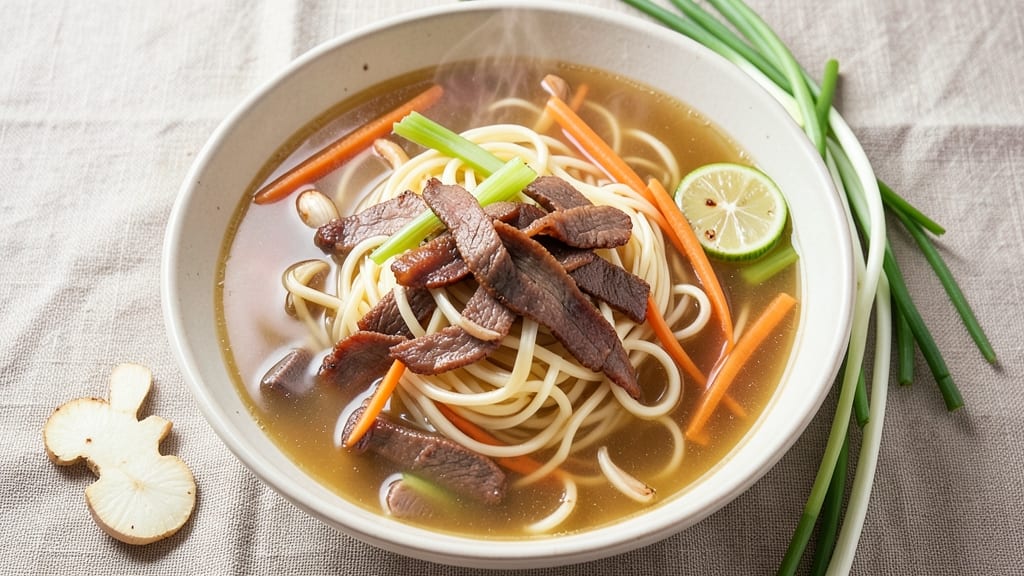
This beef egg drop soup recipe delivers restaurant-quality comfort in a steaming bowl—silky egg ribbons swirling through a rich, savory broth infused with tender beef and aromatic spices.
The secret lies in slow-braising the beef to extract maximum flavor while keeping the broth crystal clear, then mastering the egg ribbon technique for that signature silky texture.
I’ve refined this recipe over years of testing, balancing traditional techniques with modern shortcuts to make it achievable at home without sacrificing depth of flavor.
The foundation starts with a clear, velvety broth built from beef bones and aromatic vegetables, simmered for hours to develop a deep, umami-rich base. Thinly sliced beef tenderizes beautifully in the broth, absorbing its flavors while maintaining a delicate texture.
What sets this apart is the egg ribbon method—whisking eggs with a splash of hot broth creates those signature silky strands that melt on your tongue, rather than clumping into curds.
By the time you’re done, you’ll have a bowl of warm, comforting soup that’s both elegant and deeply satisfying—perfect for chilly evenings or as a light yet nourishing meal.
The broth is rich enough to stand alone but balanced by the delicate egg ribbons, while optional garnishes like mushrooms, tofu, or green onions add texture and customization. This recipe bridges tradition and convenience, delivering restaurant-quality results with a foolproof approach.
Whether you prefer a classic clear broth or a heartier stew-style version, the techniques here ensure success. The key is patience—letting the beef and broth develop their flavors slowly, then finishing with the perfect egg ribbon. Ready to master this timeless dish? Let’s get started.
Ingredients for beef egg drop soup
Master these ingredients for a velvety broth and signature silky egg ribbons in every spoonful.
| Ingredient | Amount | Notes |
|---|---|---|
| Beef Bones (Chuck or Short Rib) 🥩 | 2 lb | Marbled for rich flavor |
| Fresh Ginger Root 🧄 | 1 ½ oz | Peeled, sliced into matchsticks |
| Green Onions 🧅 | 2 whole | White and green parts separated |
| Garlic Cloves 🧄 | 6 cloves | Minced for aromatic base |
| Large Carrots 🥕 | 2 whole | Cut into 2-inch chunks |
| Celery Stalks 🧅 | 3 whole | Cut into 2-inch pieces |
| Thinly Sliced Beef Tenderloin 🥩 | 8 oz | 1/4-inch thick slices |
| Large Eggs 🥚 | 4 whole | Fresh, room temperature |
| Dried Shiitake Mushrooms 🍄 | 4 whole | Rehydrated, sliced |
| Vegetable Oil 🫒 | 2 tbsp | High smoke point preferred |
| Soy Sauce 🍶 | 2 tbsp | Light or all-purpose |
| Sesame Oil 🫒 | 1 tbsp | Toasted for aroma |
| Dried Star Anise 🌿 | 1 whole | Lightly crushed |
| Cinnamon Stick 🌿 | 1 whole | 2-inch length |
| Kosher Salt 🧂 | 1 ½ tsp | Diamond Crystal preferred |
The beef bones are non-negotiable for that deep umami foundation. Ask your butcher for chuck or short ribs—they’ll have the best marbling. Fresh ginger and star anise are the aromatic anchors here, so source them from specialty markets if possible. The shiitake mushrooms add earthy depth, and I always buy dried—they keep for months and rehydrate perfectly. Thinly sliced beef tenderloin is ideal for tender, delicate bites that won't overpower the broth. If you can't find tenderloin, flank steak works too—just slice against the grain.
No fresh ginger? Substitute 1 teaspoon ground ginger—though it won't be as aromatic. The star anise and cinnamon can be swapped for 1/2 teaspoon each of ground cinnamon and cloves if you're in a pinch. For the egg ribbons, room-temperature eggs whisk best—cold eggs create curds instead of silky strands. The soy sauce is essential for that savory depth, but coconut aminos work in a bind. And if you can't find sesame oil, toasted sesame seeds in the final drizzle give that same nutty aroma.
Store the dried shiitake mushrooms in a cool, dark place for up to 12 months. Fresh ginger keeps in the fridge for 3 weeks wrapped in a damp towel. The beef bones can be prepped ahead—blanch them 10 minutes to remove impurities before freezing for up to 3 months. For the egg ribbons, practice makes perfect—whisk the eggs with a splash of hot broth just before adding to the soup. This technique ensures those signature silky strands every time.
Why You'll Love This Recipe
- One-Pot Magic: The bones simmer all day while you do other things—no extra pots, no fuss. Just toss in the carrots, ginger, and garlic, and let the broth work its magic. By evening, you’ve got a fragrant, rich base with zero cleanup.
- Deep Umami Bomb: That beef bone broth? Chef’s kiss. The collagen melts into the soup, giving it a velvety depth that turns a simple bowl into something extraordinary. Add the egg ribbons and green onions, and it’s like a warm hug in a mug.
- Leftovers That Shine: This soup only gets better the next day. The flavors meld, the broth thickens slightly, and reheating takes two minutes. Pack it for lunch or freeze portions—it’s my go-to for lazy mornings.
- Budget Meal, Big Payoff: Chuck bones are cheap, and a single batch stretches for days. The carrots and ginger add freshness without breaking the bank, while the egg ties it all together. Honestly, it’s the kind of meal that makes grocery day feel like a win.
Step-by-step instructions for beef egg drop soup
A rich, velvety broth with silky egg ribbons and tender beef requires precise technique. Here's how to craft it properly.
Prepare the Beef Bones for Maximum Flavor
Begin by examining the 2 lb beef bones (chuck or short rib) for any remaining meat or membrane. Use a sharp knife to remove any connective tissue—this prevents cloudy broth. Place the bones in a large stockpot and cover with cold water by about 2 inches.
Add the lightly crushed dried star anise and 2-inch cinnamon stick to the pot. Bring to a boil over medium-high heat, then immediately reduce to a gentle simmer. Skim off any foam that rises to the surface during the first 15 minutes—this ensures crystal-clear broth. The reason for this initial boiling is to remove impurities that would otherwise make the final soup cloudy.
Build the Aromatic Base
While the bones simmer, prepare the vegetables. In a separate bowl, combine the peeled and sliced 1.5 oz fresh ginger root, 6 minced garlic cloves, 2-inch chunks of 2 large carrots, and 2-inch pieces of 3 celery stalks. Add these to the stockpot along with 1.5 tsp kosher salt after the initial 30 minutes of simmering.
Simmer the bones and vegetables uncovered for 2 hours to develop deep flavor. The broth should reduce slightly and develop a rich, amber color. Here's the thing—this long simmering time is non-negotiable for authentic flavor. If you rush it, the soup will taste flat and one-dimensional.
Strain and Prepare the Broth
After 2 hours, carefully strain the broth through a fine-mesh sieve into a clean stockpot, pressing gently on the solids to extract maximum flavor. Discard the bones and vegetables. Return the strained broth to the pot and bring to a gentle simmer over medium-low heat. Skim off any remaining foam that rises to the surface.
In a small bowl, whisk together 2 tbsp soy sauce and 1 tbsp toasted sesame oil. Slowly pour this mixture into the simmering broth while stirring continuously. This step is crucial for balancing the rich beef flavor with umami depth. The broth should now have a glossy sheen and aromatic steam rising from it.
Cook the Beef Tenderloin and Shiitake Mushrooms
While the broth simmers, prepare the 8 oz thinly sliced beef tenderloin and 4 rehydrated dried shiitake mushrooms. Heat 2 tbsp vegetable oil in a separate skillet over medium-high heat. Add the beef slices and sear for 1-2 minutes per side until they develop a golden crust. Remove the beef and set aside.
In the same skillet, add the sliced shiitake mushrooms and cook for 3-4 minutes until they release their moisture and develop a slightly caramelized edge. Transfer both the beef and mushrooms to the broth. The beef should cook for an additional 2-3 minutes in the simmering liquid to ensure perfect doneness while maintaining tenderness.
Create the Signature Egg Ribbons
Remove the stockpot from heat and let the soup sit for 2 minutes to allow the temperature to stabilize slightly. This prevents the eggs from scrambling when added. Crack 4 large eggs into a small bowl and whisk vigorously until the yolks and whites are fully combined.
Using a ladle, gently pour small streams of the hot broth into the whisked eggs while continuously stirring. This creates a silky, ribbon-like texture that's characteristic of egg drop soup. Once the egg mixture begins to thicken slightly, pour it back into the soup pot. Return to low heat and stir gently for 1-2 minutes until the egg ribbons form but remain delicate.
Finish and Serve
Remove the soup from heat and stir in the white and green parts of 2 whole green onions, cut separately. The white parts should be chopped into small pieces while the green parts can remain in longer sections for garnish. Taste and adjust seasoning with additional soy sauce or kosher salt if needed.
Ladle the soup into bowls immediately, garnishing each serving with a sprinkle of green onion tops. The perfect beef egg drop soup should have a velvety, cloud-like appearance with delicate egg ribbons suspended in the rich broth. Serve with steamed rice to complement the hearty flavors.
Pro Tips For Making Beef Egg Drop Soup
- BLANCH BONES FIRST: I learned this the hard way—skipping the 10-minute blanch in boiling water before braising makes the broth cloudy and weak. The bones will release impurities, and you’ll end up with a crystal-clear base. Trust me, your soup won’t taste the same if you skip this step.
- SLICE GINGER THIN: No, "chopped ginger" won’t cut it here. Use a mandoline or sharp knife to slice it paper-thin—about 1/16-inch. It’ll infuse the broth faster and dissolve completely without turning the soup into a ginger mud. (Yes, even if you’re impatient like me.)
- DON’T BOIL THE BROTH: Once the broth starts simmering, keep it at a gentle bubble—just small ripples breaking the surface. Boiling burns the collagen and makes the broth bitter. I used to rush this, and the soup always tasted flat. Patience here is everything.
- RESERVE STARCH WATER: After cutting carrots, save the cold water they were stored in (or use a splash of ice water) to thin the broth at the end. It’s cleaner than using hot water, and the starch keeps the soup silky without breaking the eggs. My grandmother swore by this, and she was right.
Common mistakes when making perfect results
Overcooking Beef
Thinly sliced beef tenderloin is delicate—cooking it too long turns it tough instead of tender. The goal is 2-3 minutes in the simmering broth after searing. I’ve ruined this dish by letting it sit too long, so always remove it as soon as it reaches 145°F internal temperature.
Overcooked beef will sink to the bottom instead of floating gracefully in the broth. 🥩
Skipping the Broth Skimming
Foam on the surface during the initial simmer isn’t just unsightly—it’s full of impurities that cloud your broth. I’ve made this mistake and ended up with a murky soup.
Skim for the first 15 minutes after boiling, then again after adding vegetables. A fine-mesh sieve later ensures crystal clarity. The effort is worth it for that restaurant-quality appearance.
Adding Eggs to Boiling Broth
Hot broth scrambles eggs instantly. The secret is to remove the pot from heat for 2 minutes first, letting it cool slightly to 185°F-190°F. Then, whisk the eggs with a splash of hot broth before gently pouring them back in.
I’ve learned this the hard way—lumpy eggs ruin the whole dish. The silky ribbons should form effortlessly when done right. 🥚
Using Cold Eggs
Cold eggs from the fridge won’t emulsify properly, creating curds instead of ribbons. Always use room-temperature eggs—let them sit for 30 minutes before whisking. I keep a bowl of eggs on my countertop for this exact purpose. The temperature difference is subtle but critical for that signature texture.
Ignoring the Aromatics
The star anise and cinnamon stick aren’t just garnishes—they’re flavor anchors. I’ve made broth without them, and it tasted flat. Simmer these spices with the bones for the full 2 hours to develop their aromatic oils. Don’t rush this step, or you’ll miss the depth that makes this soup special.
Straining Too Aggressively
Pressing too hard on the strained vegetables can release starches that make the broth cloudy. Use gentle pressure with a spoon to extract flavor without forcing out impurities.
I’ve learned to be patient—let the broth settle naturally before pouring. The result is a clear, velvety liquid that’s the soul of this dish. ✨
Nutrition facts
Frequently asked questions about beef egg drop soup
Why does the egg ribbon technique matter?
The ribbon technique creates that signature silky texture by whisking eggs with hot broth before adding them back to the soup. This prevents curdling and creates delicate strands that melt on your tongue. The key is to use room-temperature eggs and let the broth cool slightly to 185°F-190°F before adding them.
Can I make this soup vegetarian?
Yes! Replace the beef with 8 oz thinly sliced tofu or shiitake mushrooms for a hearty vegetarian version. Use vegetable broth instead of beef broth and add 1 tbsp soy sauce for umami depth. The egg ribbon technique remains the same.
How do I prevent cloudy broth?
Skimming foam during the initial 15 minutes of simmering and again after adding vegetables removes impurities. Strain through a fine-mesh sieve and avoid pressing too hard on the solids. The broth should be crystal clear, not murky.
What's the best way to store leftovers?
Let the soup cool completely, then store in an airtight container in the fridge for up to 3 days. Reheat gently on the stove over low heat—never microwave, as it can make the broth cloudy. Add a splash of water if it thickens too much.
Can I use store-bought broth?
While possible, homemade beef broth delivers deeper flavor. If using store-bought, choose a high-quality beef bone broth and simmer it with the star anise and cinnamon stick for 30 minutes to infuse aromatics. Add soy sauce and sesame oil as directed.