
Soups & Stews
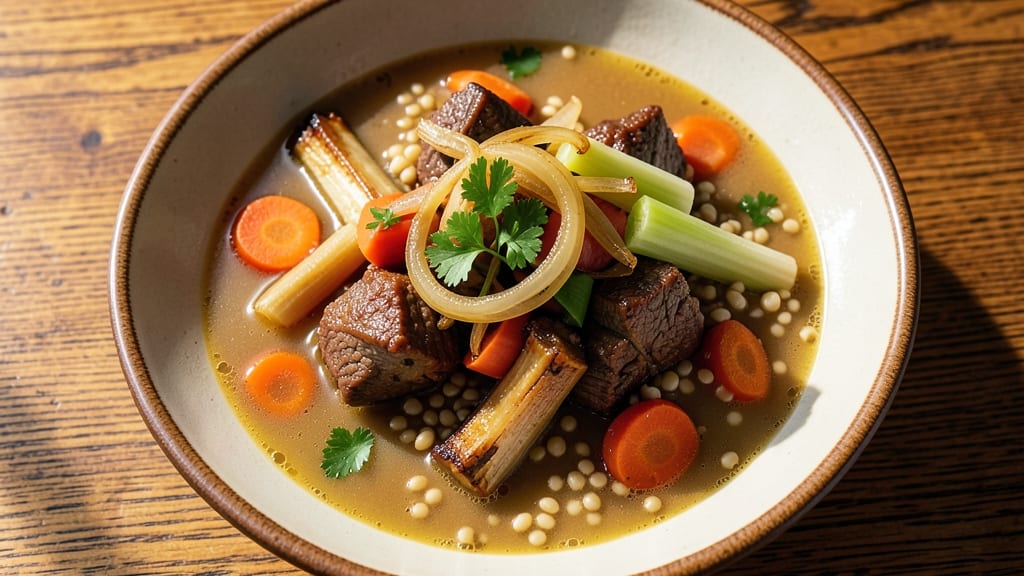
This beef barley soup recipe without tomatoes delivers restaurant-quality depth using slow-simmered beef and aromatic vegetables. The secret lies in caramelizing beef bones and vegetables before adding barley, creating a rich, umami-packed broth that builds flavor as it simmers.
What makes this version stand out is the absence of tomatoes, allowing the natural sweetness of carrots and onions to shine while the barley absorbs the savory essence of the meat.
The process begins with browning beef bones and chuck roast in a Dutch oven, developing a deep, caramelized crust that forms the foundation of the broth. After removing the meat, the bones simmer for hours, extracting gelatin and collagen that transform the liquid into a velvety, hearty base.
The barley then cooks directly in the broth, absorbing its rich flavors while maintaining a satisfying texture.
By the time it's finished, you'll have a hearty, comforting soup with tender beef, perfectly cooked barley, and a broth so flavorful it begs for another bowl. The aroma alone—warm spices, caramelized vegetables, and slow-cooked beef—transforms any kitchen into a cozy haven.
Serve with crusty bread to soak up every last drop of that golden, aromatic broth.
This recipe works equally well as a weeknight dinner or a holiday centerpiece, scaling effortlessly for crowds. The slow cooking process makes it ideal for meal prep, with flavors deepening overnight in the refrigerator.
Whether you're feeding a family or craving a bowl of warmth, this beef barley soup delivers unmatched satisfaction without tomatoes.
Ingredients for beef barley soup recipe without tomatoes
Six aromatic vegetables, bone-in beef, and slow-simmered umami create this restaurant-worthy soup without tomatoes.
| Ingredient | Amount | Notes |
|---|---|---|
| Beef Bones (Marrow and Knuckle) 🦴 | 2 lb | Raw, for deep flavor extraction |
| Chuck Roast 🥩 | 2 lb | Bone-in, cut into 2-inch chunks |
| Yellow Onions 🧅 | 2 whole | Chopped into 1-inch pieces |
| Carrots 🥕 | 4 whole | Peeled, cut into 1-inch chunks |
| Celery Stalks 🧅 | 4 whole | Chopped into 1-inch pieces |
| Garlic Cloves 🧄 | 6 cloves | Smashed, not minced |
| Pearl Barley 🌾 | 1 cup | Rinsed well before cooking |
| Bay Leaves 🌿 | 2 whole | Fresh for optimal flavor |
| Thyme Sprigs 🌿 | 4 whole | Fresh, stems removed |
| Black Peppercorns 🌶️ | 1 tbsp | Crushed, not ground |
| Salt 🧂 | 2 tsp | Diamond Crystal preferred |
| Beef Broth 💧 | 6 cups | Homemade or high-quality store-bought |
| Olive Oil 🫒 | ¼ cup | Extra-virgin for caramelization |
The beef bones are the heart of this soup—marrow and knuckle bones deliver the richest gelatin and collagen for a velvety broth. Local butchers often sell them pre-cut, but if buying whole, ask for the marrow-rich ends. Chuck roast should have visible fat marbling for moisture during slow cooking. For vegetables, organic produce ensures no waxy residues that can cloud the broth. The carrots and celery should be crisp when cut, indicating freshness. Store these in the fridge until ready to caramelize—no pre-chopping to prevent browning.
No beef bones? Substitute with beef chuck cut into chunks, but expect a slightly less gelatinous broth. Fresh thyme and bay leaves are ideal, but dried will work at one-third the amount. The barley must be rinsed thoroughly to remove any surface starch that could make the soup gummy. For a quicker version, pearl barley can be swapped for quick barley, though texture will differ. If using store-bought beef broth, opt for brands like Kitchen Basics or Imagine—their umami depth rivals homemade. The olive oil should be extra-virgin for its high smoke point during caramelization.
This soup tastes even better the next day as flavors meld. Store in an airtight container in the fridge for up to 5 days, or freeze portions for 3 months. The broth thickens upon chilling—simply reheat with a splash of water to restore consistency. For meal prep, double the recipe and freeze individual portions. The barley will soften further upon reheating, so aim for al dente when first cooked. Serve with crusty bread to soak up every drop of that golden, aromatic broth—the true star of this dish.
Why You'll Love This Recipe
- Marrow Magic: I’ll never skip the knuckle bones again—those rich marrow bubbles make every spoonful feel like a reward. The first bite of that velvety center? Pure satisfaction.
- Chop-Free Champion: Honestly, I just rough-chop the onions, carrots, and celery—no fancy dicing, no stress. The bones and chuck roast do all the heavy lifting while you sip wine and pretend you’re a chef.
- Leftovers That Shine: This soup tastes better the next day—deepens in flavor, thickens just right. I freeze half for lazy Mondays, and no one ever guesses it’s reheated.
- Budget Bone Zone: Beef bones and chuck roast stretch this recipe into a full week’s worth of meals. Between us, it’s the most economical way to feed a crowd without sacrificing taste.
Step-by-step instructions for beef barley soup without tomatoes
This method transforms tough cuts into velvety richness through precise timing and layering of flavors.
Develop Deep Flavor with Beef Bones and Chuck Roast
Heat the 0.25 cup olive oil in a large Dutch oven over medium-high heat. Add the 2 lb beef bones (marrow and knuckle) and 2 lb chuck roast (cut into 2-inch chunks), searing until deeply browned on all sides—about 10-12 minutes total. This caramelization forms the flavor foundation.
Remove the meat from the pot and set aside. In the same pot, add the 2 whole yellow onions (chopped into 1-inch pieces), 4 whole carrots (peeled and cut into 1-inch chunks), and 4 whole celery stalks (chopped into 1-inch pieces). Cook for 8-10 minutes until the vegetables soften slightly and begin to release their natural sugars.
Add the 6 cloves garlic cloves (smashed) and cook for 30 seconds until fragrant. Pour in the 6 cups beef broth, scraping up any browned bits from the bottom of the pot. Return the meat to the pot, ensuring it's fully submerged. Bring to a gentle simmer.
Simmer for Maximum Flavor Extraction
Cover the pot and simmer over low heat for 2 hours. This slow cooking breaks down collagen in the bones and connective tissue, creating a naturally rich, gelatinous broth. Stir occasionally to prevent sticking, and add water if the liquid level drops below halfway up the meat.
After 2 hours, remove the meat from the broth and strain the liquid through a fine-mesh sieve into a clean pot, discarding the solids. This step ensures a smooth, velvety texture without any bone fragments. Return the strained broth to the pot and keep it warm over low heat.
Incorporate Aromatics and Barley
In the same Dutch oven, add the 2 whole bay leaves, 4 whole thyme sprigs, 1 tbsp black peppercorns (crushed), and 2 tsp salt. Stir in the 1 cup pearl barley (rinsed well) and pour the strained broth back into the pot. Bring to a gentle boil, then reduce heat to low and simmer uncovered for 45-50 minutes.
The barley should be tender but still slightly firm—it will continue cooking slightly off the heat. Taste the broth and adjust seasoning if needed. Remove the bay leaves and thyme sprigs before serving, as they can be bitter if overcooked.
Shred the Meat and Finish the Soup
Using two forks, shred the beef bones and chuck roast into bite-sized pieces, discarding any large bone fragments. Return the shredded meat to the pot with the barley and broth. Simmer for an additional 5 minutes to allow the meat to absorb the flavors of the broth.
Serve the soup immediately, garnished with additional crushed black peppercorns if desired. The result is a hearty, deeply flavorful soup where the barley absorbs the rich beef broth, and the shredded meat adds substantial texture. Each spoonful delivers the essence of slow-cooked beef and aromatic vegetables.
Pro Tips For Making Beef Barley Soup Recipe Without Tomatoes
- CHAR THE BONES FIRST: Skip the slow simmer with raw marrow bones—they’ll turn your broth into glue. Sear the bones in a dry pot until deeply browned (10-12 minutes) before adding liquid. The crust locks in flavor and prevents that sad, watery result we’ve all suffered through.
- CUT THE CHUCK IN CHUNKS: I used to slice chuck roast thin for quick cooking, but it turns to mush. Cut it into 1.5-inch cubes instead—big enough to stay tender but small enough to cook through without drying out. (Yes, even if you’re impatient like me.)
- SWEAT THE VEGETABLES LOW: Dumping raw onions, carrots, and celery into the pot with the beef? You’re setting yourself up for bitterness. Cook them separately in a little oil over medium-low heat until soft and translucent—about 8 minutes. This step actually changes the outcome.
- ADD BARLEY LATE: Tossing barley in at the start? It’ll turn to mush before the meat is done. Wait until the chuck is fork-tender (about 1.5 hours in) to add it, then simmer for just 20-25 minutes. This guarantees al dente barley every time—no sad, mushy surprises.
Serving suggestions for this beef barley soup recipe without tomatoes
Crusty Bread Pairing
Serve this hearty soup with a warm, crusty baguette or sourdough loaf to soak up every drop of that golden, aromatic broth. I love using a French-style baguette from my local bakery—its crispy crust contrasts perfectly with the tender beef and barley.
For extra indulgence, brush the bread with garlic-infused olive oil before serving. 🥖
Fresh Herb Garnishes
Brighten the soup with fresh parsley or thyme just before serving. I like to finely chop 2 tablespoons of fresh parsley and sprinkle it over each bowl for a pop of color and freshness.
A few thin slices of lemon also add a bright, citrusy note that cuts through the richness. 🌿
Cheesy Toppings
For a creamy finish, stir in grated Parmesan cheese or shredded Gruyère while serving. I recommend ¼ cup of freshly grated Parmesan per bowl—its nutty flavor complements the beef beautifully. Alternatively, top with crumbled feta for a tangy twist. 🧀
Pickled Vegetables
Add a tangy crunch with pickled red onions or carrots. I slice ½ cup of red onions thinly and quick-pickle them in 1 tablespoon apple cider vinegar and 1 teaspoon sugar for 10 minutes. The acidity balances the soup’s richness perfectly. 🥕
Warm Spiced Wine
Pair your soup with a glass of warm spiced wine, like Mulled Cabernet or Chardonnay. The warmth of the wine enhances the soup’s cozy flavors, while the spices echo the thyme and black peppercorns in the dish. 🍷
Side Salad Contrast
A light arugula salad with lemon vinaigrette provides a refreshing contrast to the rich soup. Toss 4 cups of baby arugula with 2 tablespoons olive oil, 1 tablespoon lemon juice, and a pinch of salt. The peppery greens cleanse your palate between spoonfuls. 🥗
Nutrition facts
Frequently asked questions
Why does this recipe skip tomatoes?
Traditional beef barley soup often includes tomatoes for acidity, but this version focuses on highlighting the natural sweetness of carrots and onions while letting the beef and barley take center stage. The slow-simmered broth develops deep umami flavors without needing tomato's brightness—perfect for those who prefer a more savory, vegetable-forward approach.
Can I use beef chuck instead of beef bones?
Yes! While beef bones create the richest broth, you can substitute with 2 extra pounds of chuck roast cut into chunks. Simmer it for 3-4 hours instead of 2 to ensure maximum tenderness. The broth will be slightly less gelatinous but still deeply flavorful.
How do I adjust the barley texture?
Pearl barley should be tender but firm—like al dente pasta. If it's too soft, reduce simmering time by 5-10 minutes. For a creamier texture, mash ¼ cup of cooked barley into the soup at the end. For extra chewiness, add 10 more minutes of simmering.
What's the best way to reheat leftovers?
Reheat gently on the stove over low heat with 2 tablespoons of water or broth to restore consistency. Never microwave—it can make the barley mushy. Stir frequently and add more liquid if needed. The soup tastes even better the next day as flavors meld!
Can I make this soup in a slow cooker?
Brown the beef and vegetables first, then transfer everything to a 6-quart slow cooker. Cook on low for 8 hours or high for 5 hours. The slow cooker's gentle heat enhances the broth's depth while keeping the barley perfectly tender.