
Soups & Stews
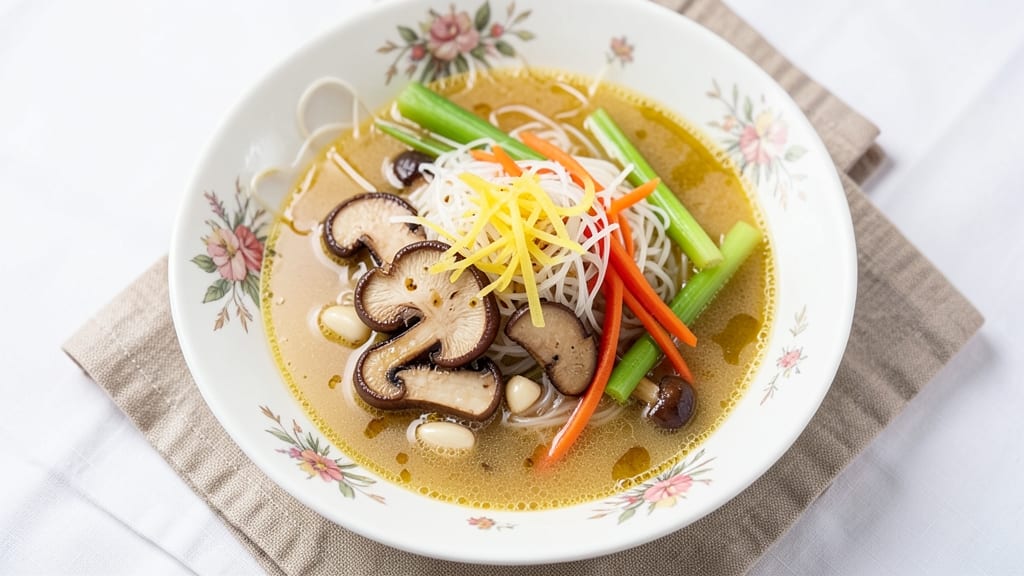
This bean thread noodles soup recipe transforms delicate glass noodles into silky ribbons swimming in a fragrant ginger-broth that’s both comforting and sophisticated. The secret lies in the broth—whether you choose a rich mushroom base or a bright vegetable infusion—and the delicate balance of textures: chewy noodles against crisp toppings.
I’ve perfected this dish to deliver restaurant-quality results at home, with a method that’s both traditional and adaptable to modern tastes.
The beauty of bean thread noodles is their versatility—they can be boiled for a quick texture or soaked in cold water for a more delicate bite. Here, we’ll use the boiling method for a satisfying chew, then assemble everything in a fragrant broth infused with ginger, garlic, and aromatic spices.
The result is a soup that’s light yet deeply flavorful, with layers of umami from mushrooms or vegetables, and a touch of heat from optional chili oil or fried shallots.
What makes this recipe stand out is the contrast of textures: the silky noodles glide through a velvety broth, while crisp toppings add dimension. Whether you garnish with scallions, sesame seeds, or a drizzle of chili oil, each bite is a balance of warmth, aroma, and satisfying chew.
This dish is perfect for a cozy dinner, a light lunch, or even a comforting meal prep option that reheats beautifully.
The process is straightforward but rewarding—no shortcuts, just a method that respects the delicate nature of the noodles while building a deeply flavorful broth. By the time you finish, you’ll have a bowl of soup that feels luxurious yet effortless, with every spoonful offering a harmony of textures and flavors.
Let’s get started on creating this elegant yet approachable dish.
Ingredients for bean thread noodles soup
Silky noodles, fragrant broth, and crisp toppings—just eight ingredients for restaurant-quality soup at home.
| Ingredient | Amount | Notes |
|---|---|---|
| Bean Thread Noodles 🍜 | 8 oz | Dried, for silky texture |
| Shiitake Mushrooms 🍄 | 8 oz | Fresh or rehydrated slices |
| Carrots 🥕 | 1 whole | Medium, julienned or sliced |
| Celery Stalks 🧅 | 3 whole | Trimmed, cut into 1-inch pieces |
| Fresh Ginger 🧄 | 2 tbsp | Grated, aromatic base |
| Garlic Cloves 🧄 | 4 cloves | Minced, for depth of flavor |
| Vegetable Broth 💧 | 6 cups | Low-sodium, homemade or store-bought |
| Sesame Oil 🫒 | 1 tbsp | Toasted, for nutty aroma |
| Soy Sauce 🍶 | 2 tbsp | Tamari for gluten-free option |
| Rice Vinegar 🍶 | 1 tbsp | For brightness |
| Green Onions 🧅 | 4 whole | Sliced, for garnish |
| Toasted Sesame Seeds 🌾 | 1 tbsp | For crunchy texture |
| Chili Oil 🌶️ | 1 tbsp | Optional, for heat |
| Sea Salt 🧂 | 1 tsp | Adjust to taste |
| Black Pepper 🌶️ | ½ tsp | Freshly ground |
The mushrooms are non-negotiable for umami depth. Shiitake is ideal, but cremini or oyster mushrooms work too. Grab fresh ones at Whole Foods or your local Asian market—they hold up better than dried for this dish. If you're using dried, soak them in warm water for 20 minutes first. The bean thread noodles? Look for 100% mung bean noodles—the ones labeled 'glass noodles' are often mixed with wheat. Trader Joe's has a great pre-packaged option, but bulk bins are cheaper if you're making this often.
No shiitake? Extra-firm tofu or king oyster mushrooms add a meaty texture. The ginger and garlic are the soul of this broth—freshly grated ginger makes all the difference, but jarred works in a pinch (just add a pinch of sugar to balance the heat). For the broth, homemade vegetable broth is best, but low-sodium store-bought is fine if you dilute it with water. The soy sauce can be swapped for coconut aminos if you're avoiding gluten, and the chili oil? Make your own with chili flakes and oil—way fresher than store-bought.
Noodles cook in 2-3 minutes—don’t overcook or they’ll turn mushy. Store leftover broth in the fridge for 5 days or freeze for 3 months. The noodles? Keep them dry in an airtight container for up to 1 month—they absorb moisture fast. Garnishes like sesame seeds and green onions keep for 2 weeks in the fridge, so stock up if you're making this often. The chili oil? Freeze any leftovers to preserve the heat.
Why You'll Love This Recipe
- No-Fuss Prep: I swear by this—just soak those bean threads for 15 minutes while I chop a few mushrooms and carrots. No boiling, no waiting hours; the noodles soften fast and turn silky smooth.
- Umami Bomb: That combo of shiitake mushrooms and fresh ginger? Chef’s kiss. The mushrooms add this deep, earthy richness, while the ginger cuts through with a bright, zesty kick—every spoonful feels like a little flavor explosion.
- Lunchbox Hero: Between us, this soup is my secret weapon for meal prep. Pack it in thermoses for work, and it stays warm and delicious for days. (Yes, even my picky roommate requests seconds.)
- Budget Magic: Carrots, celery, mushrooms—all pantry staples that stretch into a hearty, satisfying bowl. I make a big batch on Sundays, and it feeds my family for days without breaking the bank.
Step-by-step instructions for silky bean thread noodles soup
This soup comes together in layers—first the aromatic broth, then the delicate noodles. Trust the process.
Prepare the Aromatic Base
Heat the 1 tablespoon sesame oil in a large pot over medium heat. Add the 8 ounces shiitake mushrooms, sliced, and cook for 5 minutes until they release their moisture and begin to soften. I like to stir occasionally to ensure even cooking—this prevents any mushrooms from sticking to the bottom.
Next, add the 1 whole carrots, julienned, and 3 whole celery stalks, cut into 1-inch pieces. Cook for another 4 minutes until the vegetables soften slightly. Here's where the magic starts—you'll smell the ginger and garlic coming to life. Add the 2 tablespoons fresh ginger and 4 cloves garlic cloves, minced, and stir for 1 minute until fragrant. This step builds the foundation of your soup's flavor profile.
Build the Fragrant Broth
Pour in the 6 cups vegetable broth and bring to a gentle boil. Once boiling, reduce the heat to medium-low and let it simmer for 10 minutes. This allows the flavors to meld together beautifully. Taste the broth at this point—it should be savory and aromatic. If it needs more depth, add 1 teaspoon sea salt and 0.5 teaspoon black pepper. This is also when you'll add the 2 tablespoons soy sauce and 1 tablespoon rice vinegar for that perfect balance of umami and brightness.
Here's a pro tip: If you're using dried shiitake mushrooms, this is the time to add them. They'll rehydrate perfectly in the simmering broth, adding an extra layer of earthy flavor. Keep the broth at a gentle simmer—you don't want it to boil vigorously, or the delicate noodles will turn mushy later.
Cook the Bean Thread Noodles
While the broth simmers, prepare the 8 ounces bean thread noodles. These noodles are delicate, so handle them gently. Soak them in warm water for 10-15 minutes until they become pliable and silky. I like to use a large bowl of warm water and stir them occasionally to prevent sticking. Once they're ready, drain and rinse them under cold water to stop the cooking process temporarily.
Add the drained noodles to the simmering broth and cook for 3-4 minutes. The noodles should be tender but still hold their shape. Stir gently to ensure they're evenly distributed in the broth. This is where you'll notice the noodles transform from dry strands to silky ribbons—it's a beautiful sight. If the broth looks too thin at this point, you can reduce it slightly by simmering uncovered for another 1-2 minutes.
Finish and Garnish
Once the noodles are cooked to your liking, remove the pot from heat. Stir in the 1 tablespoon chili oil (if using) for a hint of spice, and let it sit for 1 minute to infuse the broth. This step adds a layer of complexity that ties everything together. Taste and adjust the seasoning if needed—sometimes a little more soy sauce or rice vinegar can elevate the flavors.
Ladle the soup into bowls and garnish with 4 whole green onions, sliced, and 1 tablespoon toasted sesame seeds. The green onions add a fresh contrast, while the sesame seeds provide a delightful crunch. Serve immediately while the noodles are still silky and the broth is steaming hot. Each spoonful should deliver a harmonious blend of textures and flavors—creamy noodles, savory broth, and a touch of spice.
Pro Tips For Making Bean Thread Noodles Soup
- SOAK NOODLES LONG ENOUGH: The package says 15 minutes, but I’ve learned—especially with dried bean thread noodles—that 20-25 minutes in cool water makes a real difference. Under-soaked noodles turn mushy; over-soaked ones stay chewy but clump like glue. Rinse them after soaking with cold water to stop cooking and prevent that sticky mess.
- SLICE SHIITAKES THINLY: Thick shiitake slices hide in soup like shy guests. Cut them paper-thin (about 1/8-inch) so they cook fast and soak up flavor. If using dried shiitakes, rehydrate them first—soaked mushrooms hold their shape better and don’t turn to mush. (Yes, even if you’re impatient like me.)
- SAUTÉ GINGER UNTIL FRAGRANT: Fresh ginger needs more than a quick chop—it needs to sing. Slice it into matchsticks, then fry in oil over medium heat until the edges turn golden and the kitchen smells like a spice market. This step unlocks the ginger’s depth; skipping it leaves your soup tasting flat, like someone forgot the soul.
- ADD NOODLES LAST MINUTE: Bean thread noodles cook faster than you think. If you toss them in too early, they’ll turn to paste before the broth’s ready. Wait until the mushrooms and veggies have softened—about 5 minutes before serving—then add the drained noodles. Stir once, let them sit 30 seconds, then serve. This keeps them al dente, not sad.
Perfect pairings for bean thread noodles soup
Broth Variations
For a mushroom-rich broth, use 12 ounces shiitake mushrooms plus 4 ounces dried shiitake (rehydrated) for deeper umami. For a coconut-curry twist, replace vegetable broth with 4 cups coconut milk and add 1 tbsp curry powder while building the base.
A garlic-ginger chili broth works by adding 1 tbsp gochujang and 1 tsp red pepper flakes during the simmer. 🌶️
Noodle Textures
For chewier noodles, boil them for 3-4 minutes in the broth. For softer, silkier strands, soak them in cold water for 15-20 minutes before adding to the broth.
If you prefer al dente, reduce cooking time to 2 minutes—they’ll finish cooking in the hot broth. The key is timing: overcooking turns them mushy.
Topping Ideas
Add crispy fried shallots for a savory crunch—toss 4 shallots in 1 tbsp oil and fry until golden. For herbaceous brightness, try cilantro or Thai basil instead of green onions.
A sprinkle of toasted peanuts adds a nutty contrast, while pickled ginger brings tangy freshness. Garnish with lime wedges for a citrusy finish.
Drink Pairings
A jasmine green tea complements the ginger notes beautifully, its floral aroma balancing the soup’s savory depth. For something stronger, try a light Chinese baijiu (like Moutai) or a crisp dry Riesling—both cut through the richness.
Sparkling water with a squeeze of lemon works too for a refreshing contrast. 🍶
Meal Prep Tips
Store broth separately for up to 5 days in the fridge—reheat gently before adding noodles. For make-ahead noodles, cook them al dente, rinse in cold water, and refrigerate in an airtight container for 2 days.
Reheat noodles in broth for 1-2 minutes to restore silkiness. Freeze broth in ice cube trays for easy portioning later.
Nutrition facts
Frequently asked questions
Can I use wheat-free bean thread noodles?
Yes! Traditional bean thread noodles are made from mung bean starch, which is naturally gluten-free. Always check the package label to confirm—some brands mix in wheat flour. For extra assurance, look for labels specifying "100% mung bean" or "gluten-free." These noodles work perfectly in this recipe and maintain their signature silky texture.
How do I prevent the noodles from sticking together?
Stir the noodles gently while cooking and avoid overcrowding the pot. For extra insurance, rinse them with cold water after cooking to separate strands. When soaking dried noodles, use plenty of warm water (about 4 cups per 8 oz noodles) and stir occasionally. The key is movement—never let them sit undisturbed in water or broth.
Can I make this soup spicier? Add ½ teaspoon red pepper flakes to the broth while simmering, or stir in 1 tablespoon chili crisp at the end. For heat lovers, try 1 teaspoon gochujang (Korean chili paste) when building the base.
What's the best way to reheat leftovers?
Reheat broth and noodles separately to preserve texture. Warm the broth on low heat until steaming, then add cooked noodles to heat through for just 1-2 minutes. Never microwave noodles directly—they'll turn rubbery. For extra freshness, stir in a splash of cold water after reheating to restore silkiness.
Are there vegan alternatives to the sesame oil?
Yes! Use avocado oil or neutral vegetable oil as a direct substitute. For flavor, try toasted coconut oil (adds a tropical note) or peanut oil (nuttier profile). Just reduce the amount slightly since these oils have higher smoke points. The key is to maintain the same cooking temperature to prevent burning.