
Soups & Stews
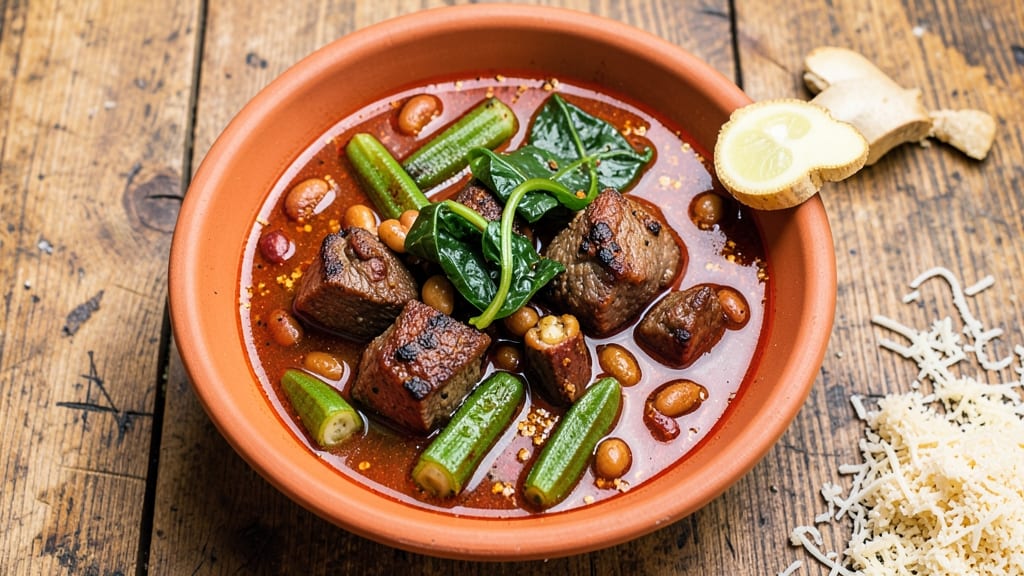
This Banga soup Nigerian recipe delivers the rich, peppery comfort of West Africa’s most beloved stew—where tender beef simmers in a vibrant okra-thickened broth infused with palm oil and aromatic spices.
The secret lies in blending fresh okra with leafy greens and palm oil, creating a naturally thickened soup that clings to every bite of meat. This isn’t just a meal; it’s a celebration of tradition, where each spoonful carries the warmth of Nigerian home cooking.
The beauty of Banga soup is in its layers: the deep, earthy flavor of palm oil, the subtle bitterness of leafy greens like bitter leaf or spinach, and the fiery kick from blended black pepper and locust beans.
I’ve perfected this recipe to balance authenticity with modern shortcuts—like using canned palm oil for convenience without sacrificing depth. The beef, slow-cooked until fork-tender, absorbs the soup’s complex flavors, making every bite irresistibly savory.
What makes this recipe special is how it transforms simple ingredients into something extraordinary. The okra thickens the broth naturally, while the blend of spices—ginger, garlic, and smoked paprika—adds warmth and complexity.
Serve it with pounded yam, eba, or rice to complete the meal, and watch as the soup’s rich, velvety texture and bold flavors turn a simple dinner into a memorable experience.
Whether you’re cooking for family gatherings or craving a taste of home, this Banga soup delivers comfort in every bowl. The slow simmering process ensures the meat stays tender, while the okra and greens create a soup that’s both hearty and satisfying.
Ready to bring a piece of Nigeria to your kitchen? Let’s get started.
Ingredients for banga soup nigerian
Pantry staples meet West African tradition in this rich, okra-thickened Banga soup.
| Ingredient | Amount | Notes |
|---|---|---|
| Beef Chuck Roast 🥩 | 2 lb | Cut into 2-inch cubes, boneless |
| Fresh Okra 🌿 | 1 ½ cups | Sliced into 1-inch pieces |
| Bitter Leaf or Spinach 🌱 | 1 lb | Chopped, fresh preferred |
| Red Palm Oil 🫒 | ½ cup | Canned or fresh, for richness |
| Dried Locust Beans 🌰 | ¼ cup | Soaked overnight, peeled |
| Ginger Root 🌿 | 1 tbsp | Freshly grated, aromatic |
| Garlic Cloves 🧄 | 6 cloves | Minced, for depth of flavor |
| Smoked Paprika 🌶️ | 1 tbsp | For smoky complexity |
| Ground Black Pepper 🌶️ | 1 tbsp | Freshly ground, fiery kick |
| Onion 🧅 | 1 whole | Chopped, for aromatic base |
| Tomato Paste 🍅 | 2 tbsp | For tangy balance |
| Salt 🧂 | 1 ½ tsp | Adjust to taste |
| Water or Beef Broth 💧 | 6 cups | For simmering the soup |
The beef is the heart of this dish—chuck roast gives the best texture, breaking down beautifully during the long simmer. Look for well-marbled cuts at African markets or specialty grocery stores like Whole Foods, where they often carry authentic ingredients. Fresh okra is ideal, but frozen works in a pinch. The bitter leaf or spinach adds that signature depth—farmers markets often have bitter leaf if you're in an African community, but regular spinach works too. For palm oil, African grocery stores carry canned versions that save time without sacrificing flavor.
No locust beans? Substitute with extra black pepper and a pinch of cayenne for heat. Fresh ginger and garlic are non-negotiable here—they're the flavor anchors. Short on time? Pre-minced garlic from the jar works, though fresh is always better. The tomato paste can be swapped for blended canned tomatoes if you prefer. For extra richness, add a splash of coconut milk at the end. The smoked paprika is crucial—Penzeys carries a great variety if you want to splurge, but regular grocery store brands work fine too.
This soup tastes even better the next day as flavors meld. Store leftovers in the fridge for up to 5 days or freeze for 3 months. I like to double the recipe and freeze portions for quick weeknight meals. The okra thickens as it cooks, so don't worry if the broth looks thin at first—it'll come together beautifully. Serve with pounded yam or rice to complete the meal.
Why You'll Love This Recipe
- One-Pot Magic: I swear by this—simmer everything together, and the beef practically melts into tender perfection while the okra thickens the broth just right. No fancy techniques, just a big pot and patience (the good kind).
- Deep, Rich Umami Bomb: That red palm oil? It’s the star—earthy, slightly sweet, and so satisfying. The locust beans add this funky, nutty depth, while the bitter leaf (or spinach) balances it with a bright, herbal punch. Honestly, it’s the kind of flavor that makes you slow down and savor every spoonful.
- Weeknight to Celebration: Between us, this soup works for everything—quick weeknight dinners, Sunday family feasts, or even a potluck showstopper. Double the batch, freeze half, and you’ve got a meal ready for lazy days. (Yes, even on a Tuesday night.)
- Budget-Friendly Powerhouse: Beef chuck roast stretches forever in this hearty broth, and locust beans? They’re cheap but pack serious flavor. Plus, leftovers taste even better the next day—like a free upgrade. My wallet and my taste buds both win.
Step-by-step instructions for Banga soup
Here's the method for creating this rich, peppery Nigerian classic with tender beef and aromatic greens.
🍳 Step 1: Prepare the Beef and Aromatics
Cut the 2 lb beef chuck roast into 2-inch cubes, removing any large pieces of fat. In a large pot, heat the 0.5 cup red palm oil over medium heat until shimmering but not smoking. Add the chopped onion and cook for 5 minutes until softened and translucent.
Add the 6 cloves minced garlic and the 1 tbsp freshly grated ginger root, cooking for 1 minute until fragrant. Stir in the 1 tbsp smoked paprika and 1 tbsp ground black pepper, letting the spices toast for 30 seconds until aromatic. This builds the flavor foundation for the soup.
🍳 Step 2: Brown the Beef and Add Locust Beans
Working in batches if needed, add the beef cubes to the pot and brown on all sides for 3-4 minutes. The meat should develop a rich color but not fully cook through. Remove the beef and set aside temporarily.
To the same pot, add the 0.25 cup peeled dried locust beans and the 2 tbsp tomato paste. Stir well and cook for 2 minutes until the tomato paste darkens slightly. This creates the signature thickened base of Banga soup.
🍳 Step 3: Simmer the Beef and Add Okra
Return the browned beef to the pot. Pour in the 6 cups water or beef broth and bring to a boil. Reduce heat to low and simmer uncovered for 45 minutes, stirring occasionally. This allows the beef to tenderize while developing deep flavor.
After 45 minutes, add the 1.5 cups sliced fresh okra. Stir well and continue simmering for another 15 minutes. The okra will thicken the soup naturally, creating that signature velvety texture. Stir occasionally to prevent sticking and ensure even cooking.
🍳 Step 4: Incorporate the Leafy Greens
When the okra has thickened the soup (about 15 minutes after adding), stir in the 1 lb chopped bitter leaf or spinach. Add the 1.5 tsp salt and adjust seasoning if needed. Simmer for an additional 10 minutes until the greens are wilted and the soup reaches your desired consistency.
The soup should be rich but not overly thick—it should coat the back of a spoon but still be ladle-friendly. Taste and adjust seasoning with additional salt or pepper if needed. The bitter leaf should be fully incorporated, adding its characteristic earthy flavor to balance the richness.
⏰ Step 5: Rest and Serve
Remove the pot from heat and let the soup rest for 5 minutes. This allows the flavors to meld together and the okra to fully thicken. Serve the Banga soup hot, traditionally with pounded yam, eba, or swallow of your choice.
For best results, let the soup sit for 10-15 minutes before serving. This resting period allows the okra to fully develop its thickening properties and the flavors to fully integrate. Each spoonful should deliver a perfect balance of tender beef, peppery okra, earthy greens, and rich palm oil.
Pro Tips For Making Banga Soup Nigerian
- CRANK THE HEAT FIRST: I learned this the hard way—starting beef chuck roast on medium heat leaves you with tough, stringy meat. Banga soup demands a hot pot from the get-go: sear the beef in red palm oil until it releases juices and turns dark brown. This isn’t just for flavor; it breaks down collagen faster, giving you tender meat by the time the locust beans and okra join the party.
- SOAK LOCUST BEANS LONG: Skip the 30-minute soak and you’ll end up with gritty, underwhelming texture. My grandmother swore by this: soak dried locust beans in hot water for at least 2 hours (overnight if possible). This softens them enough to blend into a velvety paste without turning the soup into a chewy mess. Drain well before blending—no one wants a watery soup.
- ADD OKRA LAST MINUTE: I used to throw in okra early, thinking it would soften like spinach. Wrong. Fresh okra needs to stay firm to thicken the soup properly. Add it in the final 15 minutes of cooking—this ensures it releases its natural starches just enough to give that signature slimy texture without turning mushy. (Yes, slimy is good here.)
- SALT THE MEAT TWICE: Don’t just season the beef once before cooking. After searing, sprinkle another layer of salt and let it sit for 10 minutes before adding water. This guarantees the salt penetrates deeply, especially since beef chuck can be lean. The second salting makes a real difference in balancing the rich red palm oil and bitter leaf. (Your future self will notice.)
Regional styles of this banga soup nigerian
Yoruba Roots
The Yoruba people of Southwest Nigeria call this dish "Banga"—a name that reflects its hearty, comforting nature. Traditionally, it’s made with beef, locust beans, and bitter leaf, creating a soup that’s both nutritious and deeply flavorful.
The Yoruba version often includes egusi (melon seeds) for extra thickness, but the okra-based version we’re highlighting here is equally beloved. 🌱
In Yoruba households, Banga soup is a staple for special occasions like weddings and festivals. The slow-cooked beef and rich palm oil make it a dish that feels luxurious yet homely. I remember my grandmother always saying, "A meal without Banga is like a song without music."
Igbo Adaptations
The Igbo people of Southeast Nigeria have their own take on this soup, often calling it "Okra Soup" when it’s made with okra instead of egusi.
Their version tends to be lighter in texture but equally rich in flavor, with a focus on fresh ingredients like pumpkin leaves instead of bitter leaf. The Igbo adaptation also sometimes includes fish or crayfish alongside beef for added depth.
One key difference in Igbo Banga is the use of utazi leaves (a local herb) for a distinct earthy taste. If you can find utazi at your local African market, it’s worth trying—it adds a unique complexity that sets this version apart.
The Igbo also often serve their soup with fufu or akpu (a pounded yam or cassava dough) rather than rice.
Northern Variations
In Northern Nigeria, particularly among the Hausa people, Banga soup takes on a spicier, more aromatic profile. This version often includes dried peppers, nutmeg, and cinnamon for warmth, giving it a slightly different character than the Yoruba or Igbo styles.
The use of groundnut (peanut) paste is also common, adding a nutty richness that balances the heat.
Northern Banga is frequently served with tuwo shinkafa (a white yam pudding) or rice, reflecting the region’s preference for lighter, fluffier accompaniments. The soup itself may be slightly thinner, allowing the spices to shine through more prominently. If you love bold flavors, this version is a must-try! 🌶️
Modern Shortcuts
For those short on time, modern adaptations include using pre-blended spice mixes (like those found in African grocery stores) to skip the step of toasting individual spices. Canned palm oil also saves hours of preparation—just heat it gently to mimic the fresh version’s depth.
I’ve even seen versions where instant locust bean powder is used, cutting prep time dramatically.
Another modern twist is adding smoked fish or shrimp for extra umami, especially in coastal regions. Some chefs also blend in roasted garlic or ginger for a deeper, more complex flavor without extra effort.
The key is to keep the okra and leafy greens fresh—they’re the soul of the soup! 💡
Nutrition facts
Frequently asked questions about Banga soup
Can I substitute bitter leaf with another green?
While bitter leaf is traditional, spinach, pumpkin leaves, or even kale work beautifully. For a milder flavor, use collard greens. Just chop them finely and add them at the same time as the bitter leaf in the recipe. The key is to use leafy greens that can handle the long simmer without turning mushy.
How do I make the soup less peppery?
Reduce the black pepper to ½ teaspoon or omit it entirely. For extra mildness, add a pinch of sugar or a splash of coconut milk at the end. The locust beans also contribute to the peppery flavor—if you're sensitive, you can reduce them to ¼ cup or use ½ cup dried shrimp instead for umami without the heat.
What's the secret to tender beef in Banga?
The long simmer is key—1 hour minimum for tougher cuts like chuck roast. Start with cold water or broth to prevent the meat from cooking too quickly. Add the beef back to the pot after browning, then simmer gently. For extra tenderness, marinate the beef in ½ cup palm oil, 1 tbsp ginger, and 1 tbsp garlic for 30 minutes before cooking.
Can I make Banga soup without palm oil?
While palm oil gives Banga its signature richness, you can substitute with ½ cup olive oil or coconut oil. For a deeper flavor, add 1 tbsp smoked paprika and ½ tsp cinnamon to compensate. The soup will be lighter but still delicious—just expect a slightly different texture and color.
How do I fix soup that's too thin?
Stir in 1 tbsp cornstarch mixed with 2 tbsp water and simmer for 5 minutes to thicken. If the okra didn't thicken enough, blend ½ cup okra with ¼ cup water, strain, and stir the pulp back in. For a quicker fix, add 1 tbsp tomato paste and simmer for 10 minutes—this adds body without altering the flavor dramatically.