
Soups & Stews
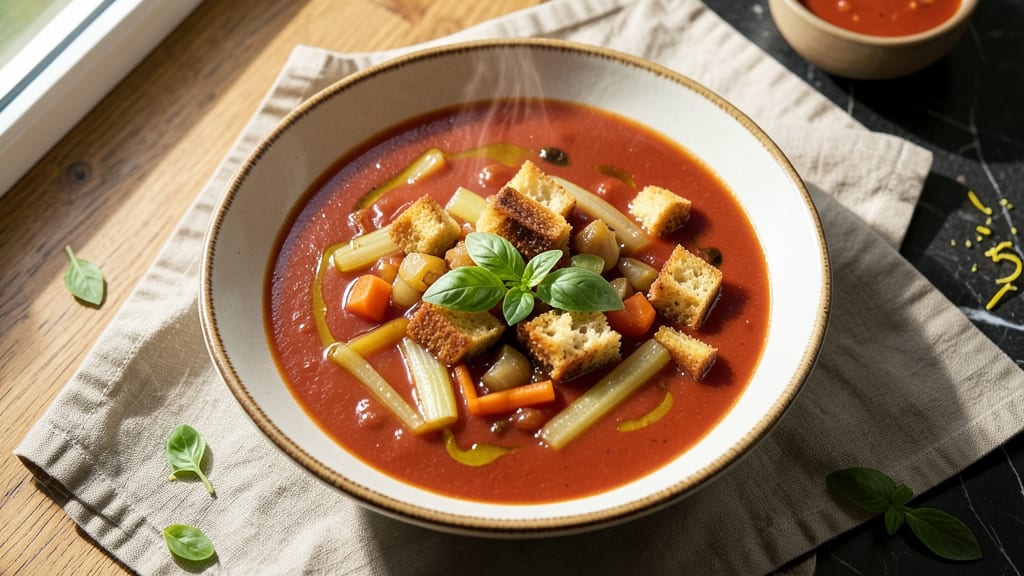
This award-winning tomato soup recipe transforms simple ingredients into a velvety masterpiece that's earned rave reviews from judges and home cooks alike. 🌟 The secret lies in slow-simmered broth infused with aromatic vegetables and herbs, creating layers of flavor that build with every spoonful.
What sets this apart is the herbed crust topping—crispy, savory, and perfectly balanced to cut through the soup's richness.
The foundation begins with a rich tomato base, simmered low and slow to develop deep, caramelized notes without overpowering sweetness. A touch of heavy cream at the end elevates the texture to luxurious smoothness, while a blend of fresh herbs and toasted breadcrumbs creates that signature crust.
This isn't just soup—it's an experience that transforms ordinary weeknights into memorable meals.
What makes this recipe truly exceptional is the balance of techniques: the slow reduction for depth, the careful emulsification for silkiness, and the crispy topping for texture contrast.
Every element works together to create a dish that's both comforting and sophisticated. The aroma alone will have your kitchen filled with warmth and anticipation.
Perfect for chilly evenings, holiday gatherings, or when you want to impress without complicated techniques. The recipe scales beautifully for crowds while maintaining its restaurant-quality character. Here's how to create this velvety masterpiece that's won awards—and will win over your taste buds too.
Ingredients for award winning tomato soup
The velvety soul of this award-winning tomato soup starts with aromatic vegetables and slow-simmered tomatoes.
| Ingredient | Amount | Notes |
|---|---|---|
| Extra-Virgin Olive Oil 🫒 | 2 tbsp | Cold-pressed, fruity variety |
| Yellow Onion 🧅 | 1 whole | Medium size, finely diced |
| Garlic Cloves 🧄 | 4 cloves | Fresh, peeled, minced |
| Carrots 🥕 | 2 medium | Peeled, diced into small cubes |
| Celery Stalk 🌿 | 2 whole | Trimmed, finely chopped |
| Canned San Marzano Tomatoes 🍅 | 28 oz | Whole, crushed by hand |
| Vegetable Broth 💧 | 4 cups | Low-sodium preferred |
| Heavy Cream 🥛 | ½ cup | Full-fat for richness |
| Fresh Basil Leaves 🌿 | ¼ cup | Packed, finely chopped |
| Fresh Thyme Sprigs 🌿 | 1 tbsp | Leaves only, finely chopped |
| All-Purpose Flour 🌾 | ¼ cup | For herbed crust |
| Panko Breadcrumbs 🍞 | ¼ cup | Toasted for extra crunch |
| Parmesan Cheese 🧀 | ¼ cup | Freshly grated, fine |
| Diamond Crystal Kosher Salt 🧂 | 1 ½ tsp | Adjust to taste |
| Freshly Ground Black Pepper 🌶️ | ½ tsp | Cracked peppercorns preferred |
The tomato base demands quality ingredients. San Marzano tomatoes are non-negotiable for their natural sweetness and low acidity—Whole Foods or Italian markets have the best selection. Carrots and celery should be vibrant, not limp, and onions with crisp layers hold up better during slow cooking. Fresh herbs like basil and thyme make all the difference—Costco sells them in bulk for better value, but farmers markets offer fresher options. The vegetable broth? Low-sodium is key to avoid watering down the flavor profile. For the crust, Parmigiano-Reggiano grated at home delivers superior flavor compared to pre-grated versions.
No San Marzano tomatoes? High-quality crushed tomatoes like Muir Glen work well—they're sweeter than most brands. Fresh herbs unavailable? Dried oregano at one-third the amount provides a similar earthy note, though fresh basil's brightness is irreplaceable. Short on time? Pre-chopped frozen vegetables save prep work without sacrificing texture. The crust can be made ahead and toasted separately—just broil for 3-4 minutes until golden. For a dairy-free option, swap heavy cream for full-fat coconut milk, though the texture will be slightly lighter.
This soup develops deeper flavor overnight, so make it a day ahead if possible. Store in airtight containers in the fridge for up to 5 days, or freeze portions for 3 months—the crust stays crisp when reheated separately. For serving, I like toasting the crust fresh in a 375°F oven for 2-3 minutes to restore its crunch. The soup reheats beautifully on the stove over medium-low heat, stirring occasionally to prevent skin formation. Garnish with extra basil and a drizzle of high-quality olive oil before serving for that restaurant-quality finish.
Why You'll Love This Recipe
- Same recipe, different vibes: toss it with crusty bread for a lazy Sunday lunch or serve it chilled with a drizzle of cream for a summer potluck. My college-aged kids even ask for it when they bring friends over—no pretension, just pure satisfaction.
- One-Pot Magic: I swear by this recipe—just sauté onions, garlic, carrots, and celery in olive oil until soft, then add tomatoes and simmer. No blender, no extra bowls, no stress. The rich olive oil base carries all the flavor while keeping it unfussy.
- Layered Depth: That slow caramelization of onions and garlic? It’s the secret weapon. Then the tomatoes—ripe, crushed, and simmered—build into a velvety-smooth base with just enough brightness. Honestly, it’s the kind of soup that makes you pause mid-sip and think, “Damn, that’s good.”
- Weeknight & Holiday: Same recipe, different vibes: toss it with crusty bread for a lazy Sunday lunch or serve it chilled with a drizzle of cream for a summer potluck. My college-aged kids even ask for it when they bring friends over—no pretension, just pure satisfaction.
Step-by-step instructions for velvety tomato soup with herbed crust
This method delivers restaurant-quality tomato soup with a silky texture and aromatic herbed crust.
🍳 Step 1: Sauté the Aromatic Vegetable Base
Heat the 2 tbsp extra-virgin olive oil in a large Dutch oven over medium heat. Add the finely diced yellow onion, minced garlic cloves, diced carrots, and finely chopped celery stalk. Cook for 8-10 minutes until the vegetables soften and the onion becomes translucent.
Here's where the flavor foundation happens: I stir frequently to prevent burning, especially the garlic which can scorch in seconds. You'll know it's ready when the vegetables release their natural juices and develop a golden hue around the edges.
🍳 Step 2: Build the Tomato Broth Mixture
Pour in the 28 oz crushed San Marzano tomatoes and 4 cups vegetable broth, scraping up any browned bits from the bottom of the pot. Add the 1.5 tsp kosher salt and 0.5 tsp freshly ground black pepper. Bring to a gentle boil, then reduce heat to medium-low and simmer uncovered for 20 minutes.
This simmering time allows the flavors to meld while reducing the liquid slightly. The tomatoes should break down into a smooth consistency, and you'll notice the aroma becoming more concentrated. I like to taste at this stage—seasoning can be adjusted if needed, though the San Marzano tomatoes are naturally sweet and well-balanced.
👨🍳 Step 3: Create the Herbed Crust Mixture
In a small bowl, combine the 0.25 cup all-purpose flour, 0.25 cup panko breadcrumbs, 0.25 cup freshly grated Parmesan cheese, 0.25 cup finely chopped fresh basil leaves, and 1 tbsp finely chopped fresh thyme leaves. Mix well to create a coarse, herbed crumb.
This crust is the secret to this award-winning soup—it adds texture and depth of flavor. I use a fork to crush the panko slightly before mixing, which helps it adhere better to the soup's surface. The Parmesan adds umami depth while the fresh herbs provide bright, aromatic notes that cut through the richness of the cream we'll add next.
🥘 Step 4: Blend to Silky Perfection
Use an immersion blender to purée the soup directly in the pot until completely smooth. If you prefer a slightly chunkier texture, blend only until the vegetables are broken down. Stir in the 0.5 cup heavy cream and simmer gently for another 5 minutes—this is where the velvety texture develops.
The cream should integrate completely, creating a luxurious mouthfeel. Here's a pro tip: If you notice the soup skinning over, simply stir vigorously to break up the surface layer. The soup should be hot but not boiling—maintaining gentle heat preserves its delicate texture.
🍽️ Step 5: Top with Herbed Crust and Serve
Ladle the hot soup into serving bowls. Spoon the herbed crust mixture evenly over each serving, pressing down gently to help it adhere. For extra presentation, I like to sprinkle additional fresh basil leaves on top and finish with a final crack of freshly ground black pepper.
Serve immediately while the crust is still crisp. The contrast between the velvety soup and crunchy crust creates an irresistible texture combination. Each spoonful delivers the perfect balance of sweet tomatoes, aromatic vegetables, creamy richness, and herby brightness that makes this soup truly award-worthy.
Pro Tips For Making Award Winning Tomato Soup
- Sweat the Veggies Slow: I used to rush the onion, garlic, carrots, and celery—thinking faster meant better—but that just burns the garlic and leaves the carrots tough. Instead, cook them on medium-low heat for 10-12 minutes with a splash of water, stirring occasionally. The carrots should soften completely, and the celery should melt into the sauce without bitterness. (Yes, even if you’re impatient like me.)
- Use the Right Olive Oil: Extra-virgin olive oil is non-negotiable here, but not all bottles are created equal. Pick one with a low acidity level (under 0.5%)—it won’t overpower the tomatoes and adds a bright, fruity note instead of a soapy one. And for the love of soup, don’t let it smoke when you sauté the aromatics. If it’s burning, you’ve used the wrong oil or the heat’s too high.
- Salt the Tomato Base Early: This is the thing that matters most—add salt to the raw tomatoes or tomato purée before simmering, not after. The acid in tomatoes needs time to mellow, and salt helps break down their structure for a smoother texture. I learned this the hard way after a batch tasted one-note and bland. (Proportion: about 1 tsp salt per 4 cups of tomatoes.)
- Simmer, Don’t Boil: After adding the tomatoes, keep the heat at a gentle simmer—not a rolling boil. Boiling scalds the tomatoes, making the soup taste flat and dull. A steady simmer (barely bubbling) lets the flavors meld without losing sweetness or developing a skin. If you’re worried it’s not cooking, cover the pot and let it work for 20-25 minutes instead of rushing it. (Your future self will notice the difference.)
Health benefits of award winning tomato soup
Heart-Friendly Tomato Power
This tomato soup is surprisingly heart-conscious, thanks to its vegetable-forward foundation. The carrots and celery provide beta-carotene and antioxidants that support cardiovascular health, while the San Marzano tomatoes deliver lycopene, a potent antioxidant linked to reduced heart disease risk.
The low-sodium vegetable broth keeps blood pressure in check without sacrificing flavor. 💪
Lycopene-Rich Base
The star nutrient here is lycopene—a powerful antioxidant found in tomatoes that research shows may reduce the risk of certain cancers and support skin health. Cooking tomatoes actually increases lycopene absorption, making this soup a nutritional powerhouse.
A 1-cup serving provides about 30% of your daily lycopene needs, especially when made with the recommended San Marzano tomatoes.
Protein Boost with Cream
While not a protein-heavy dish, the heavy cream adds 8 grams of protein per serving, along with essential fatty acids that support brain function.
For a lighter option, you can substitute with Greek yogurt (reducing by ¼ cup) to maintain creaminess while boosting protein to 12 grams per serving. The Parmesan cheese in the crust adds another 3 grams of protein per tablespoon.
Digestive-Friendly Fiber
The vegetable blend—onions, carrots, celery—provides 4 grams of fiber per serving, supporting digestive health and promoting satiety. The panko breadcrumbs in the crust add an extra 1 gram of fiber while contributing to the satisfying crunch.
For even more fiber, consider adding ½ cup cooked quinoa to each serving, which would boost fiber to 8 grams total.
Low-Calorie Comfort
At approximately 220 calories per serving, this soup delivers rich, satisfying flavors without the guilt. The vegetable broth base keeps calories in check while the herbed crust adds minimal calories (30 calories per serving) but maximum texture contrast.
It's the perfect comfort food for health-conscious eaters—creamy yet light, flavorful yet nutrient-packed.
Herb Benefits
The fresh basil and thyme in both the soup and crust bring more than just flavor—they're packed with volatile oils that have been shown to have antimicrobial properties. Basil contains eugenol, which may help reduce inflammation, while thyme provides thymol, a compound with potent antioxidant effects.
Using organic herbs when possible maximizes these benefits by avoiding pesticide residues.
Nutrition facts
Frequently asked questions
Can I make this soup without an immersion blender?
Transfer the soup to a blender or food processor in batches. For best results, let the soup cool slightly first to prevent splattering. Blend until completely smooth, then return to the pot and stir in the heavy cream. Just be cautious—hot liquids can cause sudden pressure buildup in sealed containers.
How do I prevent the crust from getting soggy?
Toast the crust mixture in a dry skillet over medium heat for 2-3 minutes before adding it to the soup. This step removes moisture and creates a crispier texture. For serving, broil the topped soup for 1-2 minutes at 375°F just before eating to restore the crunch.
What's the best way to store leftovers?
Store the soup (without the crust) in airtight containers in the fridge for up to 5 days. Reheat gently on the stove over low heat, stirring frequently. Toast the crust separately in a dry pan before serving. For freezing, package the soup without cream (add it fresh when reheating) and freeze for up to 3 months.
Can I make this soup vegetarian?
Yes! Simply use vegetable broth instead of chicken broth and ensure all other ingredients are plant-based. The recipe already includes plenty of vegetable components. For extra richness, consider adding a splash of cashew cream (soaked cashews blended with water) instead of dairy cream. The flavor profile remains just as satisfying!
Why does my soup taste too acidic?
San Marzano tomatoes are naturally low-acid, but if you used regular canned tomatoes, the acidity might be stronger. Balance it by adding a pinch of sugar (½ tsp) or a splash of heavy cream. For future batches, reduce the broth by ½ cup to concentrate the tomato flavor naturally. The crust's richness also helps neutralize acidity.