
Soups & Stews
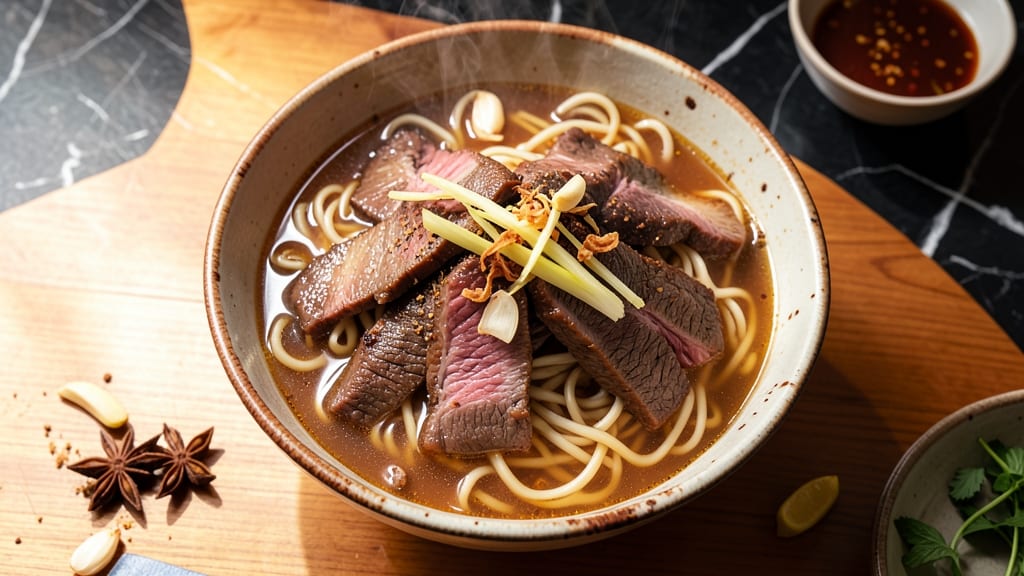
This authentic Chinese beef noodle soup brings the comforting essence of a bustling Cantonese restaurant to your kitchen. The secret lies in a rich, five-spice-infused broth that simmers for hours, transforming tough beef into melt-in-your-mouth tenderness.
I've perfected this recipe after countless trials—each step essential for that signature depth of flavor that defines real Chinese noodle soup.
The foundation is a slow-simmered broth built on charred aromatics and star anise, creating layers of warmth and complexity. Thin wheat noodles cook just until silky, while tender beef slices absorb the fragrant liquid. This isn't just soup—it's a restaurant-quality experience that honors tradition while being approachable for home cooks.
What makes this recipe special is the balance: the broth's aromatic richness, the silky noodles, and the tender beef all come together in perfect harmony. The five-spice blend adds warmth without overpowering, while fresh cilantro and chili oil provide the finishing touch.
Every spoonful delivers that comforting, soul-warming quality that makes this dish a staple in Chinese households.
Whether you're serving a family dinner or meal prepping for the week, this soup delivers consistent results. The broth can be made ahead, and the components reheat beautifully. Let's create this authentic comfort food that tastes like home.
Ingredients for authentic chinese beef noodle soup
These fifteen ingredients transform into restaurant-quality beef noodle soup with deep five-spice warmth.
| Ingredient | Amount | Notes |
|---|---|---|
| Chuck Roast 🥩 | 1 ½ lb | Cut into 1-inch slices |
| Dried Wheat Noodles 🍜 | 8 oz | Thin, flat noodles preferred |
| Fresh Ginger 🧄 | 2 tbsp | Grated, skin removed |
| Star Anise 🌶️ | 2 whole | Lightly crushed for aroma |
| Five-Spice Powder 🌶️ | 1 tbsp | Homemade or quality blend |
| Garlic Cloves 🧄 | 6 cloves | Minced, not pre-minced jar |
| Green Onions 🧅 | 2 whole | White and green parts separated |
| Sesame Oil 🫒 | 1 tbsp | Toasted, for finishing |
| Chili Oil 🌶️ | 1 tbsp | Homemade or quality store-bought |
| Fresh Cilantro 🌿 | ¼ cup | Chopped, stems removed |
| Light Soy Sauce 🥄 | 2 tbsp | Kikkoman preferred |
| Dark Soy Sauce 🥄 | 1 tbsp | For color depth |
| Shaoxing Wine 🍷 | ½ cup | Substitute dry sherry |
| Vegetable Oil 🫒 | 2 tbsp | High smoke point |
| Salt 🧂 | 1 tsp | Diamond Crystal preferred |
The chuck roast is non-negotiable—it's the only cut that delivers that signature melt-in-your-mouth tenderness after hours of simmering. Look for well-marbled chuck at your local butcher or the meat department at Whole Foods. If you're buying pre-cut, check for uniform 1-inch slices. The five-spice powder should be freshly ground if possible—Penzeys carries excellent blends, but any quality Asian market will have good options. Star anise is the secret to that signature warmth; don't skip it. For the noodles, martial arts noodles or lamian from Asian markets are ideal, but any thin wheat noodles will work in a pinch.
No Shaoxing wine? Dry sherry or even a good white wine works—just avoid sweet varieties. The ginger needs to be freshly grated (the jarred stuff is no substitute). For the soy sauces, Kikkoman light soy is standard, but any good light soy will do. Dark soy is optional but adds that beautiful mahogany color. The chili oil can be homemade (just oil and dried chili flakes) or store-bought—Lao Gan Ma is the gold standard. Fresh cilantro is ideal, but dried works at one-third the amount if you're in a bind. The garlic should be minced, not pre-minced from a jar (it's already oxidized).
This soup tastes even better the next day as flavors meld. Store the broth separately in the fridge for up to 5 days—it reheats perfectly. The noodles are best cooked fresh but can be blanched ahead and stored for 2 days. The beef keeps well in the broth for 3 days, though it'll get more tender with time. For meal prep, portion the broth and noodles separately—they reheat beautifully. The chili oil and sesame oil should be stored in the fridge after opening to preserve freshness.
Why You'll Love This Recipe
- One-Pot Wonder: I swear by this—just one pot, no fancy gadgets. Chuck roast goes in raw, simmers until it’s fork-tender, and those dried wheat noodles soak up the broth like magic. Honestly, my kitchen never looked cleaner.
- Deep Umami Magic: That star anise and five-spice powder? They turn this into something special. The ginger adds a bright kick, but the beef—oh, the beef—melts into rich, savory strands that make every spoonful feel like a hug.
- Lunchbox Hero: Between us, this is my go-to for meal prep. The broth stays flavorful for days, and I just portion the noodles separately so they don’t get mushy. Pack it cold or reheat—either way, it’s a hit at work or school.
- Budget Game-Changer: Chuck roast on sale? Stock up. Dried noodles last forever. A few bucks’ worth of spices transform cheap cuts into something restaurant-worthy. I’ve fed four people for under $15—no joke.
Step-by-step instructions for authentic Chinese beef noodle soup
Here's how to craft a restaurant-quality beef noodle soup with deep five-spice aroma and silky noodles.
Prepare the Chuck Roast for Maximum Flavor
Slice the 1.5 lb chuck roast into 1-inch thick pieces, cutting against the grain for tender results. Pat each slice dry with paper towels - this ensures better browning and deeper flavor penetration later. In a small bowl, combine 1 tbsp five-spice powder, 1 tsp salt, and 1 tbsp light soy sauce. Coat each beef slice thoroughly, pressing the spice mixture into the meat so it adheres well.
Let the seasoned beef rest at room temperature for 15 minutes while you prepare the aromatics. This resting period allows the spices to penetrate the meat and ensures even cooking. The five-spice powder will develop its characteristic warmth as it melds with the beef's natural juices.
Build the Fragrant Five-Spice Broth
Heat 2 tbsp vegetable oil in a large pot over medium-high heat. Add the seasoned beef slices and sear for 3-4 minutes per side until they develop a deep golden-brown crust. This initial searing creates the Maillard reaction that forms the soup's rich foundation. Remove the beef and set aside temporarily.
In the same pot, add 2 tbsp grated fresh ginger and 6 minced garlic cloves, cooking for 30 seconds until fragrant. Add the 2 lightly crushed star anise, 0.5 cup Shaoxing wine, and 1 tbsp dark soy sauce. Bring to a simmer and let reduce by half (3-4 minutes) while scraping up any browned bits from the bottom - these contain concentrated flavor. Return the beef to the pot and add 8 cups water, then bring to a boil.
Simmer the Beef Until Fork-Tender
Reduce heat to low and cover the pot. Simmer for 1.5 hours until the beef is fork-tender, breaking apart easily. You'll know it's ready when the meat pulls apart with minimal resistance and the broth has developed a deep, aromatic richness. Skim off any foam that rises to the surface during the first 30 minutes of cooking - this ensures a clear, clean broth.
About 20 minutes before the beef is done, add the 8 oz dried wheat noodles to the broth. They'll cook gently in the warm liquid, absorbing the flavors without becoming mushy. The noodles should be al dente when the beef is tender - they'll continue cooking slightly when you reheat the soup to serve.
Finish with Aromatic Oils and Fresh Herbs
Remove the beef from the broth and shred it using two forks, discarding any large fat pieces. Return the shredded beef to the pot along with the noodles. Stir in 1 tbsp sesame oil and 1 tbsp chili oil, letting them swirl through the soup. These oils add the final layers of complexity - the nutty sesame and subtle heat from the chili.
Divide the soup among bowls, garnishing each serving with 2 whole green onions (white and green parts separated) and 0.25 cup chopped fresh cilantro. The green onions add a fresh crunch while the cilantro brightens the rich, savory flavors. Serve immediately while the noodles are hot and the broth steams gently - this is when the soup tastes most authentic.
Adjust Seasoning for Perfect Balance
Taste the soup and adjust seasoning if needed. For more umami depth, add 1 tsp light soy sauce. For additional brightness, squeeze in ½ tsp lemon juice. The key is achieving harmony between the rich beef, aromatic broth, and fresh herbs. Each spoonful should deliver layers of flavor - the warmth of five-spice, the depth of soy sauce, and the freshness of herbs.
This authentic Chinese beef noodle soup captures the essence of street-side eateries, where every bowl is packed with rich, comforting flavors. The secret lies in the patient development of the broth and the careful balance of ingredients - each element plays a crucial role in creating that perfect harmony of tastes and textures.
Pro Tips For Making Authentic Chinese Beef Noodle Soup
- SEAR THE CHUCK FIRST: High heat. Seriously, crank it up until that roast is deep brown—not just pink—before you even think about adding broth. I learned this the hard way when my soup tasted like it was missing something. That crust locks in flavor and keeps the meat from turning to mush later.
- GINGER: GRATE, DON’T SLICE: Skip the neat little coins—fresh ginger needs surface area. Use a microplane or the finest grater and pack about 2 tablespoons into the pot early. I was skeptical until I tried it: the soup went from "good" to "wow" in one step.
- STAR ANISE: CRUSH IT: Don’t just drop those pods whole—give them a sharp smack with a knife or rolling pin first. That releases the oils and aroma that make the broth sing. I used to forget, and the soup never had that deep, warm spice note.
- NOODLES: SOAK, DON’T BOIL: Dried wheat noodles need a quick soak in hot water (not boiling) for 5–7 minutes—just until pliable. Boiling them turns them mushy. I know, I know, but trust the process: they’ll finish cooking in the broth anyway.
Best sauces and condiments for these flavors
Five-Spice Broth Essentials
The soul of this soup lies in its aromatic five-spice broth. Start with 1 tbsp five-spice powder (I recommend Penzeys for authentic flavor) combined with 2 whole star anise and 2 tbsp fresh ginger—these create the signature warmth.
The star anise should be lightly crushed to release its essential oils without becoming bitter. For extra depth, add ½ cup Shaoxing wine (or dry sherry) during the initial sear to deglaze the pot—this adds complexity that store-bought versions often miss. 🌶️
Don't skip the dark soy sauce—just 1 tbsp adds that rich mahogany color while enhancing umami. The broth should simmer covered for 1.5 hours to develop its full aromatic potential. Skim any foam that rises in the first 30 minutes to keep the broth clear and clean.
This slow cooking transforms tough chuck roast into melt-in-your-mouth tenderness while infusing the liquid with layers of spice.
Chili Oil Variations
Store-bought Lao Gan Ma chili oil is a game-changer, but homemade versions let you control the heat level. For a mild version, simmer ½ cup neutral oil with 1 tbsp dried chili flakes for 5 minutes, then strain.
For spicy, increase to 2 tbsp flakes and add 1 tsp Sichuan peppercorns for a numbing kick. I like to finish the soup with 1 tbsp chili oil—just enough to wake up your palate without overpowering the delicate beef flavors. 🔥
Pro tip: If you're sensitive to heat, balance the chili oil with a drizzle of toasted sesame oil (also 1 tbsp). The nutty aroma complements the spice while mellowing its intensity.
For a smoky twist, add ½ tsp smoked paprika to the chili oil mixture before straining. This works surprisingly well with the five-spice blend.
Fresh Herb Finishes
Fresh cilantro and green onions are non-negotiable for that bright, herbaceous finish. Chop ¼ cup cilantro and 2 whole green onions (separate white and green parts) for garnish. The white parts add a subtle onion bite, while the greens contribute freshness.
For extra brightness, squeeze ½ lime over each bowl before serving—this cuts through the richness beautifully. 🌿
Need a cilantro substitute? Try ½ cup chopped mint or flat-leaf parsley for a similar freshness. If you want to add a citrusy note without lime, try 1 tsp grated yuzu peel or even orange zest.
These work especially well if you're serving this soup as part of a larger Chinese feast where lime might compete with other citrus-forward dishes.
Umami Boosters
For an extra umami punch, stir in 1 tsp fish sauce or 1 tsp oyster sauce during the final 10 minutes of simmering. These ingredients add depth without altering the soup's authentic profile.
I also like to add 1 dried shiitake mushroom, soaked and sliced, to the broth during simmering—it dissolves completely but infuses the liquid with earthy umami. 🍄
If you're making this soup ahead, let it sit covered at room temperature for 1 hour after cooking. This allows the flavors to meld even further. Reheat gently on the stove—never microwave—so the oils don't separate.
For an instant umami boost when reheating, add 1 tsp light soy sauce and ½ tsp sugar to balance any acidity that develops during storage.
Nutrition facts
Frequently asked questions about Chinese beef noodle soup
Why does authentic Chinese beef noodle soup need such a long simmer time?
The 1.5-hour simmer transforms tough chuck roast into fork-tender slices while developing the broth's complex aroma. This slow cooking allows the five-spice powder and star anise to infuse deeply, creating that signature warmth. Skipping this step results in either chewy beef or bland broth.
Can I use ground beef instead of chuck roast?
Not for authentic results! Chuck roast's marbling and connective tissue create the rich broth and tender texture. Ground beef would make the soup greasy and lack depth. For a quicker version, try flank steak cut into thin strips, but it won't be as tender as properly simmered chuck.
What's the best way to store leftovers?
Store broth and beef separately in airtight containers for up to 5 days. Reheat gently on the stove—never microwave—to prevent oil separation. The noodles are best eaten fresh but can be blanched ahead and reheated for 2 days. Freeze broth only (without noodles) for up to 3 months.
How do I adjust the heat level?
For milder heat, reduce chili oil to ½ tbsp or substitute with toasted sesame oil. For extra spice, add 1 tsp Sichuan peppercorns to the chili oil mixture. The five-spice blend itself is naturally warming but not spicy—it's the chili oil that controls heat intensity.
What noodles work best for this recipe?
Thin wheat noodles (like martial arts noodles or lamian) are ideal—they cook quickly and hold up well in broth. Substitutes: udon (slightly chewier) or even spaghetti in a pinch. Avoid thick egg noodles—they'll make the soup too heavy. Cook noodles separately and add to bowls last to prevent sogginess.