
Soups & Stews
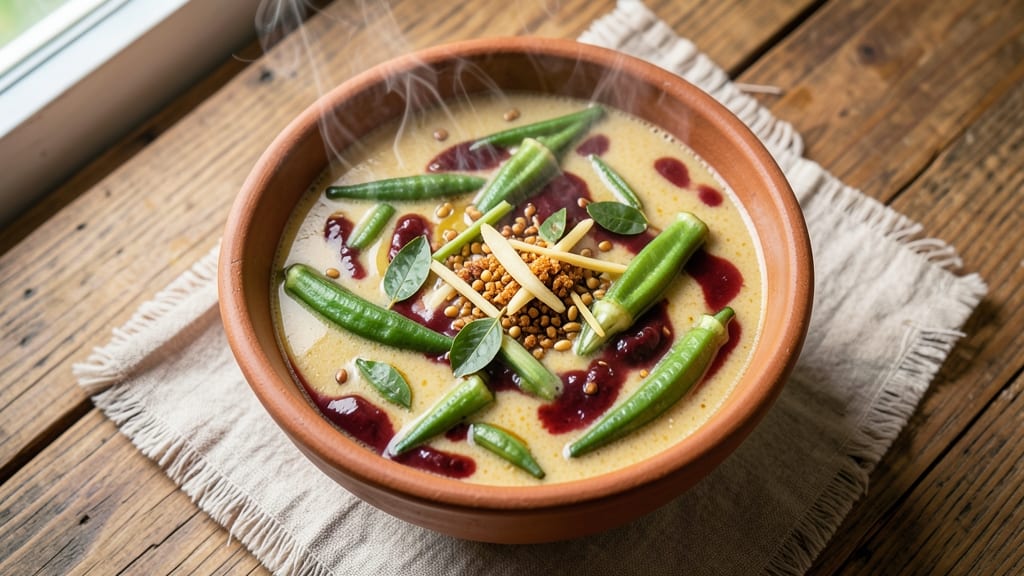
This attukal soup recipe in Tamil language brings the rich, coconut-infused flavors of Tamil Nadu to your kitchen with just one pot and minimal effort.
Traditionally made with tender okra, aromatic spices, and creamy coconut milk, this dish captures the essence of South Indian comfort food—perfect for vegetarians and gluten-free diets alike. The secret lies in the koothu tempering, where mustard seeds and curry leaves sizzle to release their full flavor potential.
What sets this recipe apart is its simplicity: no pressure cooker required, just a stovetop simmer that transforms humble ingredients into a velvety, spiced broth. The okra adds a subtle crunch, while the coconut milk creates a luscious texture that balances the tangy tamarind and the earthy spices.
Every spoonful delivers a harmony of flavors that’s both nostalgic and deeply satisfying.
By the end, you’ll have a restaurant-quality soup that pairs beautifully with steamed rice, dosa, or even as a standalone stew. The aroma alone—spiced with mustard, curry leaves, and ginger—will have your kitchen smelling like a Tamil Nadu home.
This is the kind of dish that feels like a hug in a bowl.
Ready to master the art of Attukal soup? The step-by-step guide includes Tamil transliterations for key techniques, ensuring you nail the tempering and blending for that authentic taste. Let’s begin!
Ingredients for attukal soup recipe in tamil language
Gather these simple, aromatic ingredients for a comforting bowl of Attukal soup.
| Ingredient | Amount | Notes |
|---|---|---|
| Okra 🥦 | 1 lb | Fresh, trimmed and sliced |
| Coconut Milk 🥥 | 1 ¼ cups | Full-fat for creaminess |
| Tamarind Paste 🍋 | 2 tbsp | Adjust for tanginess |
| Mustard Seeds 🌶️ | 1 tbsp | For koothu tempering |
| Curry Leaves 🌿 | ¼ cup | Dried or fresh |
| Fresh Ginger 🧄 | 1 inch | Fixed: Peel and slice thin |
| Green Chili 🌶️ | 2 whole | Slit lengthwise |
| Asafoetida 🌿 | ¼ tsp | Essential for aroma |
| Turmeric Powder 🧂 | ½ tsp | Freshly ground preferred |
| Cumin Seeds 🌶️ | ½ tsp | Toasted for depth |
| Coriander Powder 🌿 | ½ tsp | Freshly ground ideal |
| Salt 🧂 | 1 tsp | Adjust to taste |
| Coconut Oil 🫒 | 2 tbsp | For tempering |
| Tomatoes 🍅 | 2 whole | Chopped, ripe |
| Onion 🧅 | 1 whole | Finely chopped |
The coconut milk is non-negotiable here—full-fat canned coconut milk from brands like Goya or Thai Kitchen works best. Look for the kind with no additives, just pure coconut. Fresh okra is ideal, but frozen works in a pinch (thaw and dry before slicing). Indian grocery stores often have pre-trimmed okra, saving you time. The tamarind paste should be sticky and dark—if it's dry or crumbly, soak it in warm water for 10 minutes first. For the koothu tempering, mustard seeds and curry leaves are the stars—grab them from the spice aisle at Whole Foods or any Indian market.
No fresh curry leaves? Dried leaves at half the amount work too, but fresh is worth hunting down—they add that unmistakable aroma. Short on tamarind? Lemon juice plus a pinch of sugar mimics the tang. The ginger should be young and plump—Costco or Trader Joe's usually have good organic options. For the green chili, adjust the heat to your taste: more for spice lovers, fewer for mild versions. The asafoetida might be tricky to find outside Indian markets, but it's available online or in bulk spice shops. If you can't find it, skip it—your soup will still be delicious, just missing that umami depth.
Store the coconut milk in the fridge after opening—it keeps for 5-7 days once opened. Fresh curry leaves last 1 week in the fridge if wrapped in damp paper towels. The okra can be prepped ahead and stored in the fridge for 2 days before cooking. This soup actually tastes better the next day as the flavors meld. Portion into containers for easy lunches—3-4 days in the fridge or 3 months frozen. Reheat gently on low heat to preserve the creamy texture.
Why You'll Love This Recipe
- One-Pot Magic: I swear by this recipe—just toss in the okra, mustard seeds, and curry leaves, let it simmer with tamarind and coconut milk, and boom, you’re done. No extra pots, no fuss, and honestly, the smell alone makes my kitchen feel like a Tamil Nadu home.
- Tangy Creamy Bliss: That tamarind paste cuts through the richness of the coconut milk like a pro, while the mustard seeds and curry leaves add a smoky, earthy punch. The okra soaks up all the flavors—crispy outside, silky inside—it’s the kind of balance that makes you reach for seconds without thinking.
- Weeknight & Meal Prep Hero: Between us, this soup is my secret weapon for lazy nights and busy mornings. Make a big batch on Sunday, and you’ve got lunch or dinner covered for days—just reheat and serve. My kids even ask for it on school nights, and that’s saying something.
- Budget-Friendly Comfort: Okra and coconut milk stretch this recipe into a whole meal without breaking the bank. A single can of coconut milk and a handful of okra feed four people for next to nothing, and the tamarind adds that restaurant-quality tang for pennies. Pure satisfaction, no guilt.
Step-by-step instructions for Attukal soup
Here's how to create this comforting Tamil classic with rich coconut flavors and tender okra.
Prepare the Okra and Base Ingredients
Start by washing the 1 lb okra thoroughly and trimming off the ends. Cut into 1-inch pieces—this size ensures even cooking without turning mushy. In a large pot, heat the 2 tbsp coconut oil over medium heat until shimmering but not smoking. Add the 1 whole finely chopped onion and sauté for 3-4 minutes until translucent and slightly golden.
Next, add the 2 whole chopped tomatoes, 0.5 tsp turmeric powder, and 0.5 tsp coriander powder. Cook for 5 minutes until the tomatoes break down and the mixture darkens slightly. This step builds the flavor foundation—don't rush it. You'll know it's ready when the raw tomato smell disappears and you're left with a fragrant base.
Add Spices and Tempering
Push the onion-tomato mixture to the sides of the pot and add the 2 tbsp tamarind paste to the center. Let it caramelize slightly for 1 minute, then stir to combine with the base. Now for the tempering—lower the heat to medium-low and add the 0.5 tsp cumin seeds. Let them sizzle for 30 seconds until fragrant, then add the 0.25 tsp asafoetida and 1 tbsp mustard seeds.
Watch closely as the mustard seeds pop—this is your signal to add the 0.25 cup curry leaves and 1 inch sliced fresh ginger. Stir everything together for 1 minute, letting the spices bloom. Add the 2 slit green chilies and cook for another 30 seconds. The aroma should fill your kitchen—this is where the magic happens.
Simmer the Okra in Coconut Milk
Add the prepared okra pieces to the pot and stir gently to coat in the spiced base. Pour in the 1.25 cups coconut milk, then add 1 tsp salt. Bring the mixture to a gentle boil, then reduce heat to low and let it simmer uncovered for 15-20 minutes. Stir occasionally to prevent sticking, but don't over-mix—the okra should soften but remain slightly firm.
Here's the thing—you want the okra to absorb the coconut milk flavors without turning to mush. The soup should have a velvety texture with tender okra pieces that hold their shape. If it looks too thick, add 2-3 tablespoons of water. Taste and adjust seasoning—you might need a bit more salt or tamarind paste depending on your preference for tanginess.
Final Adjustments and Serving
Once the okra is tender and the soup has thickened slightly, remove from heat. Let it sit covered for 5 minutes to allow flavors to meld. The soup should have a rich, golden color with visible okra pieces floating in the creamy coconut broth. If you prefer it smoother, you can blend half the soup and mix it back in, but I like the textural contrast.
Serve hot with steamed rice or appalam for the full Attukal experience. The soup should be aromatic with a perfect balance of spice, tang from the tamarind, and creamy coconut richness. Each spoonful delivers that comforting Tamil flavor profile that makes this dish so special. For extra depth, garnish with fresh curry leaves just before serving.
Pro Tips For Making Attukal Soup Recipe In Tamil Language
- Slash Okra First: I learned this the hard way—whole okra pods sink to the bottom and turn mushy. Instead, slice them diagonally into ½-inch pieces, then cut each slice into thin matchsticks. They cook faster, release flavor evenly, and stay tender without falling apart.
- Temper Mustard Right: Don’t just toss mustard seeds into hot oil—they’ll burn before they pop. Start with a low flame, let the oil reach 110°C (just before smoking), then add seeds. Once they sizzle for 10 seconds, crank the heat to medium-high. This keeps their aroma sharp and prevents bitterness.
- Soak Tamarind 10 Minutes: Tamarind paste clumps like glue when dry. Mix it with ¼ cup warm water and let it sit while you prep the rest—this breaks down the fibers completely. Strain if needed, but don’t skip the soak. Skimpy tamarind means your soup will taste flat, not tangy.
- Add Coconut Milk Last: Coconut milk curdles if boiled too long. Wait until the okra is tender and the broth has simmered for 8 minutes before stirring in the milk. Keep the heat low—just enough to warm through, not bubble. This keeps the soup creamy without separating. (Yes, even if you’re impatient like me.)
Best sauces and condiments for this recipe
Tamarind Coconut Gravy
This tamarind coconut gravy is the soul of Attukal soup—where the tangy tamarind and creamy coconut milk create a velvety base. Start by dissolving 2 tbsp tamarind paste in ½ cup warm water to create a smooth paste.
Simmer this with 1.25 cups coconut milk and 1 tsp salt for 5 minutes on low heat. The result? A rich, slightly thick gravy that coats every spoonful. For extra depth, add ½ tsp black pepper and ½ tsp sugar to balance the tang.
This gravy works as a standalone sauce or as the foundation for your soup. 🥥
Mustard-Curry Leaf Tempering
The koothu tempering is non-negotiable—it’s what gives Attukal soup its signature aroma. Heat 2 tbsp coconut oil in a pan, then add 1 tbsp mustard seeds and 0.25 cup curry leaves. Let the mustard seeds pop and curry leaves sizzle for 30 seconds until fragrant.
Add 1 inch sliced ginger and 2 slit green chilies, cooking for another 30 seconds. This tempering should sizzle loudly—it’s the secret to that authentic Tamil flavor. Pour this over your soup just before serving for maximum impact. 🌿
Spiced Tomato Base
A spiced tomato base adds depth to your soup. Sauté 1 chopped onion and 2 chopped tomatoes in 2 tbsp coconut oil until dark and fragrant. Add 0.5 tsp turmeric and 0.5 tsp coriander powder, cooking until the tomatoes break down into a thick paste.
This base forms the flavor backbone of your soup, balancing the coconut’s creaminess. For extra richness, stir in 1 tbsp coconut milk at the end. This step is where the magic happens—don’t skip it! 🍅
Coconut Milk Variations
Swap coconut milk for other creamy options to customize your soup. For a lighter version, use ½ cup coconut milk + ½ cup vegetable broth. For extra richness, blend ½ cup roasted cashews with ½ cup water to make a cashew cream.
If you prefer a tangier soup, add 1 tbsp lemon juice at the end. Each variation keeps the dish vegetarian and gluten-free while adjusting the texture. Experiment to find your favorite balance! 🥛
Garnishing Ideas
Finish your Attukal soup with fresh garnishes to elevate its presentation. Sprinkle 0.25 cup chopped cilantro or fresh curry leaves for a bright finish. A drizzle of coconut oil adds richness, while toasted cumin seeds give extra crunch.
For heat lovers, add red chili powder or sambar powder. Garnishes should complement, not overpower—they’re the final touch that makes your soup restaurant-worthy. 🌶️
Nutrition facts
Frequently asked questions
What makes Attukal soup different from other Tamil coconut soups?
Attukal soup stands out because of its unique blend of tamarind and coconut milk, creating a tangy-creamy balance that's distinct from other Tamil soups. Unlike sambar or rasam, it features okra as the star ingredient, which adds a subtle crunch and absorbs the rich flavors beautifully. The koothu tempering with mustard seeds and curry leaves gives it that unmistakable aromatic punch that sets it apart from milder coconut-based dishes.
Can I make Attukal soup without coconut milk?
While coconut milk is traditional, you can substitute it with ½ cup coconut milk + ½ cup vegetable broth for a lighter version. For extra richness, try blending ½ cup roasted cashews with ½ cup water to make cashew cream. Just remember, coconut milk's creaminess is key to the authentic texture—without it, the soup will be thinner and less flavorful. The tamarind will still provide the tangy base you need.
Why does my Attukal soup turn out too thick or too thin?
If your soup is too thick, it's likely because the coconut milk reduced too much during simmering. Add 2-3 tablespoons of water and stir well, then simmer for another 5 minutes. For a thinner soup, add more water gradually while tasting. The ideal consistency should coat the back of a spoon but still be pourable. Pro tip: Simmer uncovered to prevent excessive thickening. If it's too thin, blend half the soup and mix it back in for a creamier texture.
Is Attukal soup gluten-free and suitable for dietary restrictions?
Yes! This recipe is naturally gluten-free and vegetarian, making it perfect for most dietary needs. The ingredients—okra, coconut milk, tamarind, and spices—contain no gluten or common allergens. For nut-free versions, avoid cashew cream substitutions. Always check your tamarind paste and spice blends for cross-contamination warnings if you have severe allergies. The dish is also dairy-free and vegan by default.
How long can I store Attukal soup, and can I freeze it?
Fresh Attukal soup tastes best within 3-4 days when stored in an airtight container in the fridge. For longer storage, freeze portions in airtight containers for up to 3 months. Thaw overnight in the fridge and reheat gently on low heat to preserve the creamy texture. Avoid microwave reheating—it can make the coconut milk separate. The soup actually improves in flavor after 1-2 days as the spices meld together.