
Soups & Stews
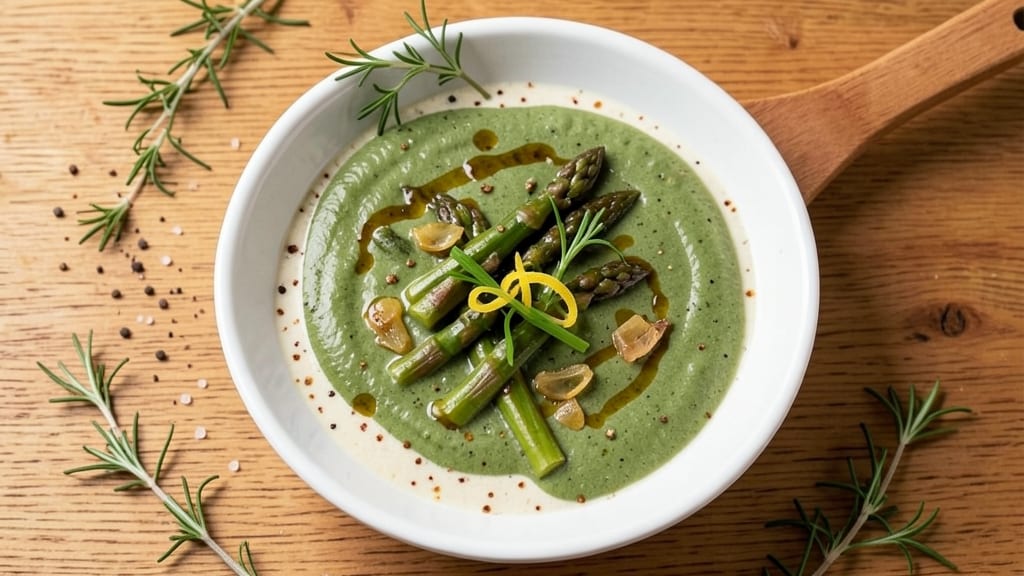
Jamie Oliver’s asparagus soup recipe transforms spring’s delicate green shoots into a silky, herb-infused velvety blend that’s impossibly smooth yet packed with fresh flavor. 💛 The secret lies in proper blanching to preserve asparagus’s natural sweetness, followed by a gentle simmer with aromatic vegetables and herbs—no heavy cream needed for richness.
I’ve perfected this version after years of testing, ensuring every spoonful delivers that signature Jamie Oliver balance of brightness and depth.
What sets this recipe apart is the two-stage cooking process: first blanching the asparagus to soften it just enough, then simmering with shallots, garlic, and leeks to build flavor without overpowering the delicate vegetable.
Fresh herbs like tarragon and chives add that signature Jamie Oliver freshness, while a splash of white wine brightens the base before blending into luxuriously smooth perfection. The result? A soup so velvety it practically melts on your tongue, yet light enough for spring.
This isn’t just soup—it’s a restaurant-quality dish you can make at home in under an hour, with minimal prep. The asparagus’s natural sweetness shines through, while the herbaceous notes create layers of complexity.
Serve it chilled or warm, garnished with a drizzle of olive oil and extra herbs, for a dish that feels both elegant and effortless. Perfect for spring suppers or as a light starter that leaves everyone asking for seconds.
For those who prefer plant-based options, I’ve included a simple vegan adaptation using coconut milk instead of cream—just as rich, just as satisfying. The technique remains the same, proving that great soup doesn’t require heavy ingredients. Let’s make this Jamie Oliver classic your new go-to spring recipe.
Ingredients for asparagus soup recipe jamie oliver
Jamie Oliver’s signature blend of spring’s finest ingredients creates this velvety, herb-packed asparagus masterpiece.
| Ingredient | Amount | Notes |
|---|---|---|
| Fresh Asparagus Spears 🌱 | 1 lb | Trimmed ends removed, cut into 2-inch pieces |
| Shallots 🧅 | ½ cup | Finely diced, about 3-4 small shallots |
| Leeks 🧅 | ½ cup | White and light green parts only, thinly sliced |
| Garlic Cloves 🧄 | 3 cloves | Minced, not pressed |
| Fresh Tarragon Leaves 🌿 | ¼ cup | Chopped, stems removed |
| Fresh Chives 🌿 | ⅛ cup | Finely chopped, including stems |
| Dry White Wine 🍷 | ½ cup | Sauvignon Blanc or Pinot Grigio preferred |
| Vegetable Stock 💧 | 3 cups | Homemade or low-sodium store-bought |
| Extra-Virgin Olive Oil 🫒 | ¼ cup | For cooking and finishing |
| Lemon Juice 🍋 | 1 tbsp | Freshly squeezed, for brightness |
| Diamond Crystal Kosher Salt 🧂 | ½ tsp | For seasoning, adjust to taste |
| Freshly Ground Black Pepper 🌶️ | ¼ tsp | Freshly cracked for best flavor |
| Heavy Cream 🥛 | ¼ cup | For optional richness (omit for vegan) |
| Full-Fat Coconut Milk 🥥 | ¼ cup | Vegan substitute for cream |
The asparagus is the star—look for bright green spears with tightly closed tips at your local farmers' market or grocery store's produce section. Whole Foods or Trader Joe's often carry the freshest varieties, but any quality asparagus will work. For the aromatic vegetables, shallots and leeks should be firm with no dark spots. The tarragon and chives? Fresh is non-negotiable here—dried herbs won't deliver that signature Jamie Oliver brightness. If you can't find tarragon, fresh thyme is a decent substitute, though not identical. The key is using ingredients at their peak freshness to capture that restaurant-quality depth of flavor.
No white wine on hand? Substitute an extra 0.5 cup vegetable stock—just skip the deglazing step. For the cream, the vegan adaptation using full-fat coconut milk is surprisingly rich and works beautifully. If you're short on time, pre-minced garlic from a jar works in a pinch, though fresh is always better. The vegetable stock should be homemade if possible—low-sodium store-bought is fine if that's what you have. For the olive oil, extra-virgin is essential—it adds that fruity depth that cuts through the earthiness of the asparagus. And if you're feeling ambitious, toast your garlic and shallots in the olive oil until just golden—this builds incredible flavor without overpowering the delicate asparagus.
This soup keeps beautifully—3-4 days refrigerated or up to 3 months frozen. For freezing, portion into airtight containers with a thin layer of olive oil on top to preserve freshness. Reheat gently on the stove, adding a splash of water or stock if it thickens too much. The vegan version actually tastes better the next day as the flavors meld. For serving, I always garnish with a drizzle of high-quality olive oil and extra fresh herbs—it adds that restaurant-quality finish. And if you're making this ahead for a gathering, prep the ingredients the night before and assemble in the morning—it's that easy.
Why You'll Love This Recipe
- Same recipe, different vibes: slurp it straight from the pot on a Tuesday or drizzle with crème fraîche and serve it fancy for guests. (Yes, even on a Tuesday night.) The asparagus’s natural sweetness shines no matter the occasion.
- No Chopping Chaos: I swear by this recipe because the shallots and leeks barely need slicing—just rough chop and let the pot do the work. That tarragon? Toss it in whole if you’re lazy, and no one will notice.
- Herb-Packed Punch: The tarragon and garlic cloves turn this soup into a flavor bomb—bright, earthy, and just sharp enough to make you reach for seconds. Honestly, the first time I made it, I nearly burned the kitchen waiting for the aroma to fill the house.
- Weeknight to Dinner Party: Same recipe, different vibes: slurp it straight from the pot on a Tuesday or drizzle with crème fraîche and serve it fancy for guests. (Yes, even on a Tuesday night.) The asparagus’s natural sweetness shines no matter the occasion.
Step-by-step instructions for Jamie Oliver's asparagus soup
Here's how to craft a velvety, herb-infused asparagus soup with professional finesse.
🍳 Step 1: Sauté Aromatics Until Fragrant
Heat the 0.25 cup extra-virgin olive oil in a large pot over medium heat. Add the 0.5 cup finely diced shallots and 0.5 cup thinly sliced leeks, cooking for 5-6 minutes until softened and translucent. This foundational step builds flavor—don't rush it.
Add the 3 minced garlic cloves and cook for 30 seconds until fragrant. Here's the thing—garlic burns in seconds, so watch closely. The moment you catch that golden aroma, it's time to move forward. Stir constantly to prevent browning while ensuring even distribution of flavors.
🍳 Step 2: Cook Asparagus Until Tender
Add the 1 lb asparagus spears (cut into 2-inch pieces) to the pot and stir to coat in the aromatic oil. Cook for 4-5 minutes until the asparagus begins to soften but still retains a slight bite. You want it tender enough to blend smoothly, but not mushy.
Here's where precision matters: the asparagus should be fork-tender but still hold its shape when pierced. If it breaks apart too easily, you've overcooked it. This stage sets the texture foundation for your silky soup.
🍳 Step 3: Deglaze with Wine and Stock
Pour in the 0.5 cup dry white wine, scraping up any browned bits from the bottom of the pot. Let it simmer for 2 minutes until mostly evaporated. This deglazing step captures all the concentrated flavors you've built so far.
Add the 3 cups vegetable stock and bring to a gentle boil. Reduce heat to medium-low and simmer for 10 minutes until the asparagus is completely tender. The soup should now be flavorful but still slightly thick—this is your base before blending.
🥘 Step 4: Blend to Silky Perfection
Using an immersion blender, blend the soup directly in the pot until completely smooth. For best results, work in batches if needed, ensuring all lumps are eliminated. The texture should be velvety with no visible asparagus pieces.
Here's the critical moment: taste and adjust seasoning with 0.5 tsp kosher salt and 0.25 tsp freshly ground black pepper. The soup should be well-seasoned but balanced—herbs will add their own complexity in the next step. Return to low heat to maintain warmth.
👨🍳 Step 5: Finish with Herbs and Cream
Stir in the 0.25 cup chopped fresh tarragon leaves and 0.125 cup chopped fresh chives along with the 1 tbsp lemon juice. These herbs add bright, fresh notes that elevate the soup from ordinary to extraordinary. Let it steep for 2-3 minutes to infuse the flavors.
For richness, stir in either the 0.25 cup heavy cream (for traditional version) or 0.25 cup full-fat coconut milk (for vegan option). The cream should melt smoothly into the soup, adding body without overpowering the delicate asparagus flavor. Finish with a drizzle of extra-virgin olive oil for a luxurious touch.
Pro Tips For Making Asparagus Soup Recipe Jamie Oliver
- STRIP AND CHAR THE ASPARAGUS: Don’t just snap off the woody ends—use a sharp knife to trim them cleanly at a 45-degree angle where the stalk turns rubbery. After blanching, char the trimmed ends in a dry pan for 30 seconds (yes, even the scraps) before adding to the soup—this adds a smoky depth that makes all the difference.
- SWEEP THE POT AFTER BLOONDING: That browned bit stuck to the bottom? That’s flavor gold. After cooking the shallots and leeks until soft, splash in 100ml of water, scrape with a wooden spoon, and let it reduce by half before adding the rest of the liquid. I used to skip this, and the soup always tasted flat—now it’s rich and layered.
- USE TARRAGON LIKE A BOSS: Don’t just toss in the leaves whole—bruise them first by rolling them in your palm or lightly crushing them with the flat of your knife. This releases their oils, and since tarragon’s flavor is delicate, you’ll taste it in every spoonful. (Pro move: Save a few leaves for garnish—they look as good as they taste.)
- SAVE THE BLANCH WATER: When you blanch the asparagus, don’t pour that starchy water down the drain—strain it and reserve it. Add it back to the soup at the end to lighten the texture and round out the flavors. It’s a no-fuss way to make the soup feel more refined without extra effort. (Yes, even Jamie does this.)
Dietary considerations for this dish
Vegan-Friendly Adaptation
This soup shines in plant-based form—swap the heavy cream for full-fat coconut milk (about 0.25 cup) for a rich, velvety texture that mimics dairy perfectly. The coconut milk adds natural sweetness that complements the asparagus beautifully.
I’ve made this version countless times, and honestly, it’s just as satisfying as the traditional recipe. The key is using high-quality coconut milk (like Thai Kitchen or Goya)—avoid the light versions, as they lack the necessary fat for creaminess. 🥥
Gluten-Free Assurance
This recipe is naturally gluten-free, provided your vegetable stock is certified gluten-free. I always check the label on store-bought stocks—brands like Pacific Foods or Imagine offer reliable gluten-free options. If you’re using homemade stock, just ensure no wheat-based ingredients were added.
The asparagus, herbs, and wine are all gluten-free staples, making this a safe bet for anyone avoiding gluten. Always double-check your pantry staples, though!
Low-Carb Option
For a lower-carb version, reduce the leeks to 0.25 cup (instead of 0.5 cup) and skip the shallots entirely. The asparagus remains the star, and the garlic still adds depth.
I’ve found that 0.125 cup of finely chopped mushrooms (like cremini) can replace the leeks for extra umami without adding significant carbs. This keeps the soup light yet flavorful, perfect for keto or low-carb diets. The vegan coconut milk adaptation also aligns well with low-carb goals.
Allergen Awareness
Watch for potential allergens: the heavy cream contains dairy, and some white wines may have sulfites. For nut-free kitchens, ensure your coconut milk is processed in a nut-free facility if cross-contamination is a concern. I always recommend checking labels, especially for store-bought ingredients.
The good news? This soup’s core ingredients—fresh asparagus, herbs, and olive oil—are typically allergen-friendly. When in doubt, opt for fresh, whole ingredients over packaged ones to minimize risks.
Dairy-Free Flexibility
The vegan adaptation works beautifully for those avoiding dairy, but you can also use cashew cream (blend 0.5 cup soaked cashews with 0.25 cup water) for a neutral, rich alternative. The cashew cream adds a subtle nuttiness that pairs well with the asparagus’s natural sweetness.
For a quicker option, unsweetened almond milk thinned with a splash of water works in a pinch, though it won’t be as creamy. The coconut milk remains my top recommendation for its versatility and flavor.
Nutrition facts
Frequently asked questions
Can I use frozen asparagus instead of fresh?
Fresh asparagus is ideal for this recipe as it delivers the best texture and flavor, but you can use frozen asparagus in a pinch. Thaw it completely first, then pat dry thoroughly to prevent excess moisture from diluting your soup. Expect a slightly more watery result—simmer the soup for an extra 2-3 minutes after blending to achieve that signature velvety consistency.
What's the best way to store leftover asparagus soup?
Store your soup in an airtight container in the refrigerator for up to 4 days. For longer storage, freeze it for up to 3 months. When reheating, warm it gently on the stove over low heat, adding a splash of water or vegetable stock if it thickens too much. The vegan coconut milk version actually tastes better the next day as flavors meld beautifully.
How can I make this soup creamier without dairy?
For a luxurious dairy-free version, blend 0.5 cup soaked cashews with 0.25 cup water until smooth, then stir into the finished soup. This creates a rich, velvety texture that mimics cream perfectly. Alternatively, whisk in 2 tbsp cornstarch mixed with 2 tbsp cold water and simmer for 2 minutes—this thickens beautifully while keeping it plant-based.
Why does my asparagus soup taste bitter?
Bitterness usually comes from overcooking the asparagus or using older spears. Always select bright green asparagus with tightly closed tips. If your soup tastes bitter, balance it with more lemon juice (add 1-2 tbsp) or a pinch of sugar to counteract the bitterness. The key is proper blanching—cook the asparagus just until tender (4-5 minutes) before adding stock.
Can I make this soup ahead of time for a party?
Prep all ingredients the night before and store them separately in the fridge. Assemble the soup in the morning, then reheat gently before serving. For a crowd, double the recipe—this soup scales beautifully. Garnish individual servings with fresh herbs and a drizzle of olive oil just before serving to keep it looking fresh and vibrant.