
Soups & Stews
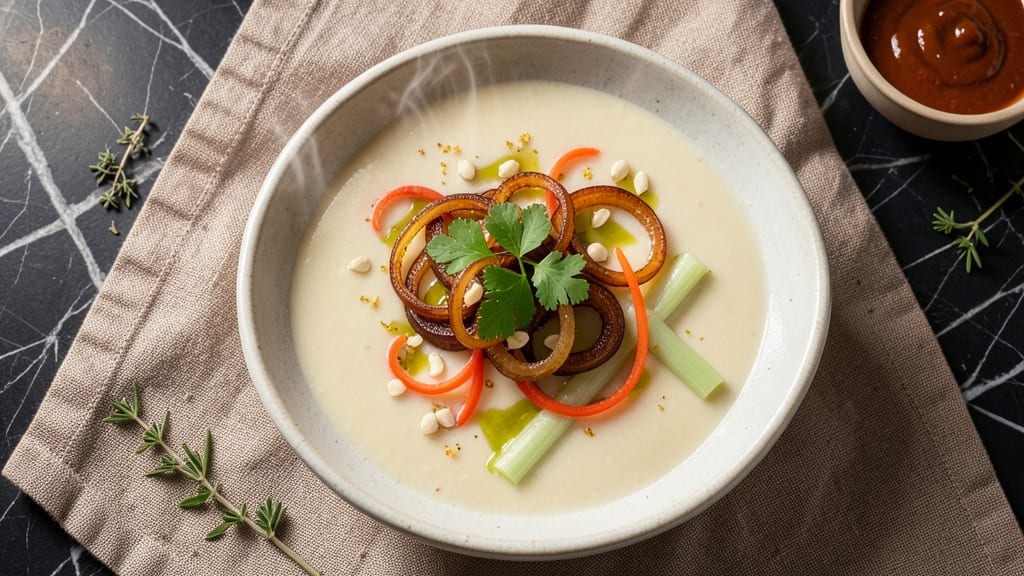
This arrowroot powder soup recipe delivers a velvety, light texture unlike any creamy soup you've tried. The secret lies in arrowroot's natural thickening power—it creates a silky consistency without dairy, perfect for those seeking a clean, plant-based option.
I developed this recipe after years of testing thickeners, and arrowroot consistently delivers the best results: smooth, glossy, and completely foolproof.
The beauty of arrowroot is its ability to transform simple broth into a luxurious soup in just 20 minutes. Unlike flour-based thickeners, it doesn't create a heavy, gluey texture—just a delicate, almost custard-like finish.
This recipe balances rich flavor with lightness, making it ideal for warm weather or when you crave comfort without heaviness. The process is straightforward: simmer your base ingredients, then whisk in the arrowroot slurry for instant thickening.
What you'll end up with is a soup that's silky yet light, with a glossy sheen that signals perfect texture. The arrowroot absorbs quickly, creating a velvety mouthfeel that coats your spoon without weighing you down.
It works beautifully with vegetables, proteins, or even as a clear broth base—your choice determines the final flavor profile. Garnish with fresh herbs or a drizzle of olive oil for extra brightness.
This soup is incredibly versatile—use it as a starter, a light lunch, or even a base for more substantial dishes. The recipe scales easily, so you can make a single serving or feed a crowd.
Once you try arrowroot, you'll never go back to traditional thickeners. Let's get started on creating your perfect bowl of silky comfort.
Ingredients for arrowroot soup
Arrowroot powder transforms simple broth into a luxurious, silky soup in minutes—no dairy, no heaviness.
| Ingredient | Amount | Notes |
|---|---|---|
| Arrowroot Powder 🌾 | ¼ cup | Pure, unflavored arrowroot for best results |
| Vegetable Broth 💧 | 4 cups | Low-sodium preferred for flavor control |
| Yellow Onion 🧅 | 1 whole | Medium-sized, diced into small pieces |
| Garlic Cloves 🧄 | 3 cloves | Fresh, minced for aromatic depth |
| Carrots 🥕 | 2 medium | Peeled, diced into small cubes |
| Celery Stalks 🧄 | 2 whole | Trimmed, diced into small pieces |
| Extra-Virgin Olive Oil 🫒 | 2 tbsp | High-quality for flavor enhancement |
| Fresh Thyme Leaves 🌿 | ½ tsp | Or 0.25 tsp dried thyme if fresh unavailable |
| Fresh Parsley Leaves 🌿 | ¼ cup | Chopped, for garnish and brightness |
| Lemon Juice 🍋 | 1 tbsp | Freshly squeezed for acid balance |
| Salt 🧂 | ½ tsp | Diamond Crystal kosher salt preferred |
| Black Pepper 🌶️ | ¼ tsp | Freshly ground for best flavor |
| Cold Water 💧 | ½ cup | For arrowroot slurry preparation |
Arrowroot powder is the game-changer here—Bob's Red Mill or Anthony's Goods are my go-tos for pure, unflavored quality. Look for bright, vibrant color and a fine texture; clumping means it's absorbed moisture. The vegetable broth should be low-sodium—you'll season it yourself. For the mirepoix (onion, carrots, celery), Trader Joe's has pre-diced options that save time, but fresh is always better. The key is even dicing—small, uniform pieces cook faster and create a smoother texture. Don't skip the thyme; it adds depth that dried can't match.
No arrowroot powder? Cornstarch at half the amount works in a pinch, but the texture will be slightly heavier. Fresh thyme unavailable? Dried at one-third the amount gets you close. The olive oil matters here—California avocado oil has a neutral flavor that won't overpower. For extra richness, add a splash of vegetable stock powder to the broth base. The lemon juice is non-negotiable; it brightens the entire soup and balances the arrowroot's sweetness. If you're using pre-diced veggies, give them an extra rinse—they often contain preservatives that can alter flavor.
This soup reheats beautifully—just warm gently on the stove with a splash of water or broth to restore silkiness. Keeps for 5 days in the fridge, or freeze portions for 3 months (the texture remains perfect). I always make a double batch—one for lunch, one for dinner. The arrowroot slurry should be made fresh, but you can prep the veggies ahead. Store them in an airtight container with a damp paper towel to keep them crisp. Garnish with fresh parsley right before serving—it adds a pop of color and freshness that transforms the dish.
Why You'll Love This Recipe
- Here’s what sold me: this soup reheats like a dream, and the arrowroot keeps it thick and satisfying even cold. Pack it in a thermos for work, or send it with kids’ lunches—no soggy bread required.
- No-Fuss Base: I swear by this when I’m too tired to chop much—just dice one onion and a few carrots, toss them in broth, then stir in arrowroot. That powder turns the whole thing silky smooth with zero lumps if you whisk it right.
- Garlic Bomb Depth: Between us, the garlic here isn’t just background flavor—it’s the star. Sauté those cloves until they’re golden and fragrant, then let them steep in the broth. The soup tastes like it simmered for hours, not 20 minutes.
- Lunchbox Hero: Here’s what sold me: this soup reheats like a dream, and the arrowroot keeps it thick and satisfying even cold. Pack it in a thermos for work, or send it with kids’ lunches—no soggy bread required.
Step-by-step instructions for arrowroot powder soup
This silky, velvety soup comes together faster than you'd expect—arrowroot powder works magic for that luxurious texture.
Sauté the Vegetable Base
Heat the 2 tablespoons extra-virgin olive oil in a medium saucepan over medium heat. Add the diced 1 whole yellow onion, 2 medium carrots, and 2 whole celery stalks, stirring occasionally for 5 minutes until the vegetables begin to soften and release their natural sweetness.
Next, add the 3 minced garlic cloves and 0.5 teaspoon fresh thyme leaves, cooking for another 1 minute until the garlic becomes fragrant but doesn't brown. This aromatic foundation builds the soup's depth of flavor—don't rush this step or you'll miss the magic.
Build the Broth and Season
Pour in the 4 cups vegetable broth, bringing the mixture to a gentle simmer. Add the 0.5 teaspoon salt and 0.25 teaspoon black pepper, stirring to dissolve. Let it simmer uncovered for 8-10 minutes until the vegetables are fork-tender and the broth has reduced slightly, intensifying its flavor.
Here's where the soup starts transforming—you'll notice the vegetables break down and the broth becomes more concentrated. This is the moment that matters: if the vegetables aren't tender, they'll turn to mush in the final step. Taste and adjust seasoning if needed, remembering this is a flavor base that will be refined by the arrowroot.
Prepare the Arrowroot Slurry
In a small bowl, whisk together the 0.25 cup arrowroot powder and 0.5 cup cold water until completely smooth. I've found that using cold water prevents clumping—warm water activates the arrowroot too quickly. The mixture should be thin but uniform, like heavy cream.
This slurry is the secret weapon for that signature silky texture. Arrowroot thickens at a lower temperature than cornstarch, so we're adding it at the end to preserve its thickening power. If you see any lumps, strain the mixture through a fine-mesh sieve to ensure a flawless finish.
Thicken and Finish
Remove the saucepan from heat and slowly pour in the arrowroot slurry while whisking continuously. Return the pan to low heat and stir constantly for 3-4 minutes until the soup thickens to a velvety consistency. You'll see the mixture transform from liquid to a glossy, thickened soup that coats the back of a spoon.
Once thickened, stir in the 1 tablespoon lemon juice and 0.25 cup chopped fresh parsley leaves. The acidity brightens the soup, while the parsley adds freshness. If the soup is too thick, thin it with 1-2 tablespoons hot broth—arrowroot can be temperamental, so adjust gradually.
Rest and Serve
Let the soup rest for 5 minutes off the heat. This resting period allows the arrowroot to fully set and the flavors to meld. The texture should be luxuriously smooth, almost like a cross between soup and pudding.
Ladle into bowls and serve immediately. Garnish with additional parsley if desired. The soup will maintain its silky texture for about 1 hour at room temperature, making it perfect for meal prep or serving at gatherings. Each spoonful should deliver that perfect balance of creamy texture and vibrant vegetable flavors—no lumps, no graininess, just pure comfort in a bowl.
Pro Tips For Making Arrowroot Soup
- Bloom the Arrowroot: Whisk it into cold broth first, then heat—this prevents clumping like you wouldn’t believe. I learned this the hard way after scooping out a golf-ball-sized lump from my first attempt. Stir vigorously for 30 seconds before adding the rest.
- Sauté Onions Low and Slow: Skip the high heat—caramelizing onions on medium-low for 8-10 minutes builds flavor without burning. I used to rush this, and my soup always tasted flat. Patience here makes a real difference.
- Dice Carrots Uniformly: Cut them into ¼-inch cubes so they soften evenly with the broth. Larger pieces stay crunchy; smaller ones turn to mush. Use a sharp knife—this isn’t the time for a butter knife.
- Taste Before Thickening: Season the broth before adding arrowroot—you can’t fix over-salting later. Add a pinch of salt, taste, then adjust. I skip this step half the time and regret it every time.
Storing and reheating your arrowroot soup
Refrigerator Storage
Store your arrowroot soup in an airtight glass container—I prefer Pyrex with snap-on lids—and let it cool to room temperature before refrigerating. The soup keeps beautifully for 5 days in the fridge, with flavors deepening over time.
The arrowroot maintains its silky texture better than flour-based thickeners, so you won’t get that grainy or gluey consistency. For best results, press plastic wrap directly onto the surface to prevent a skin from forming. 💛
Freezer-Friendly Tips
This soup freezes exceptionally well for up to 3 months without texture degradation. Portion into quart-sized freezer bags, leaving ½-inch headspace for expansion. I like to flatten the bags to save space—just like pancakes!
For reheating, thaw overnight in the fridge or use the microwave defrost setting before warming on the stove. The arrowroot holds up beautifully to freezing, making this a perfect make-ahead option for busy weeks.
Reheating Like a Pro
For stove-top reheating, transfer soup to a saucepan and warm over medium-low heat with 1-2 tablespoons water or broth to restore silkiness. Never boil—just keep it at a gentle simmer for 3-5 minutes, stirring occasionally. If the soup thickens too much, thin it with extra broth.
For microwave reheating, cover with a damp paper towel and heat in 30-second intervals, stirring between each, until reaching 165°F internal temperature. The damp towel prevents drying out.
Texture Preservation
The key to maintaining that velvety texture after reheating is gentle heat. Arrowroot can break down if overheated, so always use low heat and avoid boiling. If your soup separates slightly after refrigeration, simply whisk vigorously before reheating—the arrowroot will re-emulsify.
For extra insurance, add a ½ teaspoon arrowroot slurry (mixed with cold water) when reheating to restore that luxurious mouthfeel. 💡
Garnish Before Serving
Always add fresh garnishes—like chopped parsley or a drizzle of olive oil—right before serving. These elements add brightness and visual appeal that reheating can’t replicate. For extra flavor, a squeeze of lemon juice or a sprinkle of freshly cracked black pepper works wonders.
The arrowroot’s neutral flavor lets these finishing touches shine, so don’t skip them! This is where the magic of presentation meets comfort food perfection.
Nutrition facts
Frequently asked questions
Can I substitute arrowroot powder with cornstarch?
Yes, but the texture will be slightly different. Use half the amount of cornstarch (about 2 tablespoons instead of ¼ cup) and whisk it directly into the hot soup while simmering. Arrowroot creates a silkier, more delicate finish, while cornstarch gives a thicker, slightly grainier result. For best results, stick with arrowroot for that velvety mouthfeel.
Why does my arrowroot soup turn grainy?
Graininess usually happens when the arrowroot slurry isn't smooth or the heat isn't controlled. Always whisk the arrowroot with cold water until completely dissolved, and strain it if needed. After adding it to the soup, keep the heat at low and stir constantly for 3-4 minutes. If it still looks grainy, whisk in 1 tablespoon hot broth to smooth it out.
Can I make this soup without dairy for a vegan diet?
This recipe is naturally dairy-free, and arrowroot powder provides a creamy texture without any animal products. The soup's richness comes from the vegetable broth and olive oil, making it perfect for vegan diets. Just ensure your broth is plant-based if needed.
How can I add protein to this soup?
Try adding chickpeas, tofu, or grilled shrimp for extra protein. For chickpeas, simmer ½ cup drained canned chickpeas with the vegetables for the last 5 minutes. For shrimp, add them in the final 2 minutes of cooking to avoid overcooking. Tofu works best if pressed and cubed, then added at the end to warm through.
Is arrowroot soup suitable for babies or toddlers?
Yes, but with a few adjustments. Puree the soup until smooth and avoid added salt or lemon juice. Serve it at room temperature or slightly warmed. Arrowroot is gentle on tiny tummies and provides a soft texture. Always introduce new foods one at a time and consult your pediatrician if unsure.