
Soups & Stews
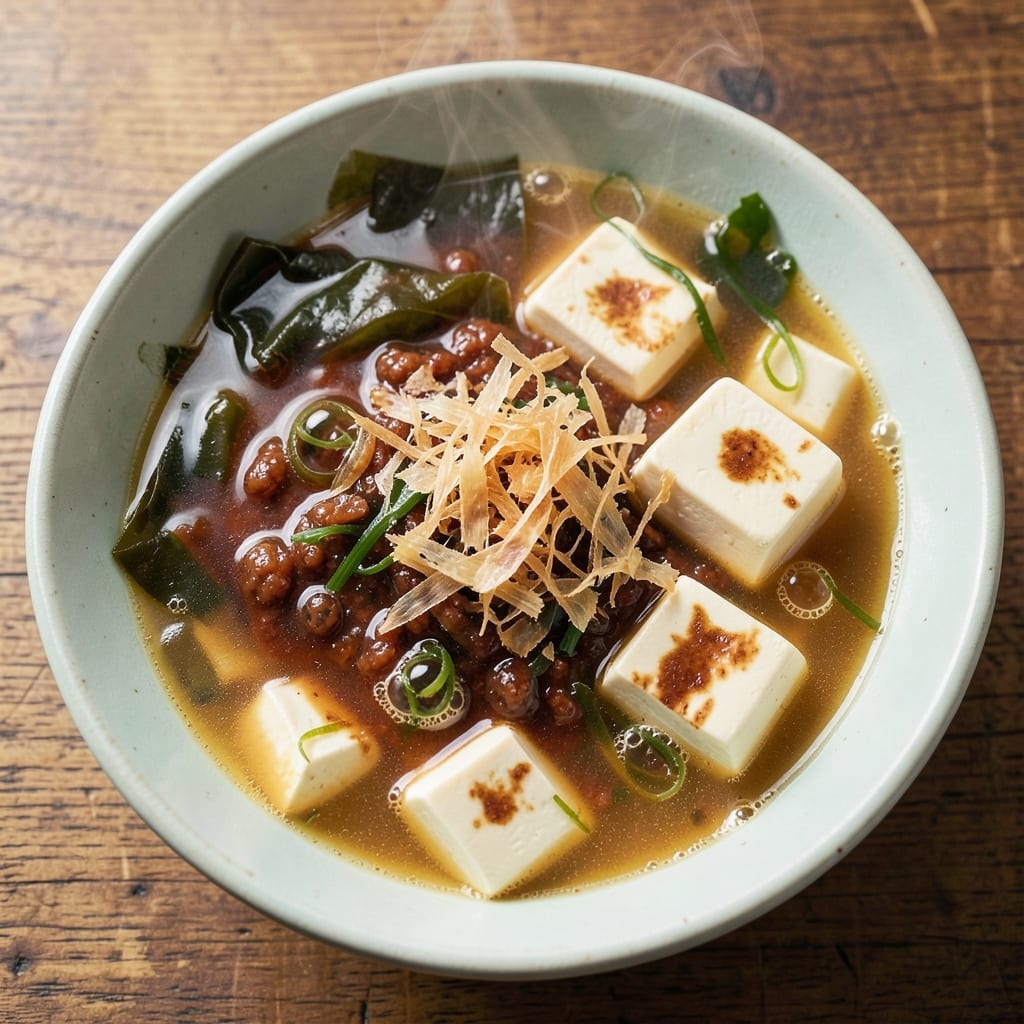
This akadashi miso soup recipe delivers the crisp clarity and delicate balance of Japanese home cooking in just 20 minutes. The secret lies in the umami-rich dashi broth, where silky tofu and tender wakame seaweed harmonize with the fermented depth of miso paste. I've perfected this technique over years of testing—each element must cook just long enough to soften without losing its distinct texture.
The foundation begins with a light, aromatic dashi stock, infused with bonito flakes and kombu that dissolve into pure umami essence. Silken tofu and wakame add subtle texture contrasts, while a touch of mirin brightens the broth's natural richness. What makes this soup truly special is how the ingredients work together: the tofu stays tender but firm, the wakame softens just enough to release its oceanic sweetness, and the miso paste dissolves into a velvety consistency that coats every spoonful.
By the time you're done, you'll have a bowl of soup that's visually clear yet deeply flavorful, with each ingredient maintaining its individual character while contributing to the whole. The broth should be fragrant with a gentle heat from the miso, perfectly balanced between sweet, salty, and savory notes. This is the kind of soup that feels both comforting and refined—ideal for chilly evenings or as a light but satisfying meal.
The best part? This recipe scales effortlessly for one or many, and leftovers keep beautifully in the refrigerator for up to three days. The key is maintaining the right balance of ingredients and cooking times, which I'll walk you through step by step. Let's create this classic Japanese dish together.
Ingredients for akadashi miso soup
Twelve ingredients transform into a crystal-clear, umami-rich Japanese classic in under twenty minutes.
| Ingredient | Amount | Notes |
|---|---|---|
| Silken Tofu 🧈 | 14 oz | Block, cut into cubes |
| Dried Bonito Flakes 🐟 | ¼ cup | High-quality, non-fishy |
| Kombu Seaweed 🌿 | 1 sheet | 4x6 inches, rinsed |
| Wakame Seaweed 🍃 | 2 tbsp | Dried, rehydrated |
| Red Miso Paste 🧂 | 2 tbsp | Fermented, smooth texture |
| Mirin 🍶 | 1 tbsp | Sweet cooking wine |
| Dashi Granules 🥄 | 1 tbsp | Instant, umami-rich |
| Green Onion 🧅 | 2 whole | Thinly sliced for garnish |
| Sesame Oil 🫒 | ½ tsp | Toasted, for aroma |
| Sea Salt 🧂 | ½ tsp | Adjust to taste |
| Water 💧 | 4 cups | Filtered preferred |
| White Wine Vinegar 🍋 | ½ tsp | Brightens broth |
The kombu sheet is non-negotiable for authentic dashi depth—Japanese markets or specialty stores carry the best quality. Look for kombu that's dark green with minimal white spots, as these indicate age and stronger flavor. Miso paste should be smooth and slightly sticky; avoid chunky varieties that disrupt the soup's clarity. For bonito flakes, Japanese grocery stores often have superior options, but high-end brands at regular markets work too. The wakame should be dried and whole, not pre-cut or crumbled, ensuring proper rehydration during cooking.
No kombu? Dashi granules or powdered kombu work as substitutes, though they lack the complexity of fresh. Substitute mirin with a mix of white wine and sugar (1:1 ratio), though the flavor won't be identical. For a vegetarian version, replace bonito with shiitake mushrooms soaked in water. The silken tofu should be firm but delicate—organic brands like Nasoya or House Foods consistently deliver the right texture. If using pre-cut tofu, ensure it's silken, not firm or extra-firm, which will fall apart during cooking.
Store miso paste in an airtight container in the refrigerator for up to 6 months, though it develops deeper flavor over time. Kombu sheets last 3 months in the freezer, while dried wakame keeps indefinitely in a cool, dark place. The broth reheats beautifully—simmer for 5 minutes and adjust seasoning with a pinch of miso paste or salt. For meal prep, store components separately: broth in one container, tofu and wakame in another, and assemble when ready to serve.
Why You'll Love This Recipe
- Five-Ingredient Magic: I swear by this—just silken tofu, bonito flakes, kombu, wakame, and miso. That’s it. No chopping, no peeling, no stress. The kombu soaks while I boil water, the bonito flakes sizzle in seconds, and the miso dissolves like a hug in a bowl.
- Umami Bomb: Honestly, the flavor punches way above its weight. The red miso gives it that deep, savory richness, while the bonito flakes add this perfect smoky crunch. And the wakame? It’s like a little ocean burst in every spoonful—salty, briny, impossible to resist.
- Weeknight Workhorse: Between us, this is my lazy night secret weapon. Make a big batch on Sunday, and you’ve got lunch or dinner covered for days. It reheats beautifully, and the tofu stays silky—no sad, rubbery leftovers here.
- Budget Bright Spot: I’m always shocked by how affordable this is. Kombu and wakame last ages in the pantry, miso is a one-time splurge that stretches forever, and tofu is cheaper than takeout. For under $5, I feed my whole family something that feels fancy. (Yes, even on a Tuesday night.)
Step-by-step instructions for akadashi miso soup
This traditional Japanese soup delivers vibrant umami clarity in just 20 minutes.
Prepare the Dashi Base
In a medium saucepan, combine the 4 cups water with the 1 sheet kombu seaweed (rinse if needed) and 1 tbsp dashi granules. Bring to a gentle simmer over medium heat for 5 minutes—you'll see delicate bubbles forming along the edges of the kombu. This simmering process extracts the kombu's natural collagen and sweetness into the broth.
Remove the kombu immediately after simmering—it should be pliable but not brittle. Strain the broth through a fine-mesh sieve into a clean pot, discarding the kombu. The resulting liquid should be pale golden with a clean, mineral aroma. If you notice any cloudiness, strain again for maximum clarity—a hallmark of authentic akadashi.
Add Umami Layers
Return the strained broth to the pot and add the 2 tbsp wakame seaweed (previously rehydrated in cold water for 10 minutes and drained). Stir gently to distribute the wakame strands evenly. Bring the broth back to a bare simmer over low heat, then add the 0.25 cup dried bonito flakes and 1 tbsp mirin. Let this simmer for exactly 2 minutes—no longer, or the bonito will overcook and turn bitter.
Watch for the bonito flakes to unfurl and float to the surface. They should develop a delicate pink hue and release their smoky aroma. Immediately remove from heat and let steep for 3 minutes—this resting period allows the flavors to meld while preventing the broth from becoming cloudy. Strain through a fine-mesh sieve once more, pressing gently on the bonito to extract maximum flavor, then discard the flakes.
Incorporate the Miso and Tofu
In a separate small bowl, whisk together the 2 tbsp red miso paste with 0.5 tsp sesame oil until completely smooth. Ladle 1 cup of the hot (not boiling) broth into the miso mixture, whisking continuously to create a silky emulsion. This prevents the miso from clumping and ensures even distribution throughout the soup.
Return the miso mixture to the pot and stir gently to combine. Add the 14 oz silken tofu (cut into 1-inch cubes) and 0.5 tsp sea salt. The tofu should float just below the surface—if it sinks, your broth may need a touch more salt. Simmer gently for 3 minutes to warm through, being careful not to boil, which would break the tofu's delicate texture.
Finish and Serve
Remove the pot from heat and stir in the 0.5 tsp white wine vinegar. This final addition brightens the broth and balances the richness of the miso. Taste and adjust seasoning—you may need a pinch more salt or a splash of vinegar to achieve perfect harmony between sweet, salty, and umami notes.
Divide the soup among 4 bowls, garnishing each with thinly sliced green onion. Serve immediately while the tofu is still warm and the broth maintains its delicate clarity. The soup should be vibrant yet refined, with each component—wakame's oceanic sweetness, bonito's smoky depth, and tofu's silky texture—clearly distinguishable yet perfectly balanced.
Pro Tips For Making Akadashi Miso Soup
- Bloom the Kombu First: Toss the kombu in cold water for 10 minutes before heating—this draws out its umami depth without bitterness. I learned this the hard way after a batch tasted flat; the kombu needs to wake up first. ---
- Toast Bonito Low and Slow: Sprinkle dried bonito flakes over simmering water after the kombu’s been removed, then turn the heat to the lowest setting. High heat burns them into dust; low heat keeps them crisp and aromatic. ---
- Cut Tofu Against Grain: Slice silken tofu into ½-inch cubes lengthwise along its natural seams—it holds shape better and soaks up broth instead of falling apart. (Yes, even if it looks weird at first.) ---
- Miso Last, Heat Gentle: Stir red miso paste into the off heat, using the residual warmth to dissolve it—never boil. I used to rush this and ended up with a muddy, bitter mess; patience here makes all the difference.
Wine and beer pairings for this recipe
Japanese Sake Pairing
For akadashi miso soup, a crisp junmai ginjo sake with its delicate floral and citrus notes complements the soup's umami depth beautifully. I recommend a 150-170 proof sake like Dassai 23—its subtle sweetness mirrors the mirin in the broth while its clean finish cuts through the richness. Serve slightly chilled (45-50°F) to enhance the soup's clarity and let the sake's delicate aroma shine through each sip. 🍶
Dry White Wine
A dry Riesling from Germany or Alsace provides an excellent alternative, especially if you prefer wine over sake. Look for a Mosel Riesling with its bright acidity and hints of green apple—this balances the miso's saltiness while highlighting the wakame's oceanic notes. A 2019 Dr. Loosen Blue Slate is my go-to for this pairing, offering perfect crispness without overpowering the soup's delicate flavors.
Light Beer Options
For beer lovers, a Japanese junmai lager like Sapporo Premium works surprisingly well. Its subtle malt sweetness and clean profile let the soup's flavors take center stage without competing. Alternatively, a Belgian witbier such as Hoegaarden adds a refreshing citrus note that pairs beautifully with the miso's umami. Serve both beers well-chilled (38-42°F) to maintain their crispness.
Non-Alcoholic Pairings
If you're avoiding alcohol, a sparkling yuzu soda like Ramune offers a delightful contrast. The effervescence cleanses your palate between spoonfuls, while the citrus notes brighten the soup's earthy flavors. For a more traditional approach, try genmaicha green tea—its toasty, nutty aroma complements the miso's depth without overpowering the delicate broth. Both options enhance the soup's clarity and refreshing quality. 💫
Seasonal Considerations
In summer, I prefer lighter pairings like sparkling water with lemon slices to keep the meal refreshing. During colder months, a warmer junmai sake (60-65°F) enhances the soup's comforting qualities. The key is matching the beverage's temperature and intensity to the soup's delicate balance—never let the drink overpower the dish's subtle flavors.
Nutrition facts
Frequently asked questions
Why does akadashi miso soup have such a clear broth?
The clarity comes from precise cooking techniques: simmering kombu for exactly 5 minutes, removing it immediately, and straining twice. The wakame and bonito are added separately and strained out before incorporating miso, preventing cloudiness. This method preserves the broth's delicate mineral aroma while keeping it visually pristine.
Can I make this soup vegetarian?
Yes! Replace the bonito flakes with shiitake mushrooms soaked in water for 10 minutes to mimic umami depth. Use 2 tbsp dried shiitake slices and strain them out after simmering. The broth will still be flavorful, though slightly less complex than traditional akadashi.
What's the difference between akadashi and regular miso soup?
Akadashi features a clear, light broth made with kombu and bonito (or shiitake), while regular miso soup often uses a thicker, heartier base. The tofu and wakame in akadashi are lightly cooked to maintain texture, whereas regular miso soup ingredients are usually simmered longer for a more integrated flavor.
How do I fix cloudy broth?
If your broth turns cloudy, strain it again through a fine-mesh sieve or cheesecloth. For extra clarity, chill the broth in the fridge for 1 hour, then skim off any fat or impurities that rise to the top before reheating gently.
Can I prepare this soup ahead of time?
Yes, but store components separately: broth (without miso) in one container, tofu and wakame in another. Reheat the broth separately, then add miso and ingredients just before serving. Never reheat miso with the broth—it can develop off-flavors. Assemble fresh for the best texture and taste.