
Soups & Stews
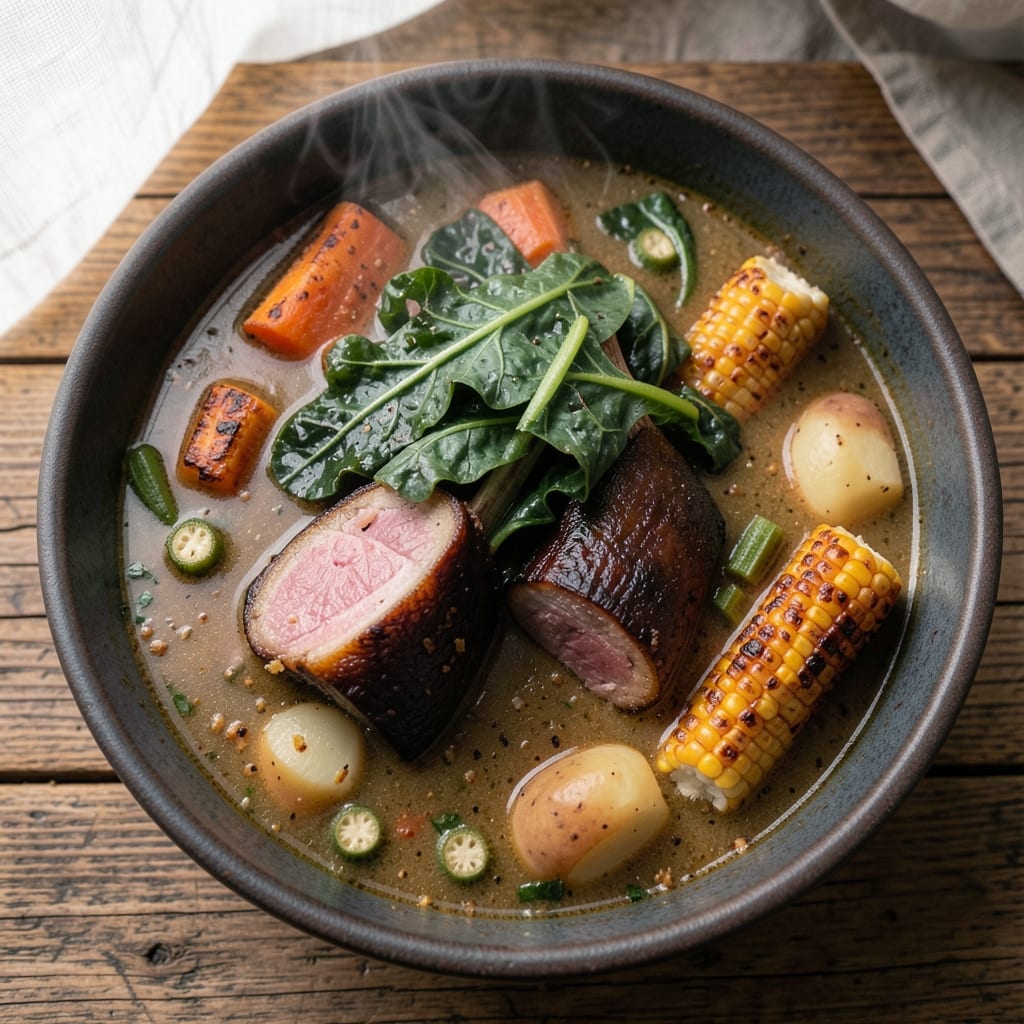
This African American vegetable soup recipe carries generations of Southern tradition in every steaming bowl. The collard greens—deepened by slow simmering with smoky ham hocks—form the heart of this dish, while okra, corn, and potatoes add texture and depth. What makes this recipe special isn't just the flavors but the stories it tells, passed down through families for decades.
The secret to authentic flavor lies in the slow cooking process, where bones and greens meld together over hours, creating a broth rich with umami and history. This isn't just soup; it's comfort in a bowl, the kind that warms both body and soul during cold months or celebrates family gatherings. The ham hocks infuse the broth with a smoky essence that's impossible to replicate with shortcuts.
By the time you're done, you'll have a pot of hearty, nutrient-packed soup with tender collards, creamy okra, and perfectly seasoned vegetables. The aroma alone will bring everyone to the table, and the first spoonful delivers on that promise of home-cooked goodness. This is the kind of recipe that becomes a family heirloom.
Serve it with crusty cornbread or over buttered egg noodles for the full experience. The beauty of this recipe is its flexibility—adjust the vegetables based on what's in season or available, but always keep those collards and ham hocks at the center. Let's get cooking!
Ingredients for african american vegetable soup
Family tradition meets Southern comfort in this soul-warming vegetable soup recipe.
| Ingredient | Amount | Notes |
|---|---|---|
| Ham Hocks 🍖 | 2 lb | Smoked for authentic flavor |
| Collard Greens 🌿 | 1 ½ lb | Fresh, stems removed |
| Okra 🍆 | 1 lb | Fresh, trimmed |
| Sweet Potatoes 🍠 | 2 medium | Peeled, cubed (about 1 lb total) |
| Russet Potatoes 🥔 | 2 medium | Peeled, cubed (about 1 lb total) |
| Corn on the Cob 🌽 | 4 ears | Fresh or frozen |
| Yellow Onion 🧅 | 1 whole | Chopped, medium size |
| Garlic Cloves 🧄 | 4 cloves | Minced, fresh |
| Celery Stalks 🧅 | 3 whole | Chopped, medium size |
| Carrots 🥕 | 3 whole | Peeled, chopped |
| Vegetable Oil 🫒 | 2 tbsp | For sautéing |
| Salt 🧂 | 1 ½ tsp | Kosher or sea salt |
| Black Pepper 🌶️ | ½ tsp | Freshly ground |
| Bay Leaves 🍃 | 2 whole | Dried, for infusion |
| Black-Eyed Peas 🌱 | 1 cup | Dried, soaked overnight |
The ham hocks are non-negotiable for that authentic smoky depth. Look for smoked hocks at your local butcher shop—they’re worth seeking out. If you can’t find smoked, regular ham hocks will work, but add a smoked paprika packet (like Lawry’s) to mimic the flavor. For collard greens, younger leaves cook faster, so if you’re using older, tougher ones, trim the stems and ribs thoroughly. The okra should be fresh—frozen works in a pinch, but fresh adds that silky texture. Trader Joe’s often carries pre-trimmed okra if you’re short on time.
No ham hocks? Two smoked sausage links (like kielbasa) or even a cup of smoked turkey broth can stand in. Fresh corn? Use it. Frozen? Thaw it first. The black-eyed peas can be canned (drained and rinsed) if you’re in a hurry, but dried gives the best texture. For the potatoes, sweet and russet add different textures—don’t skip either. The carrots can be baby carrots if that’s what’s in the fridge, but whole carrots add more rustic flavor. Substitute turnips if you’re feeling adventurous—they hold up well to long cooking.
This soup tastes even better the next day, so make a double batch if you can. Store in the fridge for up to 5 days, or freeze portions for 3 months. The broth thickens as it cools, so add a splash of water or broth when reheating. For serving, keep those ham hocks in the pot—they’re edible and packed with flavor. Garnish with extra black-eyed peas or a drizzle of hot sauce if you like a kick. Leftovers reheat beautifully, making this the perfect meal prep for the week.
Why You'll Love This Recipe
- One-Pot Magic: I swear by this soup—just toss everything in the pot and let it simmer. No chopping like a fine-dining chef, no measuring cups stressing me out. The ham hocks melt into the broth while I’m still peeling potatoes, and by the time the collards wilt, dinner’s ready.
- Rich, Deep Umami Bomb: That first bite? Smoky, savory, and layered—the ham hocks infuse the broth so deeply it’s like liquid gold. The okra adds a little chew, the sweet potatoes bring sweetness, and the collards? They turn tender enough to melt in your mouth. It’s the kind of soup that makes you close your eyes.
- Leftovers That Beg for More: Honestly, this soup tastes better the next day. The flavors marry overnight, and reheating it is just dumping it back in the pot. My family fights over seconds, and I always have jars stashed in the freezer for lazy days. (Yes, even on a Tuesday night.)
- Budget-Friendly Crowd-Pleaser: Ham hocks stretch this recipe into a feast for half the price of takeout. A single package feeds six, and the veggies—collards, sweet potatoes, okra—are cheap staples that never go to waste. It’s my go-to for potlucks, game days, or when I’m broke but still want to eat well.
Step-by-step instructions for collard green legacy with smoky ham essence
A rich, hearty vegetable soup where smoky ham hocks and collard greens create a flavor foundation that carries through every ingredient.
Prepare the Ham Hocks and Soak the Black-Eyed Peas
Place the 2 lb ham hocks in a large stockpot and cover with cold water by about 2 inches. Bring to a boil over medium-high heat, then reduce to a simmer for 30 minutes to render out initial impurities. Skim off any foam that rises to the surface during this time.
While the ham hocks simmer, drain the 1 cup black-eyed peas and place them in a bowl. Cover with fresh cold water by 2 inches and let them soak for at least 8 hours or overnight. This soaking step ensures the peas cook evenly and absorb the rich flavors of the broth. I like to add a pinch of salt to the soaking water to enhance texture.
Build the Vegetable Base in the Pot
After the initial 30 minutes of simmering, remove the ham hocks and set them aside. In the same pot, heat the 2 tbsp vegetable oil over medium heat until shimmering. Add the chopped 1 whole yellow onion, 3 whole celery stalks, and 3 whole carrots. Sauté for 8-10 minutes until the vegetables soften and the onion becomes translucent.
Add the minced 4 cloves garlic and cook for an additional 1 minute until fragrant. This aromatic base forms the flavor foundation for the entire soup. Stir in the 1.5 tsp salt, 0.5 tsp black pepper, and 2 whole bay leaves, letting them toast gently in the oil for 30 seconds before adding any liquid back.
Add Vegetables and Simmer Until Tender
Return the ham hocks to the pot and add enough water to cover all ingredients by about 2 inches. Bring to a boil, then reduce heat to medium-low and add the cubed 2 medium sweet potatoes and 2 medium russet potatoes. Simmer for 20 minutes until the potatoes begin to soften.
Add the drained black-eyed peas, 1 lb trimmed okra, and the 4 ears corn on the cob (cut off the cobs and discard the kernels if using fresh corn). The okra will release its distinctive sliminess as it cooks, which many find appealing in Southern vegetable soups. Cover and simmer for another 25-30 minutes until all vegetables are fork-tender.
Incorporate Collard Greens and Finish the Soup
Remove the ham hocks from the pot and set them aside to cool slightly. Add the 1.5 lb collard greens (stems removed) to the simmering broth. Stir gently to distribute the greens evenly. The collards will wilt and infuse the broth with their characteristic earthy flavor. Simmer uncovered for 15-20 minutes until the greens are completely tender.
Return the ham hocks to the pot and let everything simmer together for an additional 10 minutes. This final step allows the flavors to meld completely. Taste and adjust seasoning if needed, adding more salt or pepper as necessary. The soup should be rich and flavorful with a balance of smoky, sweet, and earthy notes.
Serve with Crispy Ham Hocks
Using a slotted spoon, remove the ham hocks and slice them into bite-sized pieces. Return the sliced ham to the pot and stir gently to distribute throughout the soup. Ladle the soup into bowls, ensuring each serving contains both the broth and the ham pieces. The ham hocks should be tender enough to pull apart easily with a fork.
Serve immediately while hot, with a sprinkle of freshly ground black pepper on top. This soup tastes even better the next day as the flavors continue to develop, so consider making extra for leftovers. The combination of tender vegetables, smoky ham, and rich collard greens creates a truly comforting dish that captures the essence of traditional Southern cooking.
Pro Tips For Making African American Vegetable Soup
- CRACK THE HAM HOCKS: Start with a cold pot—drop those ham hocks in raw, cover with cold water, and bring to a boil slowly. I used to rush this and end up with tough, chewy meat that fell apart when I tried to shred it later. Let them simmer uncovered for the first 30 minutes to render fat and collagen properly—no skimming, just let that golden broth form.
- TRIM COLLARDS LIKE A PRO: Wash collards thoroughly, then stack leaves and slice lengthwise into 1-inch ribbons—thicker than usual. Thinner strips get mushy; thicker ones hold up in the long simmer. My grandmother’s trick: Toss them in a little oil and a pinch of salt before adding to the pot—keeps them vibrant and prevents wilting into a sad, limp pile.
- ADD OKRA AT THE END: Okra’s magic happens when it’s fresh and added last—about 10 minutes before serving. If you toss it in early, it turns to mush and turns the soup into a gluey nightmare. I learned this after serving a batch where the okra had dissolved into the broth like a bad science experiment. Save it for the final stretch, and you’ll get those perfect, tender slices.
- SWEAT THE POTATOES FIRST: Chop sweet potatoes and russets into even 1-inch cubes, then sweat them in a dry skillet over medium heat for 5 minutes before adding to the soup. This builds a slight crust that keeps them from falling apart during the long cook. I skip this step sometimes, and the potatoes turn to mush—don’t make my mistake.
Regional styles of this recipe
Southern Soul Style
This is the classic version you'll find in Georgia and the Carolinas, where collard greens and ham hocks take center stage. The slow-cooked broth develops a deep, smoky richness from the ham hocks, while the collards soften into tender, flavorful bites. I remember my grandma always adding a splash of vinegar at the end—just 1 tbsp apple cider vinegar brightens the flavors and cuts through the richness. Don't skip the black-eyed peas; they add a satisfying texture contrast to the creamy okra. 🌶️
Mid-Atlantic Twist
In Maryland and Virginia, you'll often find this soup with a touch of sweetness from corn and a hint of heat from hot sauce. The Mid-Atlantic version keeps the same core ingredients but adds 1 cup diced tomatoes and a pinch of cayenne pepper for a subtle kick. Some families even include dried mustard seeds for an extra layer of complexity. The key difference is the broth—here, it's often lighter, letting the vegetables shine without overpowering smokiness.
Texas-Inspired Heat
If you're in Texas, you might see this soup with a 1 lb smoked sausage like kielbasa instead of ham hocks, plus 1 jalapeño pepper for heat. The Lone Star version also incorporates 1 cup chopped tomatoes and a splash of hot sauce at the end. I've made this variation with Penzeys hot sauce and it adds just the right amount of spice without overpowering the dish. The Texas take keeps the same slow-cooking method but ramps up the bold flavors. 🔥
Modern Vegetarian Adaptation
For a plant-based version, swap the ham hocks for 2 cups smoked vegetable broth> and add 1 tbsp liquid smoke> to mimic the smokiness. Use 1 cup cooked lentils> instead of black-eyed peas for protein, and boost the umami with 1 tbsp soy sauce>. The collards and okra still shine, but the broth takes on a lighter, more herb-forward profile. This version works well for those who want to keep the soulful flavors without meat. 🌱
Seasonal Variations
Summer versions often include fresh green beans> and zucchini> instead of sweet potatoes, while winter soups feature turnips> and rutabagas> for heartier texture. In spring, I like adding asparagus spears> in the last 10 minutes> of cooking to keep them crisp. The key is adjusting cook times for seasonal vegetables—root veggies need longer, while greens and tender crops cook faster. Always taste as you go! ✨
Nutrition facts
Frequently asked questions
Can I make this soup without ham hocks?
For a vegetarian version, use 2 cups smoked vegetable broth plus 1 tbsp liquid smoke to mimic the smoky flavor. Add 1 cup cooked lentils for protein and 1 tbsp soy sauce for umami depth. The collards and okra will still shine, though the broth will be lighter in texture.
How do I prevent the collard greens from getting too bitter?
Bitter collards happen when they simmer too long. Add them to the broth only in the last 15-20 minutes of cooking, and stir gently to distribute them evenly. For extra tenderness, remove the tough stems before chopping. A splash of apple cider vinegar (1 tbsp) at the end also balances bitterness.
What's the best way to store leftovers?
Store in an airtight container in the fridge for up to 5 days. The flavors actually improve overnight! For freezing, portion into ziplock bags and freeze for up to 3 months. Reheat on the stove over medium-low heat, adding a splash of water if the soup thickens too much.
Can I use frozen okra instead of fresh?
Yes, but thaw it first under cold water to preserve texture. Frozen okra works in a pinch, though fresh adds that signature silky quality. If using frozen, add it with the potatoes (after 20 minutes of simmering) to prevent mushiness.
Why does my soup taste bland?
Blandness usually means the ham hocks didn't infuse enough flavor. Simmer them longer (45+ minutes before adding other ingredients) and taste the broth before adding vegetables—it should be rich and smoky. Boost seasoning with extra black pepper or a pinch of smoked paprika at the end.