
Soups & Stews
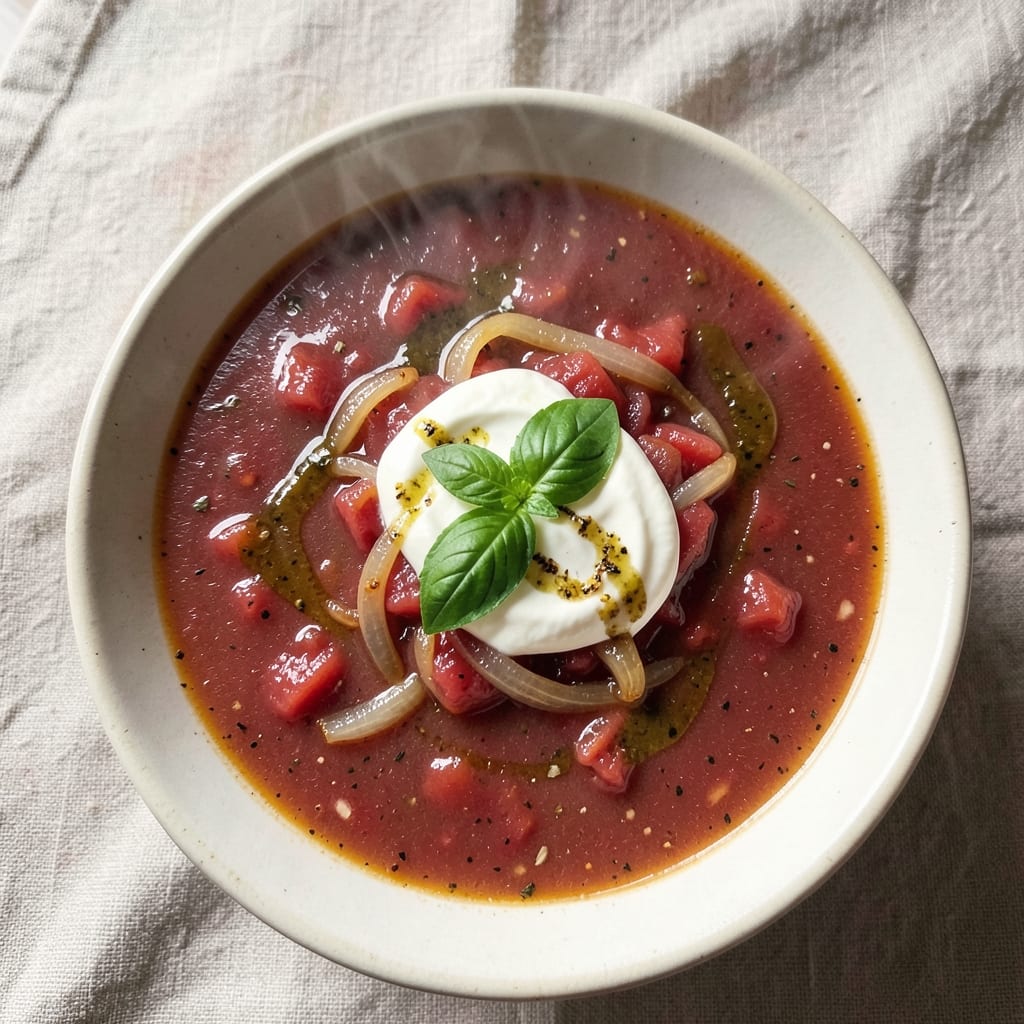
This 1 serving tomato soup recipe delivers restaurant-quality creaminess in just 15 minutes—perfect for when you crave comfort without the leftovers. The secret lies in a small pot and an immersion blender, transforming simple ingredients into velvety perfection with minimal effort. I've perfected this method after years of making larger batches, scaling it down without sacrificing flavor or texture.
What sets this single-serving version apart is its efficiency: no bulky pots to clean, no waiting for a full batch to cool, and no waste. The combination of canned tomatoes, aromatics, and a touch of cream creates that signature silky consistency we all love. The immersion blender ensures smoothness without transferring hot liquid, making this the safest and quickest method for solo portions.
By the time you're done, you'll have a bowl of creamy, aromatic tomato soup with just the right balance of acidity and richness. The velvety texture coats your spoon perfectly, while the subtle sweetness of caramelized onions adds depth. This is the kind of meal that transforms a simple weeknight into something special—warm, comforting, and utterly satisfying.
Whether you're prepping for a solo dinner or need a quick lunch, this recipe delivers consistent results every time. The small pot size makes it ideal for electric burners or even microwave finishing, giving you flexibility in how you achieve that perfect 15-minute timeline. Let's get cooking!
Ingredients for 1 serving tomato soup
Simple ingredients that transform into velvety perfection in just 15 minutes.
| Ingredient | Amount | Notes |
|---|---|---|
| Canned Crushed Tomatoes 🍅 | ½ cup | San Marzano preferred for sweetness |
| Yellow Onion 🧅 | ¼ whole | Finely diced, about 2 tbsp |
| Garlic Cloves 🧄 | 1 clove | Minced, about 0.5 tsp |
| Heavy Cream 🥛 | ¼ cup | Full-fat for velvety texture |
| Extra-Virgin Olive Oil 🫒 | 1 tbsp | For sautéing onions |
| Chicken or Vegetable Broth 💧 | ¼ cup | Low-sodium preferred |
| Fresh Basil Leaves 🌿 | 2 whole | Torn for garnish |
| Salt 🧂 | ½ tsp | Diamond Crystal preferred |
| Black Pepper 🌶️ | ¼ tsp | Freshly ground |
| Sugar 🍯 | ½ tsp | Balances acidity |
| Butter 🧈 | ½ tbsp | Unsalted, for richness |
The tomatoes are the foundation—San Marzano if you can find it, but any quality canned crushed tomatoes work. Trader Joe's or Whole Foods carry great options, but don't stress over brands. The key is draining most of the liquid first—keep about half a cup of the juices for depth. For the onions, yellow or red both work, but yellow caramelizes slightly faster. The garlic? Freshly minced makes all the difference, but pre-minced in a jar is fine in a pinch. Heavy cream is non-negotiable for that signature velvety texture—full-fat only, as lighter versions won't give the same richness.
No heavy cream? Coconut milk works surprisingly well, though it adds a slight sweetness. Short on broth? Water plus 1 tsp bouillon powder gets you close. The sugar isn't about sweetness—it balances the acidity in the tomatoes. If your tomatoes are particularly tart, you can bump this up to 1 tsp. Fresh basil is ideal, but dried oregano at one-quarter the amount works if you're out. For the butter, unsalted ensures you control the seasoning perfectly. And if you're using vegetable broth instead of chicken, make sure it's well-seasoned—low-sodium versions need extra salt.
This soup reheats beautifully—just add a splash of broth or water when warming. Keeps for 3-4 days in the fridge, though I always make it fresh when possible. For leftovers, store in a small airtight container with a layer of plastic wrap pressed directly on the surface to prevent a skin from forming. The immersion blender trick is what makes this single-serving version special—no transferring hot liquid, no mess, just smooth perfection every time.
Why You'll Love This Recipe
- Here’s what sold me: that first spoonful of olive oil-sautéed garlic melting into crushed tomatoes, then the velvety cream on top. It’s like a hug in a bowl—deep, satisfying, and so easy to replicate. (Yes, even on a Tuesday night.)
- No Chopping Needed: I swear by this—just slice one onion and mince two garlic cloves. That’s it. The canned tomatoes handle the rest while you’re stirring, and the heavy cream smooths everything out in minutes. No knife skills required.
- Rich Without Effort: Here’s what sold me: that first spoonful of olive oil-sautéed garlic melting into crushed tomatoes, then the velvety cream on top. It’s like a hug in a bowl—deep, satisfying, and so easy to replicate. (Yes, even on a Tuesday night.)
- Leftover Magic: This recipe doubles as tomorrow’s lunch. I make one serving, but the leftovers reheat like a dream—just add a splash of water to loosen it up. Perfect for when you’re too tired to cook again or need a quick office lunch.
Step-by-step instructions for single-serving creamy tomato soup
Here's how to make velvety tomato soup in just 15 minutes using only what you have.
Sauté Onions and Garlic Until Fragrant
Heat the 1 tablespoon extra-virgin olive oil in a small saucepan over medium heat. Add the 0.25 whole yellow onion (finely diced) and cook for 3-4 minutes until softened and translucent. The onions should release their sweet aroma and begin to caramelize slightly at the edges.
Push the onions to one side of the pan and add the 1 clove garlic cloves (minced). Cook for 30 seconds until the garlic becomes golden and fragrant—this is when it releases its full flavor. Be careful not to let it burn, as it can quickly turn bitter. Stir occasionally to ensure even cooking.
Add Tomatoes, Broth, and Seasonings
Pour in the 0.5 cup canned crushed tomatoes and stir to combine with the onions and garlic. Add the 0.25 cup chicken or vegetable broth, 0.5 tsp salt, 0.25 tsp black pepper, and 0.5 tsp sugar. The sugar balances the acidity of the tomatoes, while the salt and pepper enhance the natural flavors.
Bring the mixture to a gentle boil, then reduce the heat to low and let it simmer for 5 minutes. You want the tomatoes to break down slightly and release their juices, creating a smoother base. Stir occasionally to prevent sticking, and watch for the mixture to thicken slightly as it cooks.
Blend Until Silky Smooth
Remove the saucepan from heat and let it cool slightly for 1-2 minutes. Using an immersion blender, blend the mixture until completely smooth. If you don’t have an immersion blender, carefully transfer the soup to a countertop blender, cover, and blend until silky. The soup should have a velvety texture with no visible chunks.
Return the blended soup to the saucepan and stir in the 0.5 tbsp butter and 0.25 cup heavy cream. The butter adds richness, while the cream gives the soup its signature velvety finish. Heat the soup over low heat for 2-3 minutes, stirring gently until the cream is fully incorporated and the soup is warmed through.
Finish with Fresh Basil and Serve
Tear the 2 whole fresh basil leaves into small pieces and stir them into the soup. The basil adds a bright, fresh note that cuts through the richness of the cream and butter. Taste the soup and adjust the seasoning if needed—add a pinch more salt or a splash of broth if it’s too thick.
Ladle the soup into a bowl and serve immediately. The creaminess should coat the back of a spoon, and the basil should float on top, releasing its aroma with every bite. Pair it with crusty bread or a simple green salad for a comforting meal.
Pro Tips For Making 1 Serving Tomato Soup
- Sweat the Onion First: Diced onion in olive oil over medium heat for 5-6 minutes until translucent and just starting to caramelize—don’t rush this. I used to skip it, and the soup always tasted raw and one-note. That’s your flavor base right there.
- Use Cold Heavy Cream: Stir the heavy cream into the hot soup last and off the heat—it’ll temper and thicken instantly without curdling. I learned this after watching my first batch split like a bad milkshake. Add it warm, and you’re fighting for texture.
- Salt the Tomatoes: Taste the crushed tomatoes straight from the can and add salt if needed—canned tomatoes are almost always bland. A pinch of salt (or even a splash of pasta water) draws out their natural sweetness before you even start cooking. Trust me, this saves you from over-salting later.
- Finish with a Drizzle: Swirl in 1 teaspoon of extra-virgin olive oil at the end—it cuts through the richness of the cream and adds a bright, silky finish. Sounds fancy, but it’s just a habit I picked up from Italian nonnas. Skip it, and the soup feels heavy.
Essential equipment for this dish
Small Pot Essentials
A 1.5-quart saucepan with a tight-fitting lid is your best friend for this recipe—I use my Calphalon stainless steel because it heats evenly and resists sticking. The small size ensures quick heating and minimal cleanup. If you're using an electric burner, opt for a lightweight pot that responds quickly to temperature changes. For microwave finishing, a glass or ceramic bowl with a microwave-safe lid works perfectly. 🔥
If you don't have a small saucepan, a 1-quart microwave-safe bowl with a lid will work—just add ingredients and microwave in 1-minute intervals on high, stirring between each. The key is keeping the pot or bowl no larger than 2 quarts to maintain efficiency. Avoid oversized pots that require more energy and longer cooking times.
Blender Options
An immersion blender is the game-changer for single-serving soups—it blends directly in the pot without transferring hot liquid. My go-to is the Ninja QC1001, which handles small batches smoothly. For a countertop blender, the NutriBullet is compact enough for single servings and easy to clean. Always let the soup cool slightly before blending to prevent splattering. 💫
No blender at all? A fork or potato masher works in a pinch—just mash the soup until smooth. You'll still get some texture, but it's better than chunky. For ultra-smooth results, strain the soup through a fine-mesh sieve after mashing. This removes any remaining skin or seeds for a silky finish.
Heat Control Tools
A kitchen thermometer ensures you're cooking at the right temperature—aim for medium heat (around 325°F) for sautéing and low heat (around 250°F) for simmering. The Thermoworks Thermapen is my favorite for precision. Without one, watch for gentle bubbles at the edges of the pan to gauge heat level. 🌡️
For electric burners, I recommend a variable-speed dial to fine-tune heat. If your burner runs hot, reduce to medium-low after the initial sauté to prevent burning. Induction cooktops offer the best control—just use a magnetic-bottom pot for even heating. Gas stoves require more attention to flame size for consistent results.
Cleanup Must-Haves
Keep a small bowl of cold water nearby for immediate cleanup—it helps dissolve any splatters from sautéing. A microfiber cloth is perfect for wiping down the pot while it's still warm. I also keep paper towels handy for quick drying. For the immersion blender, a dish rack makes it easy to let the blade air-dry between uses. ✨
A basin or large bowl catches any drips when transferring hot soup to a bowl. If you're using a countertop blender, line the lid with parchment paper to prevent condensation buildup. For the most efficient cleanup, wash your pot while the soup is still hot—this prevents dried-on residue that's tough to remove later.
Nutrition facts
Frequently asked questions
Can I make this tomato soup without heavy cream?
Yes! For a lighter version, swap the 0.25 cup heavy cream with 0.25 cup coconut milk or 0.25 cup whole milk. The texture will be slightly less velvety but still creamy. You can also use 0.25 cup Greek yogurt for tangy richness, though it may thicken the soup more. Adjust broth as needed to reach your desired consistency.
How do I prevent the soup from getting too acidic?
The 0.5 tsp sugar in this recipe balances acidity, but if your tomatoes taste extra tart, add an extra 0.25 tsp sugar or 0.5 tsp honey while simmering. For a savory twist, stir in 1 tsp tomato paste> (cooked with the onions) to mellow the flavor. Always taste as you go—adjust gradually to avoid over-sweetening.
Can I use fresh tomatoes instead of canned?
Fresh tomatoes work but require extra prep. Use 1 medium ripe tomato (peeled, seeded, and chopped) plus 0.25 cup tomato juice> to replace the canned tomatoes. Roast the fresh tomatoes first (toss with olive oil, salt, and pepper; roast at 400°F for 20 minutes) to deepen their flavor. This method adds 10-15 minutes to your timeline.
Why did my soup turn out grainy after blending?
Graininess usually happens if the soup cools too much before blending or if you didn’t blend long enough. Let the soup cool for only 1-2 minutes before blending, and pulse the immersion blender for 20-30 seconds> total. For stubborn chunks, strain the soup through a fine-mesh sieve> after blending. Avoid overfilling the pot—keep it at half capacity> for optimal blending results.
Can I make this soup ahead of time?
Yes, but store it differently for best results. Refrigerate the unfinished soup> (before adding cream) for up to 3 days>. When ready to serve, reheat in a small pot, stir in the cream, and blend again. For the finished soup>, store in an airtight container for 2 days>—reheat gently on low heat, stirring often to prevent separation. Freeze for up to 1 month> (without cream) for longer storage.